Tag Archives: Le promenoir des deux amants

Episode 456. John Wustman in Memoriam


I had hoped not to be bringing this episode to my listeners until many years hence. Alas, my dear teacher and mentor John Wustman, one of the most influential, pathbreaking, and inspired of all accompanists (a term he far preferred to “collaborative pianist”) died this past Thursday at the age of 95. I have already featured his magnificent artistry on countless episodes, including two devoted expressly to his superb artistry and musicianship. Rather than simply reissuing one of those episodes (or recycling an additional bonus episode already published for my Patreon supporters), I decided to focus on his work with one singer in particular, the French soprano Régine Crespin. Wustman’s work with singers such as Luciano Pavarotti and others is well-remembered and documented, but at a crucial point in his career, it was his recital work with Crespin that was (at her insistence) documented on two commercial releases of art song, both recorded in the mid-1960s, one on EMI, the other on London/Decca. These form a central part of Wustman’s recorded legacy. Today, however, I am focusing on rare live recordings of the pair in recital between 1967 and 1970, the twilight of Crespin’s prime. From these, I have chosen five different song cycles that were featured in those performances, works by Poulenc, Debussy, Milhaud, Schumann, and Hugo Wolf. These recordings have not received widespread circulation, and for that reason alone they would constitute essential listening, but what is even more exceptional is the strong musical bond between the two performers, one which emanates out to their audience in a way which is utterly remarkable. I shall be featuring further episodes with my beloved Mr. Wustman in months to come, but I am particularly honored to share these with you today, as we mourn his death and celebrate his ongoing legacy.

Countermelody is the podcast devoted to the glory and the power of the human voice raised in song. Singer and vocal aficionado Daniel Gundlach explores great singers of the past and present focusing in particular on those who are less well-remembered today than they should be. Daniel’s lifetime in music as a professional countertenor, pianist, vocal coach, voice teacher, and author yields an exciting array of anecdotes, impressions, and “inside stories.” At Countermelody’s core is the celebration of great singers of all stripes, their instruments, and the connection they make to the words they sing. By clicking on the following link (https://linktr.ee/CountermelodyPodcast) you can find the dedicated Countermelody website which contains additional content including artist photos and episode setlists. The link will also take you to Countermelody’s Patreon page, where you can pledge your monthly or yearly support at whatever level you can afford.
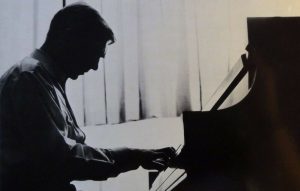
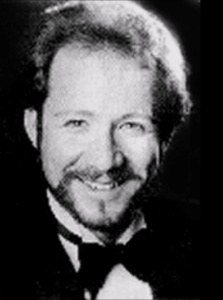
Episode 268. Will Parker Redux


Today I revisit the life and legacy of lyric baritone William Parker (05 August 1943 – 29 March 1993), to whom I devoted an episode exactly a year ago. To further explore his unmatched contribution to the art of song, I present a second episode which was originally published as a bonus episode at the same time, featuring Will in four contrasting song cycles by Charles Wakefield Cadman, Claude Debussy, Aaron Copland, and Francis Poulenc, recorded between 1975 and 1987, when he was in his absolute prime. He is accompanied by William Huckaby, Gérard van Blerk, and the late Rudolf Jansen. Also included are two haunting settings of Herman Melville’s “Billy in the Darbies,” a segment added posthumously to his Billy Budd novella; in two settings by Robert Evett and Ernst Bacon. The episode is prefaced by a brief tribute to the pianist Norman Shetler, who died yesterday in Austria nine days after observing his 93rd birthday; as well as a brief introduction by Will Parker’s nephew, Mark Doty.

Countermelody is a podcast devoted to the glory and the power of the human voice raised in song. Singer and vocal aficionado Daniel Gundlach explores great singers of the past and present focusing in particular on those who are less well-remembered today than they should be. Daniel’s lifetime in music as a professional countertenor, pianist, vocal coach, voice teacher, and journalist yields an exciting array of anecdotes, impressions, and “inside stories.” At Countermelody’s core is the celebration of great singers of all stripes, their instruments, and the connection they make to the words they sing. By clicking on the following link (https://linktr.ee/CountermelodyPodcast) you can find the dedicated Countermelody website which contains additional content including artist photos and episode setlists. The link will also take you to Countermelody’s Patreon page, where you can pledge your monthly support at whatever level you can afford. Bonus episodes available exclusively to Patreon supporters are currently available and further bonus content including interviews and livestreams is planned for the upcoming season.


Episode 10. Régine Crespin: Un doux privilège


Régine Crespin, whose Metropolitan Opera debut as the Marschallin in Richard Strauss’s Der Rosenkavalier occurred exactly 57 years ago this week, is featured on this week’s episode. I give an overview of her major roles, with a few surprises, both monumental and insouciante, tossed in. Because of her enormous range and versatility, I will have to return to my subject in the near future in order to do full justice to this great artist.

Countermelody is a new podcast devoted to the glories of the human voice raised in song. Singer and vocal aficionado Daniel Gundlach explores great classical and opera singers of the past and present with the help of guests from the classical music field: singers, conductors, composers, coaches, agents, and voice teachers. Daniel’s lifetime in music as a professional countertenor, pianist, vocal coach, voice teacher, and journalist yields an exciting array of anecdotes, impressions, and “inside stories.” At Countermelody’s core is the interaction between singers of all stripes, their instruments, and the connection they make to the words they sing. Please also visit the Countermelody website for updates, additional content, and to pledge your support. www.countermelodypodcast.com