Tag Archives: Walter Heinrich Robert-Tornow

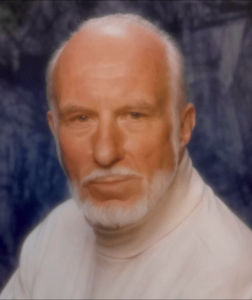
Episode 451. Norman Bailey Sings Three Song Cycles


I have twice featured the great British bass-baritone Norman Bailey (who also sang both regular baritone and, later in his career, regular bass roles) on my podcast. The first time was on the occasion of his death in the fall of 2021 at the age of 88. The second time was a 2025 episode entitled “Norman Bailey Revisited” in which he was heard singing everything from Peter Warlock to Sigmund Romberg to the great Heldenbariton roles of Wagner and Strauss for which he was particularly celebrated. Today, in an episode appropriate for the pentitential observance of Good Friday, I present him in three different (and each, in their own way, meditative) song cycles, Beethoven’s An die ferne Geliebte, the three Michelangelo-Lieder, which were the final songs written by Hugo Wolf, and the only one of his collections which he actually considered a song cycle, and the Brahms Vier ernste Gesänge. These were featured on two different recordings of art song featuring Bailey and his frequent collaborator John Constable, recorded in 1977 and 1979. His beauty of both tone and utterance, and the humanity expressed therewith, made me realize that I had, once again, to share this great artists with you, my listeners. May Norman Bailey, the majesty and humanity of his voice, reinforced by his peerless diction and musicianship, beguile you with his well-nigh ideal performances of these song cycles.

Countermelody is the podcast devoted to the glory and the power of the human voice raised in song. Singer and vocal aficionado Daniel Gundlach explores great singers of the past and present focusing in particular on those who are less well-remembered today than they should be. Daniel’s lifetime in music as a professional countertenor, pianist, vocal coach, voice teacher, and author yields an exciting array of anecdotes, impressions, and “inside stories.” At Countermelody’s core is the celebration of great singers of all stripes, their instruments, and the connection they make to the words they sing. By clicking on the following link (https://linktr.ee/CountermelodyPodcast) you can find the dedicated Countermelody website which contains additional content including artist photos and episode setlists. The link will also take you to Countermelody’s Patreon page, where you can pledge your monthly or yearly support at whatever level you can afford.
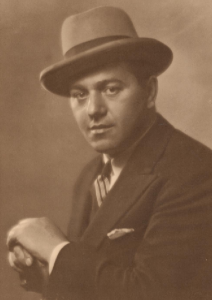
Episode 193. Alexander Kipnis


If I were to indulge in the foolish task of dubbing certain artists the “Greatest Ever,” I would have little hesitation in naming Ukrainian-American bass Alexander Kipnis (1891–1978) “the greatest” in several categories: greatest Wagner bass, greatest low-voiced Lieder singer, just maybe even the greatest bass ever captured on recording. Though I am trying to wean myself of these designations, I have no difficulty in naming Kipnis my favorite bass. In this episode, his operatic impersonations, though legendary, are touched on but peripherally: the focus instead is on his contributions in art song, specifically Lieder. Despite his heavily-accented German (which to my ear only increases the power of his interpretations in songs like Schubert’s “Aufenthalt” or Wolf’s Michelangelo-Lieder), Kipnis was as keenly attuned to text and its musical setting than any singer of art song before or since. As usual of late in my episodes, I begin with several short contrasting examples that illustrate the “why” question: why was this artist so important, and why does he remain so? There follow a few all-too-brief examples of Kipnis in opera, including examples stretching back to his earliest recordings in 1916, when he was barely 25 years old. Then follow a further examination of Kipnis’s Lieder recordings, including a rare 1943 radio broadcast of Schumann’s Dichterliebe accompanied by Wolfgang Rosé, the son-in-law of Gustav Mahler, as well as recordings issued under the aegis of the Hugo Wolf Society and the Johannes Brahms Society, and his matchless early recordings of the songs of Franz Schubert, which were my introduction not only to Kipnis’s magisterial voice, but also the songs themselves. In all of this material, whether tender, ardent, humorous, or transcendent, Kipnis’s dignity and humanity shine through.

Countermelody is a podcast devoted to the glory and the power of the human voice raised in song. Singer and vocal aficionado Daniel Gundlach explores great singers of the past and present focusing in particular on those who are less well-remembered today than they should be. Daniel’s lifetime in music as a professional countertenor, pianist, vocal coach, voice teacher, and journalist yields an exciting array of anecdotes, impressions, and “inside stories.” At Countermelody’s core is the celebration of great singers of all stripes, their instruments, and the connection they make to the words they sing. By clicking on the following link (https://linktr.ee/CountermelodyPodcast) you can find the dedicated Countermelody website which contains additional content including artist photos and episode setlists. The link will also take you to Countermelody’s Patreon page, where you can pledge your monthly support at whatever level you can afford. Bonus episodes available exclusively to Patreon supporters are currently available and further bonus content including interviews and livestreams is planned for the upcoming season.