Tag Archives: Clemens Schmalstich

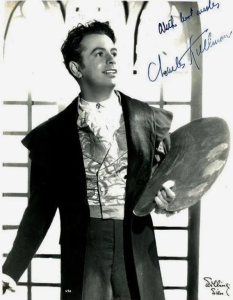
Episode 462. Get to Know Charles Kullman


I’ve had a real urge lately to revisit the voices and careers of some of my favorite tenors. So today I bring you the exceptional American artist Charles Kullman (1903 – 1983). The early years of his career were spent primarily in Berlin and Vienna, but for twenty-five years beginning in 1935, he was also a mainstay at the Metropolitan Opera, where he sang a total of 33 different roles. The sheen and spin on his lyric voice, allied to a firm technique, allowed him sing everything from Rinuccio and Fenton to Tannhäuser and Herodes (and nearly everything else in between!) During his European years, he made a number of invaluable recordings, including opera and operetta arias as well as songs from a number of popular films in which he starred. Though he recorded only one complete operatic role in the studio (Eisenstein in Die Fledermaus in 1951), there exist a large number of choice live stage performances that allow us to more fully explore the full length (and variety) of Kullman’s performing career. In this episode, we not only hear excerpts from those early German recordings, but also from live performances of Das Lied von der Erde, Meistersinger, Manon, Traviata, Fledermaus, and Montemezzi’s monumental L’amore dei tre re, some of which feature recent Countermelody divas Licia Albanese, Regina Resnik, and Bidú Sayão. Some aficionado or other has dubbed Kullman “the compleat tenor” and I couldn’t agree more. Enjoy getting better acquainted with this great singer!

Countermelody is the podcast devoted to the glory and the power of the human voice raised in song. Singer and vocal aficionado Daniel Gundlach explores great singers of the past and present focusing in particular on those who are less well-remembered today than they should be. Daniel’s lifetime in music as a professional countertenor, pianist, vocal coach, voice teacher, and author yields an exciting array of anecdotes, impressions, and “inside stories.” At Countermelody’s core is the celebration of great singers of all stripes, their instruments, and the connection they make to the words they sing. By clicking on the following link (https://linktr.ee/CountermelodyPodcast) you can find the dedicated Countermelody website which contains additional content including artist photos and episode setlists. The link will also take you to Countermelody’s Patreon page, where you can pledge your monthly or yearly support at whatever level you can afford.
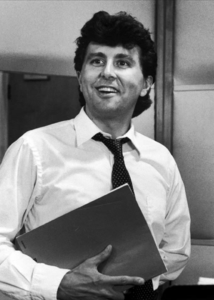


Episode 194. Great Mozart Tenors


Today’s is a mammoth episode, one of my longest ever, so I suggest you listen to it in easily digestible segments. It’s mammoth because it’s a gigantic subject: great Mozart tenors of the 20th century, covering more than 100 years of recorded documents of the finest examples of tenorial interpretations of the big Mozart operas as well as some of his lesser-known works, including his concert arias. You will be dazzled (and that is a promise and a guarantee) by performances by Fritz Wunderlich (for many of us, the ne plus ultra of lyric tenors), George Shirley, Richard Tauber, Anton Dermota, Léopold Simoneau, Nicolai Gedda, Gösta Winbergh, John McCormack, David Rendall, Peter Schreier, and countless others, including lesser-known figures such as John van Kesteren, Kálmán Pataky, and Wiesław Ochman, and duets featuring Pilar Lorengar, Leontyne Price, Roberta Alexander, and Margaret Price. I also feature a peek into the future with a special salute to the young tenor Alex Banfield, whose work has impressed me enormously. The entire episode is dedicated to the memory of my friend Jerry Hadley, one of the supreme Mozart tenors of all time.

Countermelody is a podcast devoted to the glory and the power of the human voice raised in song. Singer and vocal aficionado Daniel Gundlach explores great singers of the past and present focusing in particular on those who are less well-remembered today than they should be. Daniel’s lifetime in music as a professional countertenor, pianist, vocal coach, voice teacher, and journalist yields an exciting array of anecdotes, impressions, and “inside stories.” At Countermelody’s core is the celebration of great singers of all stripes, their instruments, and the connection they make to the words they sing. By clicking on the following link (https://linktr.ee/CountermelodyPodcast) you can find the dedicated Countermelody website which contains additional content including artist photos and episode setlists. The link will also take you to Countermelody’s Patreon page, where you can pledge your monthly support at whatever level you can afford. Bonus episodes available exclusively to Patreon supporters are currently available and further bonus content including interviews and livestreams is planned for the upcoming season.
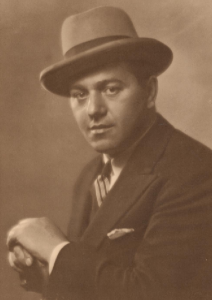

Episode 193. Alexander Kipnis


If I were to indulge in the foolish task of dubbing certain artists the “Greatest Ever,” I would have little hesitation in naming Ukrainian-American bass Alexander Kipnis (1891–1978) “the greatest” in several categories: greatest Wagner bass, greatest low-voiced Lieder singer, just maybe even the greatest bass ever captured on recording. Though I am trying to wean myself of these designations, I have no difficulty in naming Kipnis my favorite bass. In this episode, his operatic impersonations, though legendary, are touched on but peripherally: the focus instead is on his contributions in art song, specifically Lieder. Despite his heavily-accented German (which to my ear only increases the power of his interpretations in songs like Schubert’s “Aufenthalt” or Wolf’s Michelangelo-Lieder), Kipnis was as keenly attuned to text and its musical setting than any singer of art song before or since. As usual of late in my episodes, I begin with several short contrasting examples that illustrate the “why” question: why was this artist so important, and why does he remain so? There follow a few all-too-brief examples of Kipnis in opera, including examples stretching back to his earliest recordings in 1916, when he was barely 25 years old. Then follow a further examination of Kipnis’s Lieder recordings, including a rare 1943 radio broadcast of Schumann’s Dichterliebe accompanied by Wolfgang Rosé, the son-in-law of Gustav Mahler, as well as recordings issued under the aegis of the Hugo Wolf Society and the Johannes Brahms Society, and his matchless early recordings of the songs of Franz Schubert, which were my introduction not only to Kipnis’s magisterial voice, but also the songs themselves. In all of this material, whether tender, ardent, humorous, or transcendent, Kipnis’s dignity and humanity shine through.

Countermelody is a podcast devoted to the glory and the power of the human voice raised in song. Singer and vocal aficionado Daniel Gundlach explores great singers of the past and present focusing in particular on those who are less well-remembered today than they should be. Daniel’s lifetime in music as a professional countertenor, pianist, vocal coach, voice teacher, and journalist yields an exciting array of anecdotes, impressions, and “inside stories.” At Countermelody’s core is the celebration of great singers of all stripes, their instruments, and the connection they make to the words they sing. By clicking on the following link (https://linktr.ee/CountermelodyPodcast) you can find the dedicated Countermelody website which contains additional content including artist photos and episode setlists. The link will also take you to Countermelody’s Patreon page, where you can pledge your monthly support at whatever level you can afford. Bonus episodes available exclusively to Patreon supporters are currently available and further bonus content including interviews and livestreams is planned for the upcoming season.