Monthly Archives: March 2026

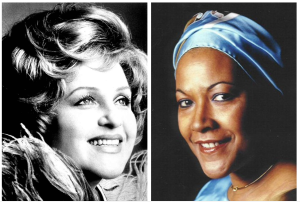
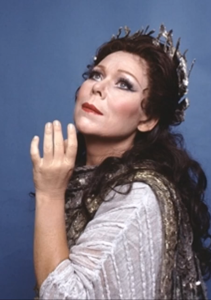
Episode 444. Renata Scotto: Casta Diva


Today’s episode serves numerous purposes: first, as a belated tribute to the great Renata Scotto and in particular her controversial assumption of the title role Vincenzo Bellini’s bel canto masterpiece, Norma. Second, as a memento of International Womens’ Day and Women’s History Month. The remainder of the month will feature various favorite divas in belated Countermelody tributes. In all honesty, this episode also is posted today because I have been quite ill and exhausted upon returning home to Berlin and have not had the energy to post a brand new episode. An earlier version of this episode first saw the light of day in the summer of 2020 in the first season of the podcast. Scotto is heard in some of her earliest recordings, including her first studio recording in 1954 and a live performance from Trieste of Weber’s Il franco cacciatore [AKA Der Freischütz]. Early bel canto triumphs as Adina in Elisir and Amina in Sonnambula serve as a foretaste of possibly her greatest (and certainly her most ambitious and audacious) bel canto heroine, Norma, in which she is heard in early live performances between 1963 and 1978. Fellow singers heard in this episode include Alfredo Kraus, Gianfranco Cecchele, Biancamaria Casoni, Ermanno Mauro and Tatiana Troyanos. Conductors include Giuseppe Patanè, Nicola Rescigno, Nello Santi, Fulvio Vernizzi, and Riccardo Muti.

Countermelody is the podcast devoted to the glory and the power of the human voice raised in song. Singer and vocal aficionado Daniel Gundlach explores great singers of the past and present focusing in particular on those who are less well-remembered today than they should be. Daniel’s lifetime in music as a professional countertenor, pianist, vocal coach, voice teacher, and author yields an exciting array of anecdotes, impressions, and “inside stories.” At Countermelody’s core is the celebration of great singers of all stripes, their instruments, and the connection they make to the words they sing. By clicking on the following link (https://linktr.ee/CountermelodyPodcast) you can find the dedicated Countermelody website which contains additional content including artist photos and episode setlists. The link will also take you to Countermelody’s Patreon page, where you can pledge your monthly or yearly support at whatever level you can afford.

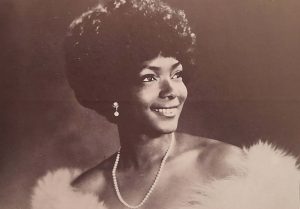
Episode 443. Meet Klesie Kelly


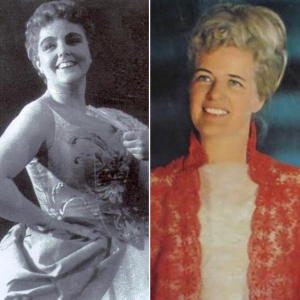
As a pendant to, and continuation of, my Black History Month 2026 series on Countermelody, I am pleased and honored to present to you the exquisite African American lyric soprano Klesie Kelly, who, as with numerous other singers that we have explored together this month, has made her life, career, and home abroad, in this case, Germany, where she came to pursue post-university studies in Detmold and from there simply put down roots. Though unlike me, Kelly was not born in Milwaukee, she did spend some of her formative years there, including pursuing her undergraduate degree at the University of Wisconsin Madison. In her years in Germany, Kelly was not only an active and deeply respected both on the operatic stage and the concert platform (where her performances of Bach were particularly lauded), but she also dedicated herself to the education of many of the finest singers to have come through the Musikhochschule in Köln. I have managed to unearth a number of invaluable sound documents of Klesie Kelly, including a number of recordings of Lieder and duets with instrumental obbligato accompaniment, and peerless performances of Bach cantatas, as well as a 1970 concert performance of Porgy and Bess in the Netherlands, and an ultrarare recording made during her undergraduate years in Wisconsin. Excerpts from all of these are heard on the episode, which salutes (and delivers flowers to) one of the most respected German-American musical figures of her generation.

Countermelody is the podcast devoted to the glory and the power of the human voice raised in song. Singer and vocal aficionado Daniel Gundlach explores great singers of the past and present focusing in particular on those who are less well-remembered today than they should be. Daniel’s lifetime in music as a professional countertenor, pianist, vocal coach, voice teacher, and author yields an exciting array of anecdotes, impressions, and “inside stories.” At Countermelody’s core is the celebration of great singers of all stripes, their instruments, and the connection they make to the words they sing. By clicking on the following link (https://linktr.ee/CountermelodyPodcast) you can find the dedicated Countermelody website which contains additional content including artist photos and episode setlists. The link will also take you to Countermelody’s Patreon page, where you can pledge your monthly or yearly support at whatever level you can afford.

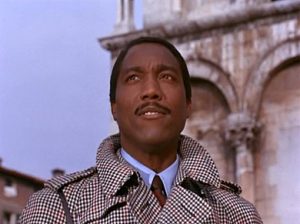
Episode 442. Henry Wright Revisited


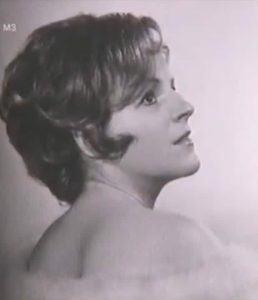
Last week I published an episode about Black Pop Singers who emigrated to Europe in the 1950s and 1960s. Most of these gentlemen settled in the German-speaking countries, where there was a ready market for the “otherness” and exoticism that they embodied. The one outlier on that episode was Henry Wright, born in 1933, who in the late 1950s toured Italy with Lionel Hampton’s band and elected to remain there. With a voice as suave and seductive as any of the great crooners of the 1950s and 1960s, Henry Wright first came to international prominence as the voice on the record to which Sophia Loren performed her legendary striptease in the 1962 film Ieri, oggi, domani [Yesterday, Today and Tomorrow]. He went on to make a great impact on Italian pop music throughout the 1960s. A couple years ago I began collecting the ultra-rare (and costly) records of Henry Wright, which formed the basis of two separate Countermelody episodes. Here is the second of those episodes, first published as a bonus episode nearly three years ago now, which is devoted to Henry Wright’s recordings of pop standards, most of them from the so-called Great American Songbook, but a few of them English-language adaptations of favorite songs originally in Italian. The program begins with one of Henry Wright’s first Italian recordings, which features standards by Duke Ellington and Harold Arlen. The majority of the music on the program, however, is from Henry Wright’s 1967 LP, Prisoner of Amore, in which he is joined by the doodling pianism of Romano Mussolini (youngest son of the late dictator), and the somewhat overwrought arrangements of Giulio Libano. In spite of the excesses of his colleagues, Henry Wright still manages to make a positive showing in this, (as far as I know!) his final recording. In the course of the episode, I go down a number of rabbit holes that go off in a number of interesting directions: the songs of Harry Warren, the early pop stylings of Gérard Souzay in the first flush of youth as a pop crooner on the French airwaves, and the fascinating life and times of the pre-hippie Eden Ahbez, best known as the composer of “Nature Boy,” whose further compositions were performed by (among others) the sophisticated and cosmopolitan Eartha Kitt and Ahbez himself.

Countermelody is the podcast devoted to the glory and the power of the human voice raised in song. Singer and vocal aficionado Daniel Gundlach explores great singers of the past and present focusing in particular on those who are less well-remembered today than they should be. Daniel’s lifetime in music as a professional countertenor, pianist, vocal coach, voice teacher, and author yields an exciting array of anecdotes, impressions, and “inside stories.” At Countermelody’s core is the celebration of great singers of all stripes, their instruments, and the connection they make to the words they sing. By clicking on the following link (https://linktr.ee/CountermelodyPodcast) you can find the dedicated Countermelody website which contains additional content including artist photos and episode setlists. The link will also take you to Countermelody’s Patreon page, where you can pledge your monthly or yearly support at whatever level you can afford.