Tag Archives: Mack David

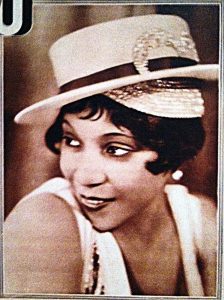
Episode 436. Adelaide Hall, Sophisticated Lady


Adelaide Hall (1901 – 1993), entertainer extraordinaire, really had it all: voice, talent, beauty, dancing chops, charisma, joie de vivre and sophistication. She was the first Black performer to attain international stardom, even before Joséphine Baker, with whom she shared a number of similarities (though Hall probably had the superior voice). She was the first singer to scat on record; she helped popularize both the Charleston and the Black Bottom and was considered the epitome of the Flapper; she introduced the world to a number of now-standard songs from the Great American Songbook; she appeared on a rare 1935 Vitaphone short that featured all Black performers; she and her husband owned and ran various night clubs in three different countries, as well as headlining at the legendary Cotton Club; and she headlined the sensational revue Blackbirds of 1928 and several other ground-breaking shows in the 1920s and 1930s. I got to know her work many years back when I happened to find a late-career LP of hers in the basement of an apartment building I was living in. I have been a fan ever since. The number of great musicians with whom she rubbed shoulders is almost mind-boggling (Duke Ellington, Fats Waller, Louis Armstrong, Fela Sowande, Joe Turner, and Art Tatum, for starters), and she continued to perform with gusto and sophistication into her late eighties, occasionally returning to her native US from London, where she settled in 1938 and lived until her death. Her range of influence is truly far-flung and her many recordings, made between 1927 and 1989, a generous sampling of which are offered on this episode, continue to bring consistent delight and surprise.

Countermelody is the podcast devoted to the glory and the power of the human voice raised in song. Singer and vocal aficionado Daniel Gundlach explores great singers of the past and present focusing in particular on those who are less well-remembered today than they should be. Daniel’s lifetime in music as a professional countertenor, pianist, vocal coach, voice teacher, and author yields an exciting array of anecdotes, impressions, and “inside stories.” At Countermelody’s core is the celebration of great singers of all stripes, their instruments, and the connection they make to the words they sing. By clicking on the following link (https://linktr.ee/CountermelodyPodcast) you can find the dedicated Countermelody website which contains additional content including artist photos and episode setlists. The link will also take you to Countermelody’s Patreon page, where you can pledge your monthly or yearly support at whatever level you can afford.
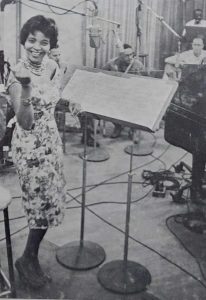
Episode 225. Joya Sherrill


This week’s episode is the first in what I hope will be a series featuring vocalists who performed with Duke Ellington, Today’s artist is the playful and sophisticated Joya Sherrill (20 August 1924 – 28 June 2010) who, by a series of happy “accidents,” became one of the best-remembered and most enduring of Ellington’s songsters while still a teenager. For she was not only a musically- and vocally-gifted singer, she was also a lyricist and composer. She herself composed the lyrics to the Billy Strayhorn classic “Take the ‘A’ Train,” as well as another Ellington standard, “Kissing Bug,” she also was the first singer to record “I’m Beginning to See the Light” and numerous other Ellington and Strayhorn standards. Though she left the Ellington Orchestra before 1950, she continued to appear with them in various projects, including his 1957 television extravaganza A Drum Is a Woman (alongside soprano Margaret Tynes), and My People, his 1963 extravaganza commemorating the centenary of the Emancipation Proclamation. She also performed with the Benny Goodman Orchestra on their 1962 tour of Russia, and was the first African American host of a children’s television program, Time for Joya (later renamed Joya’s Fun School) which began in 1970 and ran in reruns until 1982 on local New York television. In this endeavor she was assisted by another powerhouse Black musician, Luther Henderson, who also arranged and conducted her altogether individual 1959 studio album, Sugar and Spice, which put a sophisticated spin on old Mother Goose rhymes. As late as 1994 she continued to perform and record the music of Duke Ellington and others. Here is an artist whose combination of élan and exuberance is well worth rediscovering and celebrating.

Countermelody is a podcast devoted to the glory and the power of the human voice raised in song. Singer and vocal aficionado Daniel Gundlach explores great singers of the past and present focusing in particular on those who are less well-remembered today than they should be. Daniel’s lifetime in music as a professional countertenor, pianist, vocal coach, voice teacher, and journalist yields an exciting array of anecdotes, impressions, and “inside stories.” At Countermelody’s core is the celebration of great singers of all stripes, their instruments, and the connection they make to the words they sing. By clicking on the following link (https://linktr.ee/CountermelodyPodcast) you can find the dedicated Countermelody website which contains additional content including artist photos and episode setlists. The link will also take you to Countermelody’s Patreon page, where you can pledge your monthly support at whatever level you can afford. Bonus episodes available exclusively to Patreon supporters are currently available and further bonus content including interviews and livestreams is planned for the upcoming season.