Podcast: Play in new window | Download (Duration: 1:23:21 — 114.5MB) | Embed
Subscribe: Spotify | TuneIn | RSS | More
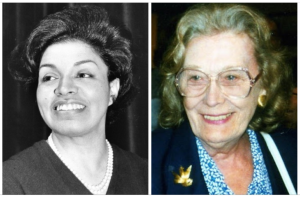
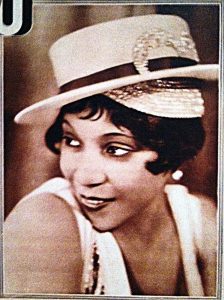
Today’s Pride episode foregrounds trans pioneer Angela Morley (10 March 1924 – 14 January 2009), who achieved great fame in her native England as a composer, arranger and conductor of popular music, becoming the music director for the British division of Philips records in 1953. She transitioned in 1970 and went public with her new name in 1972. She subsequently moved with her second wife Christine to the United States, where she was deeply involved in creating and arranging music for some of the most highly acclaimed movies and television shows of that era. She was twice nominated for an Oscar (the first out trans person to be so acclaimed) and won three Emmy Awards. In her association with Philips, she was the arranger and conductor for all the pop records made by African American icon Muriel Smith (23 February 1923 – 13 September 1985), probably best known for creating the title role in Oscar Hammerstein’s musical Carmen Jones. Smith moved to the UK in the early 1950s and achieved enormous acclaim and recognition for her stage portrayals in the West End of the British premieres of South Pacific and The King and I before returning to the United States in the early 1960s. These recordings, made between 1953 and 1955, are noteworthy both for Smith’s unique way of connecting with her musical material as well as for Morley’s lush and varied musical arrangement. When I first discovered Muriel Smith during the first year of Countermelody, I made it a goal to collect all her elusive yet remarkable Philips recordings, promising to celebrate that accomplishment with my listeners once I finally attained it. Just last week, I finally secured my last Morley/Smith 78. So here, finally, is that very special episode, replete with Smith’s intensely personal song stylings backed by the evocative arrangements of Angela Morley (for once identified in these recordings under her post-transition name).
Countermelody is the podcast devoted to the glory and the power of the human voice raised in song. Singer and vocal aficionado Daniel Gundlach explores great singers of the past and present focusing in particular on those who are less well-remembered today than they should be. Daniel’s lifetime in music as a professional countertenor, pianist, vocal coach, voice teacher, and author yields an exciting array of anecdotes, impressions, and “inside stories.” At Countermelody’s core is the celebration of great singers of all stripes, their instruments, and the connection they make to the words they sing. By clicking on the following link (https://linktr.ee/CountermelodyPodcast) you can find the dedicated Countermelody website which contains additional content including artist photos and episode setlists. The link will also take you to Countermelody’s Patreon page, where you can pledge your monthly or yearly support at whatever level you can afford.