Tag Archives: Paul Bowles

Episode 458. From Ear to Ear: A Conversation with Steven Blier


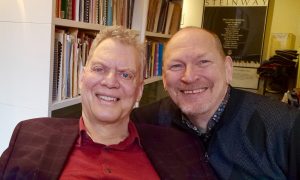
Today a new segment of Countermelody Conversations that has been months in the offing! One of the ineffable delights of hosting Countermelody over the years is the connection it has brought me with my listeners, fans, and subjects, including some extraordinary (and sometimes famous) musicians and people. One of the podcast’s most devoted fans is a man that I have held in adulation for years: pianist and educator Steven Blier, co-founder of the New York Festival of Song, now concluding its 38th season. Powered by Blier’s vision, musical insight, and an intrepid sense of stretching boundaries, NYFOS has revolutionized the genre of the song recital. Last November, Steven’s extraordinary memoir, From Ear to Ear: A Pianist’s Love Affair with Song, was published to great acclaim by W.W. Norton. A few years ago I, as the host of Countermelody, received a fan letter from this man whom I have admired for decades. Since then, I pay him a visit whenever I return to New York and have also taken in every NYFOS concert I possibly can. This past February, almost exactly two months ago, in the depths of New York’s ungodly deep freeze and the week before NYFOS’s powerful concert entitled “Fugitives,” I paid a visit to Steve at the Upper West Side apartment he shares with his husband Jim, and we resumed our ongoing conversation about music and song. And this time I brought my mic along! Our widen-ranging and in-depth conversation covers the gamut from many topics and personalities discussed in the book, punctuated throughout by fascinating musical examples, including by frequent NYFOS collaborators Kate Lindsey, Theo Hoffman, Cyndia Sieden, William Sharp, and Julia Bullock, with special focus on the late Lorraine Hunt Lieberson. As a lover of great singers of the past, I am also deeply moved and amused by our discussion of Steve’s encounters with Valerie Masterson, Martha Schlamme, Patricia Brooks, and others. I am naming this week “Steven Blier Week” at Countermelody, for on Friday I shall bring you “The Art of Steven Blier,” an additional episode featuring nearly forty years of recorded performances of Steven Blier, both live and in the studio.

Countermelody is the podcast devoted to the glory and the power of the human voice raised in song. Singer and vocal aficionado Daniel Gundlach explores great singers of the past and present focusing in particular on those who are less well-remembered today than they should be. Daniel’s lifetime in music as a professional countertenor, pianist, vocal coach, voice teacher, and author yields an exciting array of anecdotes, impressions, and “inside stories.” At Countermelody’s core is the celebration of great singers of all stripes, their instruments, and the connection they make to the words they sing. By clicking on the following link (https://linktr.ee/CountermelodyPodcast) you can find the dedicated Countermelody website which contains additional content including artist photos and episode setlists. The link will also take you to Countermelody’s Patreon page, where you can pledge your monthly or yearly support at whatever level you can afford.
Episode 366. Donald Gramm Revisited (Pride 2025)


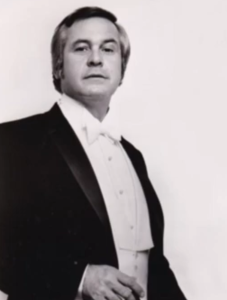
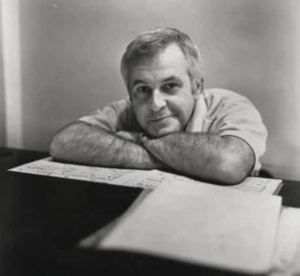
I’m going all out (literally) for this year’s Pride celebrations, especially because the haters are out there in such force. Today I pay tribute to my fellow Milwaukeean, the marvelous bass-baritone Donald Gramm (1927-1983), one of the central house singers at both the Metropolitan Opera and New York City Opera from the 1960s through his premature death at the age of 56. Gifted with an intrinsically beautiful voice, an impeccable technique and an expansive range, he also was a crackerjack musician whose repertoire easily encompassed musical styles from florid Baroque music through the thorniest contemporary idioms. He is probably best celebrated these days for his commitment to American art song. This episode focuses on both his intrepid and thoughtful programming of such songs, as well as a cross-section of his achievements on the operatic stage. Though Gramm may not have been “out” by today’s standards, he lived his life unapologetically and is still remembered today for his exacting yet bountiful musicianship and voice. It’s a treat to revisit his legacy today.

Countermelody is a podcast devoted to the glory and the power of the human voice raised in song. Singer and vocal aficionado Daniel Gundlach explores great singers of the past and present focusing in particular on those who are less well-remembered today than they should be. Daniel’s lifetime in music as a professional countertenor, pianist, vocal coach, voice teacher, and journalist yields an exciting array of anecdotes, impressions, and “inside stories.” At Countermelody’s core is the celebration of great singers of all stripes, their instruments, and the connection they make to the words they sing. By clicking on the following link (https://linktr.ee/CountermelodyPodcast) you can find the dedicated Countermelody website which contains additional content including artist photos and episode setlists. The link will also take you to Countermelody’s Patreon page, where you can pledge your monthly or yearly support at whatever level you can afford.


Episode 160. Donald Gramm


Dear ones, I present to you today the extraordinarily versatile bass-baritone and my fellow native Milwaukeean Donald Gramm (1927-1983), one of the central house singers at both the Metropolitan Opera and New York City Opera from the 1960s through his premature death at the age of 56. Gifted with an intrinsically beautiful voice, an impeccable technique and an expansive range, he also was a crackerjack musician whose repertoire easily encompassed musical styles from florid Baroque music through the thorniest contemporary idioms. He is probably best celebrated these days for his commitment to American art, and this episode features him singing songs by Ned Rorem, John Duke, Richard Cummings, Douglas Moore, and Paul Bowles, with a particular emphasis on texts by Walt Whitman. What is perhaps less well-remembered today is how versatile an opera singer he was, singing roles from Osmin to Scarpia, with a strong emphasis on both bel canto and buffo roles by Rossini and Donizetti. The episode also explores his collaborations with Igor Stravinsky, Glenn Gould, and, perhaps most significantly, Sarah Caldwell, another important musical figure from that era who is strongly deserving of reappraisal.

Countermelody is a podcast devoted to the glory and the power of the human voice raised in song. Singer and vocal aficionado Daniel Gundlach explores great singers of the past and present focusing in particular on those who are less well-remembered today than they should be. Daniel’s lifetime in music as a professional countertenor, pianist, vocal coach, voice teacher, and journalist yields an exciting array of anecdotes, impressions, and “inside stories.” At Countermelody’s core is the celebration of great singers of all stripes, their instruments, and the connection they make to the words they sing. By clicking on the following link (https://linktr.ee/CountermelodyPodcast) you can find the dedicated Countermelody website which contains additional content including artist photos and episode setlists. The link will also take you to Countermelody’s Patreon page, where you can pledge your monthly support at whatever level you can afford. Bonus episodes available exclusively to Patreon supporters are currently available and further bonus content including interviews and livestreams is planned for the upcoming season.


Episode 22. Gloria Davy (Black History Month III)


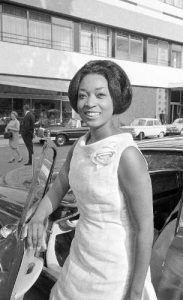
Today we examine the fascinating and somewhat frustrating career of Gloria Davy (1931-2012). Yet another African American singer who found greater opportunity abroad than in the United States, Davy has the distinction of being the first Black singer to perform the title role of Verdi’s Aida at the Metropolitan Opera, which role served as her debut in 1958. Another early career success came when she replaced Leontyne Price as Bess in an international tour of Porgy and Bess. Her earliest recordings, both live and studio, reveal a voice of uncommon beauty with an interpretive sensitivity to match. A superb musician, Davy also sang contemporary music throughout her career, including important premieres by Hans Werner Henze and Karlheinz Stockhausen. One must ask the question, however, if her voice would have been better served had she not turned to sung Bess and Aida so early in her career, but had instead had access to roles such as Anna Bolena, which she sang brilliantly at Town Hall in New York in 1957. The episode includes a rare airing of Davy’s 1956 album of Spirituals, in arrangements by the lesser-known African American composer Julia Perry and excerpts from her recordings of Shulamit Ran’s O the Chimneys, on poems by Nelly Sachs, and the 1972 revision of Stockhausen’s momentous Momente.

Countermelody is a new podcast devoted to the glories of the human voice raised in song. Singer and vocal aficionado Daniel Gundlach explores great classical and opera singers of the past and present with the help of guests from the classical music field: singers, conductors, composers, coaches, agents, and voice teachers. Daniel’s lifetime in music as a professional countertenor, pianist, vocal coach, voice teacher, and journalist yields an exciting array of anecdotes, impressions, and “inside stories.” At Countermelody’s core is the interaction between singers of all stripes, their instruments, and the connection they make to the words they sing. Please also visit the Countermelody website for updates, additional content, and to pledge your support. www.countermelodypodcast.com