Monthly Archives: June 2026

Episode 474. Brigitte Fassbaender sings Brahms


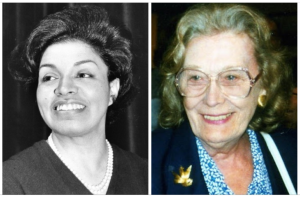
Pride 2026 at Countermelody continues with an episode devoted to the towering German mezzo-soprano Brigitte Fassbaender, not only one of the great opera stars of the late twentieth century (her Octavian, for instance, was, is, and remains, hors concours), but also one of the greatest Lieder singers of all time. Today I choose to focus on her performance of the songs of Johannes Brahms, whose music is ideally suited to her dark-timbred, urgently projected voice and artistry. She’s heard in these selections with four of the primary pianists with whom she collaborated and recorded in the songs of Brahms: Erik Werba, Irwin Gage, Karl Engel, and the great Georgian pianist Elisabeth Leonskaja, with whom she made her final recordings and performances in the early 1990s, just before her sudden departure from the opera and concert stage. I read a portion of her memoirs (translated into English) in which she candidly discusses the reasons for that choice. Fassbaender has always lived her life openly and matter-of-factly, never foregrounding her sexuality while also never denying or hiding it. For her, music and the theater have always been the focal points in her public life, and her unique artistry has placed her at the forefront of the great musical artists of our time. There are few vocal artists I esteem as highly.

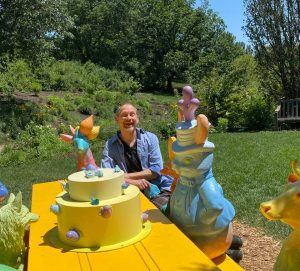
Countermelody is the podcast devoted to the glory and the power of the human voice raised in song. Singer and vocal aficionado Daniel Gundlach explores great singers of the past and present focusing in particular on those who are less well-remembered today than they should be. Daniel’s lifetime in music as a professional countertenor, pianist, vocal coach, voice teacher, and author yields an exciting array of anecdotes, impressions, and “inside stories.” At Countermelody’s core is the celebration of great singers of all stripes, their instruments, and the connection they make to the words they sing. By clicking on the following link (https://linktr.ee/CountermelodyPodcast) you can find the dedicated Countermelody website which contains additional content including artist photos and episode setlists. The link will also take you to Countermelody’s Patreon page, where you can pledge your monthly or yearly support at whatever level you can afford.


Episode 473. Renata Scotto and the Opera Queens


We are quickly approaching the third anniversary of the death of Renata Scotto, and that sad commemoration, combined with my desire to produce an episode celebrating Opera Queens, prompted this episode, which features a rare live LP that I once owned a few decades ago and recently returned to my collection. It features live performances of “our diva” from the stage of Carnegie Hall on two different occasions in the mid- to late-1970s: the first, a gala concert on September 12, 1975 with Eve Queler leading the Opera Orchestra of New York on which Scotto performed Rossini (the bravura rondo from Armida) and Donizetti (the mad scene from Anna Bolena). She also sang “Tu che invoco” from Spontini’s La Vestale on that concert, and though it was not included on that record, I have unearthed a live recording of that exact performance, which is also included on the episode. The second concert featured on that LP took place on October 31, 1979 under the baton of Lorin Maazel leading the Cleveland Orchestra, and includes a rare performance of Scotto singing from Cherubini’s Medea as well as the mad scene from Bellini’s Il pirata. In all of these, Scotto is in sterling vocal form, which allows her to fully explore the expressive bel canto possibilities of this music. Since Scotto was also widely accused of being anti-Callas, I also dispute that view with some comments that Scotto made in an interview about Callas’s importance as the high priestess of bel canto. I also intone a few more nasty reviews and comments from those who do not hold Scotto in the same high esteem that I (we!) do. For I, too, am one of those opera queens that we are celebrating today. I just happen to have better taste than those that are dissing our diva!

Countermelody is the podcast devoted to the glory and the power of the human voice raised in song. Singer and vocal aficionado Daniel Gundlach explores great singers of the past and present focusing in particular on those who are less well-remembered today than they should be. Daniel’s lifetime in music as a professional countertenor, pianist, vocal coach, voice teacher, and author yields an exciting array of anecdotes, impressions, and “inside stories.” At Countermelody’s core is the celebration of great singers of all stripes, their instruments, and the connection they make to the words they sing. By clicking on the following link (https://linktr.ee/CountermelodyPodcast) you can find the dedicated Countermelody website which contains additional content including artist photos and episode setlists. The link will also take you to Countermelody’s Patreon page, where you can pledge your monthly or yearly support at whatever level you can afford.



Episode 472. Ben Bagley Revisited: Lies Come True


A year ago I published an episode entitled “Gay Eccentrics,” which featured a number of the most delightfully peculiar personalities sprinkled across queer music history. The third of those characters, theatrical and record producer Ben Bagley, reappears on today’s episode. This time I feature selections from his record albums featuring two more gay eccenctrics, Lorenz Hart and Cole Porter! Bagley’s recordings uncovered and/or resuscitated trunk songs and other material by some of the most important Broadway composers and lyricists sung by a fascinating hodge-podge of some of the most prominent singers and actors of the era. In this episode alone we hear Tony Perkins, Gloria Swanson, Blossom Dearie, Charlotte Rae, Bobby Short, Sandy Stewart, Carmen Alvarez, Dorothy Loudon, Karen Morrow, David Allyn, Dolores Gray, Johnny Desmond, Ann Hampton Calloway, and Danny Meehan. These recordings were inevitably against all odds, seemingly tossed together, and on a shoestring budget, but the results were almost always surprisingly polished (and if not polished, at least fascinating!) One of the most notorious aspects of these releases was Bagley’s outrageously campy (and sometimes simply outrageous) liner notes, from which I quote extensively. I also read a 1974 profile of Bagley in which he espouses his ongoing credo of stretching the truth in order to make seemingly impossible dreams come true.

Countermelody is the podcast devoted to the glory and the power of the human voice raised in song. Singer and vocal aficionado Daniel Gundlach explores great singers of the past and present focusing in particular on those who are less well-remembered today than they should be. Daniel’s lifetime in music as a professional countertenor, pianist, vocal coach, voice teacher, and author yields an exciting array of anecdotes, impressions, and “inside stories.” At Countermelody’s core is the celebration of great singers of all stripes, their instruments, and the connection they make to the words they sing. By clicking on the following link (https://linktr.ee/CountermelodyPodcast) you can find the dedicated Countermelody website which contains additional content including artist photos and episode setlists. The link will also take you to Countermelody’s Patreon page, where you can pledge your monthly or yearly support at whatever level you can afford.

Episode 471. Joan Caplan In Recital


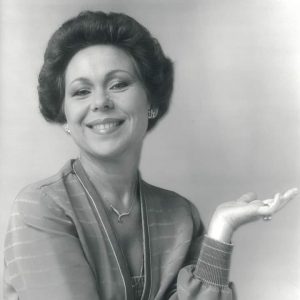
Today we visit the rare recorded output my beloved teacher, Joan Caplan (15 October 1932 – 19 April 2025), live performances made during her active years as a song recitalist and as an opera and oratorio singer. We hear her complete performances of Thirteen Ways of Looking at a Blackbird by Peggy Glanville-Hicks, the Cinco canciones negras by Xavier Montsalvatge, and the Zigeunerlieder of Johannes Brahms, as well as songs by Gustav Mahler from the German folk poetry collection Des Knaben Wunderhorn and arias by Handel, Vivaldi, Hasse, and Donizetti. This episode constitutes the continuation of a promise that I made to Joan before she died that I would do my utmost to ensure that she never be forgotten for the great teacher and singer that she was. The episode also includes a memorial tribute full of insights and anecdotes that I recorded in her memory last year.

Countermelody is the podcast devoted to the glory and the power of the human voice raised in song. Singer and vocal aficionado Daniel Gundlach explores great singers of the past and present focusing in particular on those who are less well-remembered today than they should be. Daniel’s lifetime in music as a professional countertenor, pianist, vocal coach, voice teacher, and author yields an exciting array of anecdotes, impressions, and “inside stories.” At Countermelody’s core is the celebration of great singers of all stripes, their instruments, and the connection they make to the words they sing. By clicking on the following link (https://linktr.ee/CountermelodyPodcast) you can find the dedicated Countermelody website which contains additional content including artist photos and episode setlists. The link will also take you to Countermelody’s Patreon page, where you can pledge your monthly or yearly support at whatever level you can afford.

Episode 470. Peter Pears Plays Around


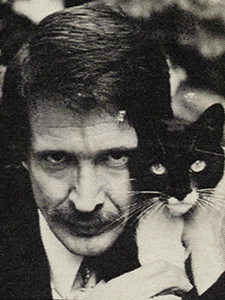
A year ago, I published as my final Pride 2025 episode, Pears Sings Not-Britten, which explored the voice and artistry of British tenor Peter Pears in repertoire other than that written for him by his partner Benjamin Britten. Today’s episode, a refurbished bonus episode originally published nearly a year ago has a new, catchy title that carries that theme even further, in that Britten is entirely absent, either as composer or as Pears’s usual accompanist. Today, I feature collections of songs by five different composers, Ludwig Van Beethoven, Claude Debussy, Robert Schumann, Alan Bush, and Michael Tippett, all featuring Pears accompanied by pianists other than Britten, including celebrated solo virtuosi Noel Mewton-Wood, Murray Perahia and Sviatoslav Richter; with composer Alan Bush himself accompanying Pears himself in the thornily difficult piano part of his self-described cantata Voices of the Prophets. Of today’s setlist, all but the Bush are either live or radio recordings which span three separate decades of Pears’s career, and show an artist who, whether in his vocal prime or in the inevitable decline of his later years (and even after Britten’s death), was fixated on expressing the finest shades of textual nuance and vocal color.

Countermelody is the podcast devoted to the glory and the power of the human voice raised in song. Singer and vocal aficionado Daniel Gundlach explores great singers of the past and present focusing in particular on those who are less well-remembered today than they should be. Daniel’s lifetime in music as a professional countertenor, pianist, vocal coach, voice teacher, and author yields an exciting array of anecdotes, impressions, and “inside stories.” At Countermelody’s core is the celebration of great singers of all stripes, their instruments, and the connection they make to the words they sing. By clicking on the following link (https://linktr.ee/CountermelodyPodcast) you can find the dedicated Countermelody website which contains additional content including artist photos and episode setlists. The link will also take you to Countermelody’s Patreon page, where you can pledge your monthly or yearly support at whatever level you can afford.

Episode 469. Muriel and Angela: Together Again for the First Time


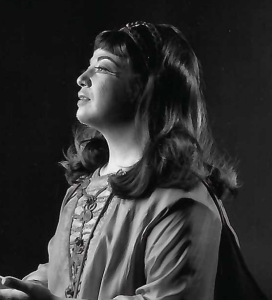
Today’s Pride episode foregrounds trans pioneer Angela Morley (10 March 1924 – 14 January 2009), who achieved great fame in her native England as a composer, arranger and conductor of popular music, becoming the music director for the British division of Philips records in 1953. She transitioned in 1970 and went public with her new name in 1972. She subsequently moved with her second wife Christine to the United States, where she was deeply involved in creating and arranging music for some of the most highly acclaimed movies and television shows of that era. She was twice nominated for an Oscar (the first out trans person to be so acclaimed) and won three Emmy Awards. In her association with Philips, she was the arranger and conductor for all the pop records made by African American icon Muriel Smith (23 February 1923 – 13 September 1985), probably best known for creating the title role in Oscar Hammerstein’s musical Carmen Jones. Smith moved to the UK in the early 1950s and achieved enormous acclaim and recognition for her stage portrayals in the West End of the British premieres of South Pacific and The King and I before returning to the United States in the early 1960s. These recordings, made between 1953 and 1955, are noteworthy both for Smith’s unique way of connecting with her musical material as well as for Morley’s lush and varied musical arrangement. When I first discovered Muriel Smith during the first year of Countermelody, I made it a goal to collect all her elusive yet remarkable Philips recordings, promising to celebrate that accomplishment with my listeners once I finally attained it. Just last week, I finally secured my last Morley/Smith 78. So here, finally, is that very special episode, replete with Smith’s intensely personal song stylings backed by the evocative arrangements of Angela Morley (for once identified in these recordings under her post-transition name).

Countermelody is the podcast devoted to the glory and the power of the human voice raised in song. Singer and vocal aficionado Daniel Gundlach explores great singers of the past and present focusing in particular on those who are less well-remembered today than they should be. Daniel’s lifetime in music as a professional countertenor, pianist, vocal coach, voice teacher, and author yields an exciting array of anecdotes, impressions, and “inside stories.” At Countermelody’s core is the celebration of great singers of all stripes, their instruments, and the connection they make to the words they sing. By clicking on the following link (https://linktr.ee/CountermelodyPodcast) you can find the dedicated Countermelody website which contains additional content including artist photos and episode setlists. The link will also take you to Countermelody’s Patreon page, where you can pledge your monthly or yearly support at whatever level you can afford.


Episode 468. Deutsche Orchesterlieder: Beyond Mahler and Strauss


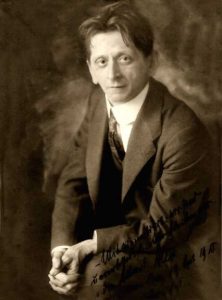
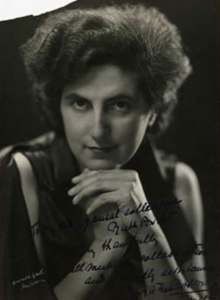
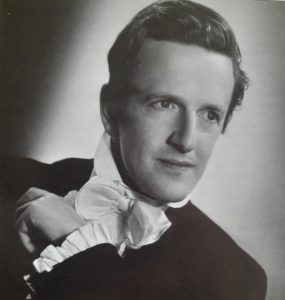
Today’s lengthy episode (I probably should’ve divided it in half!) is another devoted to orchestral song, in this case Deutsche Orchesterlieder. But, in a twist, you will not be hearing any music by either Mahler or Strauss today. (Their orchestral songs have already been amply represented on Countermelody. No, today I am featuring songs ranging from the late nineteenth century through the mid-twentieth century. Some of the composers presented – Alban Berg, Max Reger, Hugo Wolf, Arnold Schoenberg – will be familiar to listeners; others – Alexander Zemlinsky (pictured), Hans Pfitzner, Paul Hindemith, Hans Werner Henze, Franz Schreker – perhaps more as names familiar for musical historical reasons than for their actual compositions. Still others – Ernst Toch, Wolfgang Fortner, Joseph Marx – may be new discoveries altogether. What links them is that they are all fascinating composers whose works run the gamut from lush post-romanticism to exotic orientalism to Neue Sachlichkeit clarity. Texts include the great German lyric poets; anonymous Italian folk poetry; German translations of American poets such as Walt Whitman and major figures of the Harlem Renaissance; and translations of ancient Chinese poetry and the verse of Rabindranath Tagore. Similarly varied are the singers (Elisabeth Söderström, Friedrich Schorr, Edith Mathis, Willard White, Elly Ameling, Irmgard Seefried, Roberta Alexander, Barry McDaniel, Christine Brewer, Christa Ludwig, Helen Donath) and conductors (Michael Tilson Thomas, Riccardo Chailly, Rafael Kubelik, Sergiu Celibidache, Erich Leinsdorf, Carl Schuricht, Hermann Scherchen), heard. Settle in for a ride across a varied, surprising, and always engaging musical landscape.

Countermelody is the podcast devoted to the glory and the power of the human voice raised in song. Singer and vocal aficionado Daniel Gundlach explores great singers of the past and present focusing in particular on those who are less well-remembered today than they should be. Daniel’s lifetime in music as a professional countertenor, pianist, vocal coach, voice teacher, and author yields an exciting array of anecdotes, impressions, and “inside stories.” At Countermelody’s core is the celebration of great singers of all stripes, their instruments, and the connection they make to the words they sing. By clicking on the following link (https://linktr.ee/CountermelodyPodcast) you can find the dedicated Countermelody website which contains additional content including artist photos and episode setlists. The link will also take you to Countermelody’s Patreon page, where you can pledge your monthly or yearly support at whatever level you can afford.