Tag Archives: Der Zarewitsch

Episode 426. Teresa Stratas [Season Seven Premiere]


I wanted to start off the year (and the new season of the podcast) with something momentous, and who better to take us there than one of the great operatic artists of the twentieth century: Canadian soprano Teresa Stratas. I have not yet done a full episode on this artist, though she provided me with what was probably my greatest night in the opera house (I get into that in the episode, as well as featuring a rare excerpt of her in that shattering performance). As always with my podcast, I like to provide unexpected glimpses of such a great singer, alongside many of her most legendary moments. So not only do we hear Stratas’ legendary interpretations of her favorite roles (Mimì, Mélisande, Lulu, Violetta, and Salome [the latter a role she never portrayed onstage]), we also hear her in Mozart, her favorite composer, as an operetta singer, as an interpreter of Lieder, in her single Broadway role in the short-lived Rags, and in another of her creations, the title role in Australian composer Peggy Glanville-Hicks’ Nausicaa, as well as two late career Met roles, Liù and the Komponist, roles she had sung there at the beginning of her career, more than thirty years earlier. Along the way, we hear her with artists who have already been featured in previous seasons (Gabriel Bacquier, Florence Quivar and Fritz Wunderlich), but also singers who will each be featured in the upcoming series of the podcast, including Tom Krause, Wiesław Ochman, Bernd Weikl, Elizabeth Harwood, and Vasile Moldoveanu. Also much discussion also about what makes Stratas unique as an interpreter, and why she deserves to be ranked among the very greatest. Welcome to Season Seven!

Countermelody is the podcast devoted to the glory and the power of the human voice raised in song. Singer and vocal aficionado Daniel Gundlach explores great singers of the past and present focusing in particular on those who are less well-remembered today than they should be. Daniel’s lifetime in music as a professional countertenor, pianist, vocal coach, voice teacher, and author yields an exciting array of anecdotes, impressions, and “inside stories.” At Countermelody’s core is the celebration of great singers of all stripes, their instruments, and the connection they make to the words they sing. By clicking on the following link (https://linktr.ee/CountermelodyPodcast) you can find the dedicated Countermelody website which contains additional content including artist photos and episode setlists. The link will also take you to Countermelody’s Patreon page, where you can pledge your monthly or yearly support at whatever level you can afford.


Episode 419. Wunderlich in Duet


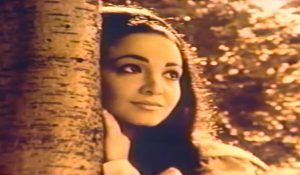
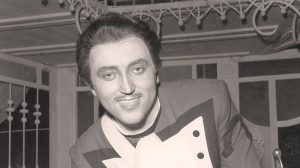
Anytime I do an episode on Fritz Wunderlich, the sun breaks through the clouds, emotionally speaking. Possessor of a bright-timbred voice of such exquisite beauty anchored by a profoundly satisfying musical sensibility, he and his legacy inspire rather than sadden me. Today I’ve chosen a duet program, because it allows me to showcase Fritz’s effortless stylistic flexibility, while at the same time highlighting a rainbow of singing partners, some of whom are old favorites, and others of whom might not yet be well-known to my listeners. Today’s treasure-trove of singers includes sopranos Maria Stader, Lucia Popp, Teresa Stratas, Erika Köth, Edith Mathis, Stefania Woytowicz, Pilar Lorengar, Melitta Muszely, Trude Eipperle, Hilde Güden, Anneliese Rothenberger, and Ruth-Margret Pütz; mezzo-soprano Christa Ludwig; and baritones Hermann Prey and Marcel Cordes, among others. Wunderlich and his co-stars sing repertoire ranging from the early Baroque through Janáček, including a particularly generous helping of Italian opera (albeit sung mostly in German), German Singspiel and Viennese operetta. It’s a long episode, so don’t hesitate to divide the episode up into bite-sized segments. No matter how you slice it up, I forecast a blissful response to these clarion tones!

Countermelody is a podcast devoted to the glory and the power of the human voice raised in song. Singer and vocal aficionado Daniel Gundlach explores great singers of the past and present focusing in particular on those who are less well-remembered today than they should be. Daniel’s lifetime in music as a professional countertenor, pianist, vocal coach, voice teacher, and author yields an exciting array of anecdotes, impressions, and “inside stories.” At Countermelody’s core is the celebration of great singers of all stripes, their instruments, and the connection they make to the words they sing. By clicking on the following link (https://linktr.ee/CountermelodyPodcast) you can find the dedicated Countermelody website which contains additional content including artist photos and episode setlists. The link will also take you to Countermelody’s Patreon page, where you can pledge your monthly or yearly support at whatever level you can afford.



Episode 320. Hadley in Wien


I can think of no more appropriate way to end this difficult year than with another episode lauding my late friend, the sublime American lyric tenor Jerry Hadley. I am of the firm belief that Jerry was one of the finest singers this country has ever produced. Everyone has their favorite among his performances, which display an eclecticism rare among opera singers, but I believe that his artistry found its fullest and truest expression in his performances of Viennese operetta. His bright, sunny vocal timbre, his capacity for vocal shading and dynamics, his sense of both humor and pathos, his ringing high notes, as well as of precision and acuity of his German diction make him an ideal interpreter of this music. The majority of the music heard on this episode comes from two albums of operetta arias that Jerry recorded in 1995 under the baton of Richard Bonynge. This is supplemented by two duets with Australian soprano Deborah Riedel from a series of English-language versions of Lehár operettas also conducted by Bonynge, as well as various live performances of Jerry in the music of Johann Strauss II and Erich Korngold. While Lehár is the most prominently featured composer, we also heard excerpts from work by Emmerich Kálmán, Carl Millöcker, Ralph Benatzky, Leo Fall, and that king of operetta tenors himself, Richard Tauber, who was also quite a capable composer. The episode concludes with reminiscences of my close friendship with Jerry, crowned by a magisterial live performance of “Dein ist mein ganzes Herz.”

Countermelody is a podcast devoted to the glory and the power of the human voice raised in song. Singer and vocal aficionado Daniel Gundlach explores great singers of the past and present focusing in particular on those who are less well-remembered today than they should be. Daniel’s lifetime in music as a professional countertenor, pianist, vocal coach, voice teacher, and journalist yields an exciting array of anecdotes, impressions, and “inside stories.” At Countermelody’s core is the celebration of great singers of all stripes, their instruments, and the connection they make to the words they sing. By clicking on the following link (https://linktr.ee/CountermelodyPodcast) you can find the dedicated Countermelody website which contains additional content including artist photos and episode setlists. The link will also take you to Countermelody’s Patreon page, where you can pledge your monthly or yearly support at whatever level you can afford.