Tag Archives: Frank Brieff

Episode 477. American Orchestral Song [Queer Edition]


I know, I know, I said that we were done with Pride for 2026. But honestly, given the tenor of the times (no pun intended), we have to continue foregrounding Pride every day we tread this increasingly precipitous path that is earth. And that is the United States of America. For as I write this. Even as our nation squeezes out what should be a momentous birthday celebration, our very queer existence is threatened. And one way of resisting the animosity and cruelty is to celebrate our history and our solidarity and our resilience and our creativity and our ingenuity and originality. All of these traits come to the fore in this episode: American Orchestral Song, Queer Edition. All of the composers fall somewhere on the LGBTQIA+ spectrum, as do many of the poets as well as the performers. It’s interesting how many of the performances today center around the US Bicentennial in 1976, a time when spirits were much higher than they are today. Of course the most familiar figures are here: Leonard Bernstein, Samuel Barber, Aaron Copland, Ned Rorem, Virgil Thomson, Gian Carlo Menotti, but also Charles Tomlinson Griffes, John Corigliano, Mark Adamo, and David Del Tredici. Perhaps even more important are figures less renowned or perhaps completely forgotten such as Julia Perry, Robert Helps, John La Montaine, Ben Weber, and the elusive Frank Ahrold, whose compisitions all reveal a bold and individual voice. Remembering these figures keeps them alive and provides us with courage to keep forging on, against the current as need be, yet always toward justice, inclusion, and equity.

Countermelody is the podcast devoted to the glory and the power of the human voice raised in song. Singer and vocal aficionado Daniel Gundlach explores great singers of the past and present focusing in particular on those who are less well-remembered today than they should be. Daniel’s lifetime in music as a professional countertenor, pianist, vocal coach, voice teacher, and author yields an exciting array of anecdotes, impressions, and “inside stories.” At Countermelody’s core is the celebration of great singers of all stripes, their instruments, and the connection they make to the words they sing. By clicking on the following link (https://linktr.ee/CountermelodyPodcast) you can find the dedicated Countermelody website which contains additional content including artist photos and episode setlists. The link will also take you to Countermelody’s Patreon page, where you can pledge your monthly or yearly support at whatever level you can afford.
Episode 205. Eileen Farrell: Bach/Pop


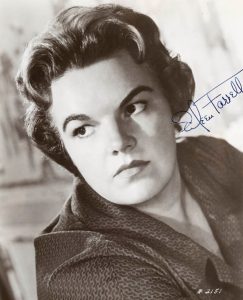
Eileen Farrell (13 February 1920 – 23 March 2002) was one of the finest and most versatile singers that the United States has ever produced. She began her career as a radio singer, the star of her own program, Eileen Farrell Sings, which ran from 1941 to 1945, which offered a wide range of music from the pop songs of the era to opera. In the 1950s and early 1960s Farrell was involved with the legendary Bach Aria Group, originally founded in 1946 by scholar and philanthropist William H. Scheide, which consisted of a quartet of singers (which in Farrell’s time included tenor Jan Peerce, alto Carol Smith, and bass Norman Farrow) and a group of the most gifted instrumental soloists of the era (including oboist Robert Bloom, flautist Julius Baker, and violinist Maurice Wilk). Alongside their pathbreaking performances, they made a series of celebrated recordings for RCA and American Decca, excerpts of which are heard on this episode. Though Farrell had a huge voice, it was well-suited to the music of Bach, which she performed with suppleness, flexibility, poise, and power. Farrell may have been but a reluctant opera star, but her most long-lasting musical love was probably the Great American Songbook. Years beyond her official retirement, indeed well into her 70s, she continued to record both standards and less-familiar material, and her recordings of pop songs from the 1960s through the 1990s – buoyant, playful, perceptive, often heartbreaking and always deeply musical – form a substantial component of her recorded legacy. In this episode I contrast her performances of these two disparate styles of music, recorded over the course of forty years, to shed light on her continuing supremacy among American sopranos.

Countermelody is a podcast devoted to the glory and the power of the human voice raised in song. Singer and vocal aficionado Daniel Gundlach explores great singers of the past and present focusing in particular on those who are less well-remembered today than they should be. Daniel’s lifetime in music as a professional countertenor, pianist, vocal coach, voice teacher, and journalist yields an exciting array of anecdotes, impressions, and “inside stories.” At Countermelody’s core is the celebration of great singers of all stripes, their instruments, and the connection they make to the words they sing. By clicking on the following link (https://linktr.ee/CountermelodyPodcast) you can find the dedicated Countermelody website which contains additional content including artist photos and episode setlists. The link will also take you to Countermelody’s Patreon page, where you can pledge your monthly support at whatever level you can afford. Bonus episodes available exclusively to Patreon supporters are currently available and further bonus content including interviews and livestreams is planned for the upcoming season.