Monthly Archives: August 2026

Episode 487. Jill Gomez In Memoriam


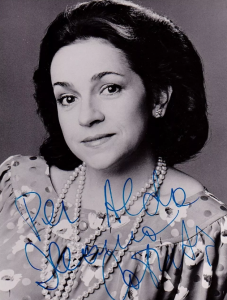
Jill Gomez, the brilliant, intrepid Trinidadian-British soprano, known for the last fifteen years of her life as Jill Carnegy, Countess of Northesk, died on August 11, just a few weeks short of her 84th birthday. She is a singer that I have loved and followed for decades, and one whose recordings I collected assiduously and that I had earmarked for a special celebratory episode, one that, like with Ben Luxon a few years ago, is instead being offered as a posthumous tribute. Not nearly as universally known as her younger colleague Felicity Lott, who died this spring, Gomez was a similarly eclectic, adventurous artist. Her accomplishments covered the gamut from the classiest, most pristine singer of Baroque music, to the most deep-delving recitalist, from the most playful purveyor of crossover material to the creator of roles in challenging contemporary operas including Michael Tippett’s The Knot Garden in 1970 and Thomas Adès’s Powder Her Face 25 years later. She also sang a wide range of operatic parts (primarily in the UK) from Mozart to Massenet. This episode, which includes collaborations with Robert Tear, Pierre Boulez, Franz Grundheber, John Constable, Ria Bollen, Felicity Palmer, and Benjamin Luxon, presents as wide-ranging a portrait in sound as you are ever likely to encounter anywhere, including excerpts from all the works mentioned above, to music by Ravel, Donizetti, Turina, Mahler, Schumann, Rameau, Wolf, Monteverdi, Debussy, Pergolesi, and Britten. The icing on the cake is an intimate and exquisite rendition of Satie’s “Je te veux” that will remain in your mind’s ear long after the episode is over.

Countermelody is the podcast devoted to the glory and the power of the human voice raised in song. Singer and vocal aficionado Daniel Gundlach explores great singers of the past and present focusing in particular on those who are less well-remembered today than they should be. Daniel’s lifetime in music as a professional countertenor, pianist, vocal coach, voice teacher, and author yields an exciting array of anecdotes, impressions, and “inside stories.” At Countermelody’s core is the celebration of great singers of all stripes, their instruments, and the connection they make to the words they sing. By clicking on the following link (https://linktr.ee/CountermelodyPodcast) you can find the dedicated Countermelody website which contains additional content including artist photos and episode setlists. The link will also take you to Countermelody’s Patreon page, where you can pledge your monthly or yearly support at whatever level you can afford.
Episode 486. The Other Maureen Forrester


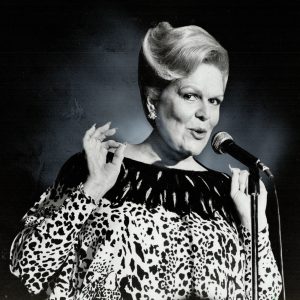
This episode celebrates one of the twentieth century’s great contraltos, Canadian icon, Maureen Forrester, an exceptionally versatile, profoundly communicative artist. This past July 25 would have been her 96th birthday. It would be a nearly insurmountable challenge to present all aspects of her artistry in a single episode, so today I have chosen to bestow upon her a title which might surprise you: I am crowning her Queen of Crossover. Clearly both Eileen and Eleanor might look askance at such a claim, but among Forrester’s fellow Canadians, I don’t think anyone can challenge Queen Maureen’s title. Central to this episode is a delicious 1982 issue on Canadian RCA entitled The Other Me, which features la nostra regina canadese in a delectable assortment of pop favorites, ranging from standards from the Great American Songbook (Berlin, Porter, Gershwin, Arlen, Schmidt and Jones, Loesser). In addition, I’ve included a generous sampling of her 1987 recording with pianist John Arpin entitled From Kern to Sondheim: Great American Theatre Songs, as well as a smattering of the folk song arrangements (mostly of Canadian material arranged by Canadian composers) which formed such a vital part of her programs. Her fellow grande dame of Canadian song, soprano Lois Marshall, even joins her in duet on one of those folk songs. I dedicate today’s episode to the memory of my friend Tom Muraco, who collaborated frequently with Maureen and positively adored her.

Countermelody is the podcast devoted to the glory and the power of the human voice raised in song. Singer and vocal aficionado Daniel Gundlach explores great singers of the past and present focusing in particular on those who are less well-remembered today than they should be. Daniel’s lifetime in music as a professional countertenor, pianist, vocal coach, voice teacher, and author yields an exciting array of anecdotes, impressions, and “inside stories.” At Countermelody’s core is the celebration of great singers of all stripes, their instruments, and the connection they make to the words they sing. By clicking on the following link (https://linktr.ee/CountermelodyPodcast) you can find the dedicated Countermelody website which contains additional content including artist photos and episode setlists. The link will also take you to Countermelody’s Patreon page, where you can pledge your monthly or yearly support at whatever level you can afford.

Episode 485. Anneliese Rothenberger singt Stolz und Lehár


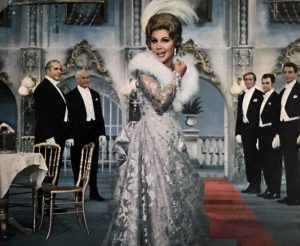
The theme of today’s episode is “escapism,” a valuable and even necessary pursuit in the world in which we find ourselves currently existing. What more glorious escapism could there be then Operettenlieder by composers Robert Stolz and Franz Lehár as performed by beloved German soprano Anneliese Rothenberger (1919 – 2010). She was one of the most prominent and glamorous musical figures in Germany by virtue of her resplendent voice and splendidly vivid performances, as well as her ubiquitous presence on German-language television in the 1970s. For today’s episode I draw primarily on two EMI releases,1969’s Anneliese Rothenberger singt Robert Stolz and 1970’s Anneliese Rothenberger singt Franz Lehár, the latter a compilation released in honor of Lehár’s 100th birthday, all recorded at various points in the 1960s. Along the way, I consider the lives and careers of both composers, and contrast Stolz’s authentic heroism during the Nazi era with Lehár’s sometimes egrerious opportunism. And yet, in keeping with today’s theme of escapism, the music of both of these composers provides us with a temporary respite from today’s cares, especially as performed by the resplendent Rothenberger.

Countermelody is the podcast devoted to the glory and the power of the human voice raised in song. Singer and vocal aficionado Daniel Gundlach explores great singers of the past and present focusing in particular on those who are less well-remembered today than they should be. Daniel’s lifetime in music as a professional countertenor, pianist, vocal coach, voice teacher, and author yields an exciting array of anecdotes, impressions, and “inside stories.” At Countermelody’s core is the celebration of great singers of all stripes, their instruments, and the connection they make to the words they sing. By clicking on the following link (https://linktr.ee/CountermelodyPodcast) you can find the dedicated Countermelody website which contains additional content including artist photos and episode setlists. The link will also take you to Countermelody’s Patreon page, where you can pledge your monthly or yearly support at whatever level you can afford.
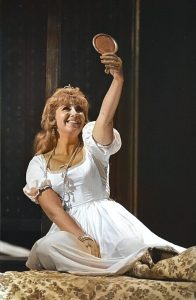

Episode 484. Bubbles on the Nile, Handel Edition


Today’s episode is the second of my so-called “Bubbles on the Nile” series, performances by Beverly Sills (and a host of other divas) in unexpected roles. While the first episode drew on the contents of a 1985 release on the Legendary Recordings label with the same title, today’s episode focuses exclusively on the music of George Frideric Handel with an entirely Gundlach-generated setlist. Sills is featured not as Cleopatra in Giulio Cesare, the role that made her a star, but in two other Handel roles which she only rarely performed: Ginevra in Ariodante, and the title role in Semele. There follow nearly two dozen additional singers singing unexpected Handel roles, beginning with Alma Gluck all the way back in 1916. Other singers include Claudia Muzio, Elisabeth Rethberg, Lotte Lehmann, Florence Quartararo, Teresa Żylis-Gara, Hanne-Lore Kuhse, Christa Ludwig, Ileana Cotrubaș, Christiane Eda-Pierre, Shirley Verrett, Martina Arroyo, Grace Bumbry, Victoria de los Ángeles, and Reri Grist. There is a special section featuring six unexpected performers of the role of Cleopatra in Giulio Cesare: Renata Tebaldi, Leontyne Price, Montserrat Caballé, Renata Scotto, Onelia Fineschi, and Virginia Zeani. Other Handel works represented include Rinaldo, Hercules, Alcina, Atalanta, Amadigi, Judas Maccabaeus, and Radamisto. Hearing these singers take a determinedly “old school” approach to Handel’s music is fascinating, diverting, challenging, sometimes amusing, and always revelatory. And overseeing it all is our beloved Bubbles!

Countermelody is the podcast devoted to the glory and the power of the human voice raised in song. Singer and vocal aficionado Daniel Gundlach explores great singers of the past and present focusing in particular on those who are less well-remembered today than they should be. Daniel’s lifetime in music as a professional countertenor, pianist, vocal coach, voice teacher, and author yields an exciting array of anecdotes, impressions, and “inside stories.” At Countermelody’s core is the celebration of great singers of all stripes, their instruments, and the connection they make to the words they sing. By clicking on the following link (https://linktr.ee/CountermelodyPodcast) you can find the dedicated Countermelody website which contains additional content including artist photos and episode setlists. The link will also take you to Countermelody’s Patreon page, where you can pledge your monthly or yearly support at whatever level you can afford.