Tag Archives: Herman Hupfeld

Episode 442. Henry Wright Revisited


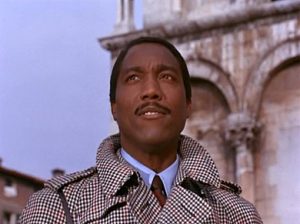
Last week I published an episode about Black Pop Singers who emigrated to Europe in the 1950s and 1960s. Most of these gentlemen settled in the German-speaking countries, where there was a ready market for the “otherness” and exoticism that they embodied. The one outlier on that episode was Henry Wright, born in 1933, who in the late 1950s toured Italy with Lionel Hampton’s band and elected to remain there. With a voice as suave and seductive as any of the great crooners of the 1950s and 1960s, Henry Wright first came to international prominence as the voice on the record to which Sophia Loren performed her legendary striptease in the 1962 film Ieri, oggi, domani [Yesterday, Today and Tomorrow]. He went on to make a great impact on Italian pop music throughout the 1960s. A couple years ago I began collecting the ultra-rare (and costly) records of Henry Wright, which formed the basis of two separate Countermelody episodes. Here is the second of those episodes, first published as a bonus episode nearly three years ago now, which is devoted to Henry Wright’s recordings of pop standards, most of them from the so-called Great American Songbook, but a few of them English-language adaptations of favorite songs originally in Italian. The program begins with one of Henry Wright’s first Italian recordings, which features standards by Duke Ellington and Harold Arlen. The majority of the music on the program, however, is from Henry Wright’s 1967 LP, Prisoner of Amore, in which he is joined by the doodling pianism of Romano Mussolini (youngest son of the late dictator), and the somewhat overwrought arrangements of Giulio Libano. In spite of the excesses of his colleagues, Henry Wright still manages to make a positive showing in this, (as far as I know!) his final recording. In the course of the episode, I go down a number of rabbit holes that go off in a number of interesting directions: the songs of Harry Warren, the early pop stylings of Gérard Souzay in the first flush of youth as a pop crooner on the French airwaves, and the fascinating life and times of the pre-hippie Eden Ahbez, best known as the composer of “Nature Boy,” whose further compositions were performed by (among others) the sophisticated and cosmopolitan Eartha Kitt and Ahbez himself.

Countermelody is the podcast devoted to the glory and the power of the human voice raised in song. Singer and vocal aficionado Daniel Gundlach explores great singers of the past and present focusing in particular on those who are less well-remembered today than they should be. Daniel’s lifetime in music as a professional countertenor, pianist, vocal coach, voice teacher, and author yields an exciting array of anecdotes, impressions, and “inside stories.” At Countermelody’s core is the celebration of great singers of all stripes, their instruments, and the connection they make to the words they sing. By clicking on the following link (https://linktr.ee/CountermelodyPodcast) you can find the dedicated Countermelody website which contains additional content including artist photos and episode setlists. The link will also take you to Countermelody’s Patreon page, where you can pledge your monthly or yearly support at whatever level you can afford.
Episode 277. Benjamin Luxon In Memoriam


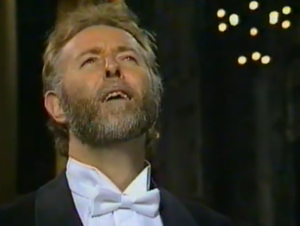
Last week on July 25th, the music world was saddened by the death of the Cornish baritone Benjamin Luxon at the age of 87. I began collecting recordings of this exceptional artist a few years ago with the intention of producing an episode in his honor at some point. Here is that episode, albeit a posthumous effort now. In an episode I produced in the first few months of Countermelody in 2019, I featured the French baritone Gérard Souzay and called him “a modern troubadour.” There are very few singers of recent years to whom one could accurately apply that appellation, but Ben Luxon is emphatically one of them. Music and words simply flowed out of him, and he sang with equal aplomb in an extraordinary number of different styles: opera, oratorio, art song, Broadway, crossover, and, perhaps most immediately and delectably, folk. In opera alone his range was exceptional, covering key roles in Mozart, Verdi, Tchaikovsky, Wagner, Berg, and Britten, who wrote the title role of his television opera Owen Wingrave expressly for Luxon. In song as well he covered a vast array of repertoires, including Russian, German, and British (including Victorian ballads), including, again, many contemporary composers. Luxon’s career hit a snag in the late 1980s, when he first began experiencing hearing loss which eventually resulted in him putting a stop to his singing career. But he hardly retired: moving to the Berkshires, he became actively involved in the artistic life of the region, and founded a theatre troupe, the Sandisfield Players, while continuing to give poetry readings and spoken word performances. The program today attempts to recreate his profound versatility, and range from folk song to pop song; from orchestral song cycles to world premiere creations; art songs by Hugo Wolf, Mussorgsky, George Butterworth, Schubert, and John Ireland; to late career narration and poetry projects. Collaborators include artists such as Benjamin Britten, Bill Crofut, Galina Vishnevskaya, Leonard Bernstein, Robert Tear, Janet Baker, Seiji Ozawa, Ileana Cotrubaș, Jill Gomez, Klaus Tennstedt, Mstislav Rostropovich, and his most frequent recital collaborator, pianist David Willison.

Countermelody is a podcast devoted to the glory and the power of the human voice raised in song. Singer and vocal aficionado Daniel Gundlach explores great singers of the past and present focusing in particular on those who are less well-remembered today than they should be. Daniel’s lifetime in music as a professional countertenor, pianist, vocal coach, voice teacher, and journalist yields an exciting array of anecdotes, impressions, and “inside stories.” At Countermelody’s core is the celebration of great singers of all stripes, their instruments, and the connection they make to the words they sing. By clicking on the following link (https://linktr.ee/CountermelodyPodcast) you can find the dedicated Countermelody website which contains additional content including artist photos and episode setlists. The link will also take you to Countermelody’s Patreon page, where you can pledge your monthly support at whatever level you can afford. Bonus episodes available exclusively to Patreon supporters are currently available and further bonus content including interviews and livestreams is planned for the upcoming season.


Episode 179. The Pop Stylings of Maria Ewing


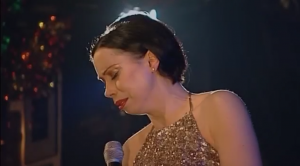
A year ago, as I was preparing my memorial Countermelody episode dedicated to Maria Ewing I was struck anew at just how naturally she had mastered the often messy “crossover” genre. Perhaps that’s because she never “crossed over” at all: this material formed part of her essence. I thought it would be a lovely thing to give a more complete picture of her work as a pop singer, using three primary sources: first, her 1990 studio pop album entitled “From this Moment On,” featuring arrangements by Richard Rodney Bennett; second, a rare release entitled “Simply Maria,” which comprises a live concert she gave at the Barbican Centre in London in 10 May 1997; and third, live and studio recordings that she made in in the early 2000s with the jazz combo Kymaera, led by guitarist Simon James. The range of material is dizzying, from Broadway classics by Rodgers and Hammerstein, Cole Porter, Jule Styne, Harold Arlen, Cy Coleman, Kurt Weill, and George and Ira Gershwin to jazz stylings by Tom Jobim, eden ahbez, and Billy Strayhorn, with more than a few surprises along the way, and her mastery of it all is exceptional, with all of the intense commitment she showed in her operatic portrayals (and none of the condescension or preciousness associated with certain other crossover artists). I’m so thrilled to share this less well-known side of one of the great operatic singing actors of our time.

Countermelody is a podcast devoted to the glory and the power of the human voice raised in song. Singer and vocal aficionado Daniel Gundlach explores great singers of the past and present focusing in particular on those who are less well-remembered today than they should be. Daniel’s lifetime in music as a professional countertenor, pianist, vocal coach, voice teacher, and journalist yields an exciting array of anecdotes, impressions, and “inside stories.” At Countermelody’s core is the celebration of great singers of all stripes, their instruments, and the connection they make to the words they sing. By clicking on the following link (https://linktr.ee/CountermelodyPodcast) you can find the dedicated Countermelody website which contains additional content including artist photos and episode setlists. The link will also take you to Countermelody’s Patreon page, where you can pledge your monthly support at whatever level you can afford. Bonus episodes available exclusively to Patreon supporters are currently available and further bonus content including interviews and livestreams is planned for the upcoming season.