Tag Archives: Sophocles

Episode 389. Rescue Mission (Operatic Duet Edition)


I have spent the past week planning forthcoming episodes and last night I realized I had to “throw together” something for this weekend’s episode. When this happens, it can often result in a very eclectic program, indeed, and one which many of my listeners find to be among the most enjoyable Countermelody episodes. I have collected more than enough material for at least a dozen of my so-called “Rescue Mission” episodes, in which I feature artists to whom an entire episode has already been devoted, but for whom I have unearthed additional recordings. For today’s episode, I decided to focus exclusively on duets, featuring at least one singer of each pair who has already been heard (sometimes quite recently) on the podcast. And thus we have David Rendall singing Erik in The Flying Dutchman opposite Rita Cullis; Renata Scotto (with Carlo Bergonzi) in Elisir; April Cantelo in Paul Hindemith’s Cardillac; Maureen Lehane as Penelope in Il ritorno d’Ulisse in Patria; Carol Neblett as Donna Elvira; and Helen Donath (with Deborah Voigt in Strauss’s rare Die ägyptische Helena). Also heard are operas by Gottfried von Einem, Giuseppe Verdi, Lee Hoiby, and Carl Orff featuring Christa Ludwig, John Reardon, Grace Bumbry, Edda Moser, and upcoming Countermelody featured artists John Bröcheler, Roland Hermann, and Eberhard Wächter. The episode concludes with the unlikely pair of Ileana Cotrubaş (pictured) and Jorma Hynninen (two of my most revered singers) as the title characters in a transcendent live recording of Pelléas et Mélisande.

Countermelody is a podcast devoted to the glory and the power of the human voice raised in song. Singer and vocal aficionado Daniel Gundlach explores great singers of the past and present focusing in particular on those who are less well-remembered today than they should be. Daniel’s lifetime in music as a professional countertenor, pianist, vocal coach, voice teacher, and author yields an exciting array of anecdotes, impressions, and “inside stories.” At Countermelody’s core is the celebration of great singers of all stripes, their instruments, and the connection they make to the words they sing. By clicking on the following link (https://linktr.ee/CountermelodyPodcast) you can find the dedicated Countermelody website which contains additional content including artist photos and episode setlists. The link will also take you to Countermelody’s Patreon page, where you can pledge your monthly or yearly support at whatever level you can afford.
Episode 285. Edda Moser Reappraised


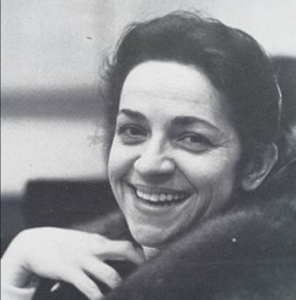
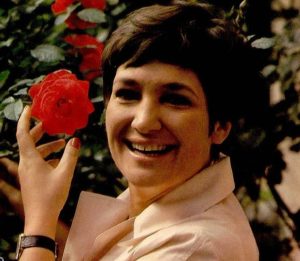
Lately I have been doing a series of episodes on artists that in my opinion deserve a reassessment, a second glance, if you will. Edda Moser is almost universally regarded as the “best” Queen of the Night that ever walked the earth. Certainly she is the most ominous and menacing, as well as the most monumental of voice and delivery. But there is a false narrative surrounding Frau Moser that over the course of her career, she lost control of her voice and pursued a repertoire that destroyed her voice. In this episode, I plead exactly the opposite: that Moser moved naturally and with dedicated assurance into the heavier roles of Strauss and Wagner, and that her voice from its origins displayed affinity for these more dramatic parts. Some of Edda Moser’s earliest successes were in the stratospheric vocal compositions of Hans Werner Henze, in which she displayed a fearless and limitless virtuosity. During her long career, her roles spanned nearly the entire range of the soprano repertoire, everything from her supreme Mozart characterizations to Hanna Glawari to Nedda to Iphigénie to Senta to Salome. Recently, some late-career live recordings of Edda Moser have appeared on the landscape, and instead of recycling one of my two previous Moser episodes, I have selected choice tidbits from these recordings, as well as more readily available material, that show Moser in all facets of her artistry, focusing on the epic, perhaps, but not overlooking her delicacy, sensitivity, pathos, charm, and delicious sense of humor. Guest singers heard on the episode include some of the finest baritones active during this period, including Siegmund Nimsgern, Hermann Prey, Gerd Feldhoff, Claudio Nicolai, and Robert Hale. Conductors include Heinrich Hollreiser, Riccardo Muti, Herbert Blomstedt, Lovro von Matačić, Christoph von Dohnányi, Kent Nagano, and many others. Give this episode a listen and may find yourself agreeing with me that she is one of the supreme classical vocalists of the twentieth century.

Countermelody is a podcast devoted to the glory and the power of the human voice raised in song. Singer and vocal aficionado Daniel Gundlach explores great singers of the past and present focusing in particular on those who are less well-remembered today than they should be. Daniel’s lifetime in music as a professional countertenor, pianist, vocal coach, voice teacher, and journalist yields an exciting array of anecdotes, impressions, and “inside stories.” At Countermelody’s core is the celebration of great singers of all stripes, their instruments, and the connection they make to the words they sing. By clicking on the following link (https://linktr.ee/CountermelodyPodcast) you can find the dedicated Countermelody website which contains additional content including artist photos and episode setlists. The link will also take you to Countermelody’s Patreon page, where you can pledge your monthly support at whatever level you can afford.