Tag Archives: Eugen d’Albert

Episode 499. Sweet Dreams


We’re one step closer to Episode 500 of Countermelody, and this week, I am doing another preview for Season Eight of the podcast, which will begin in January. Though I did not plan this intentionally when creating my setlist, so much of the music that we are hearing today concerns itself with evening, with night, with the moon, and with dreams. We hear excerpts from operas and operettas like Franz Lehár’s Eva, Eugen d’Albert’s Die toten Augen, Tchaikovsky’s Pique-Dame, Carl Orff’s Antigonae, and Siegfried Wagner’s Schwarzschwanenreich performed by Melitta Muszely, Martha Mödl, Manfred Jung, Wiesław Ochman, Sabine Hass, Yolanda Marcoulescou, and Stefka Evstatieva. We also hear concert music ranging from an Irish folk song sung by Bernadette Greevy; to mélodies sung by Maggie Teyte and Colette Herzog; and songs by intrepid 20th century composers such as Henze, Szymanowski, Shostakovich, Messiaen, and Dallapiccola, performed by Frederick Fuller, Philip Langridge, Galina Pisarenko, and Stefania Woytowicz. Other singers heard on the episode are Françoise Pollet, Aafje Heynis, Erland Hagegård, Janine Micheau, and even your very own intrepid podcast host, in anticipation of next week’s milestone episode, which will feature live archival recordings highlighting my life in music.

Countermelody is the podcast devoted to the glory and the power of the human voice raised in song. Singer and vocal aficionado Daniel Gundlach explores great singers of the past and present focusing in particular on those who are less well-remembered today than they should be. Daniel’s lifetime in music as a professional countertenor, pianist, vocal coach, voice teacher, and author yields an exciting array of anecdotes, impressions, and “inside stories.” At Countermelody’s core is the celebration of great singers of all stripes, their instruments, and the connection they make to the words they sing. By clicking on the following link (https://linktr.ee/CountermelodyPodcast) you can find the dedicated Countermelody website which contains additional content including artist photos and episode setlists. The link will also take you to Countermelody’s Patreon page, where you can pledge your monthly or yearly support at whatever level you can afford.

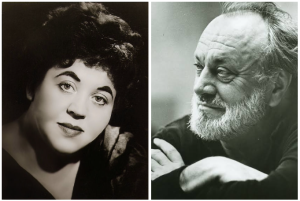
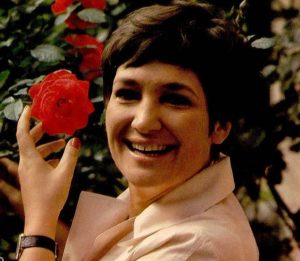
Episode 493. Hanne-Lore Kuhse and Kurt Masur: Deutsche Einheit Edition


Today, October 3, is probably the most significant of all German holidays, the Tage der Deutschen Einheit, the day on which we celebrate “Die Wende,” German reunification. Though the country in some ways is more divided than it has ever been (shades of my own home country!), we somehow must continue to hold on to hope and love as the forces that drive us on. It just so happens that the episode I was planning for today fits in quite nicely with today’s theme of German reunification, as it presents two significant East German musicians, the jugendlich dramatisch soprano Hanne-Lore Kuhse, and the conductor Kurt Masur. The latter figure, in fact, played a significant part in Germany’s coming back together. The two of them were collaborators from the beginning of their respective careers, as they both performed at the Mecklenburgisches Staatsoper in Schwerin in the 1950s. The trajectory of Masur’s later career is well known; after Schwerin, Kuhse herself was a leading soprano first in Leipzig and then at the Staatsoper Unter den Linden in Berlin, finding her greatest personal success during a surprising yet brief sojourn to the United States in 1966, where she performed in Boston, New York, Philadelphia, and Los Angeles in particular, just missing out (thanks to the machinery of the East German bureaucracy) on a Metropolitan Opera debut as Isolde, probably her greatest role. Today’s episode presents, nearly in its entirety, a 1968 release for the East German Eterna label which brought Kuhse and Masur back together. Another in the label’s Ein Opernabend mit… series, this installment features Kuhse and Masur collaborating on arias from Don Giovanni, Fidelio, Macbeth, and several Wagner operas, including Tannhäuser, Lohengrin, and Tristan. I supplement these with additional recordings of Kuhse, both live and studio, in Turandot, Iphigenia auf Tauris, Don Carlos, Radamisto of Handel, Tiefland by Eugen d’Albert, and Der Friedensengel of Siegfried Wagner. Still remembered by aficionados of great singing, Kuhse is revealed once again (or for the first time) as one of the most important German sopranos of the mid-twentieth century.

Countermelody is the podcast devoted to the glory and the power of the human voice raised in song. Singer and vocal aficionado Daniel Gundlach explores great singers of the past and present focusing in particular on those who are less well-remembered today than they should be. Daniel’s lifetime in music as a professional countertenor, pianist, vocal coach, voice teacher, and author yields an exciting array of anecdotes, impressions, and “inside stories.” At Countermelody’s core is the celebration of great singers of all stripes, their instruments, and the connection they make to the words they sing. By clicking on the following link (https://linktr.ee/CountermelodyPodcast) you can find the dedicated Countermelody website which contains additional content including artist photos and episode setlists. The link will also take you to Countermelody’s Patreon page, where you can pledge your monthly or yearly support at whatever level you can afford.


Episode 285. Edda Moser Reappraised


Lately I have been doing a series of episodes on artists that in my opinion deserve a reassessment, a second glance, if you will. Edda Moser is almost universally regarded as the “best” Queen of the Night that ever walked the earth. Certainly she is the most ominous and menacing, as well as the most monumental of voice and delivery. But there is a false narrative surrounding Frau Moser that over the course of her career, she lost control of her voice and pursued a repertoire that destroyed her voice. In this episode, I plead exactly the opposite: that Moser moved naturally and with dedicated assurance into the heavier roles of Strauss and Wagner, and that her voice from its origins displayed affinity for these more dramatic parts. Some of Edda Moser’s earliest successes were in the stratospheric vocal compositions of Hans Werner Henze, in which she displayed a fearless and limitless virtuosity. During her long career, her roles spanned nearly the entire range of the soprano repertoire, everything from her supreme Mozart characterizations to Hanna Glawari to Nedda to Iphigénie to Senta to Salome. Recently, some late-career live recordings of Edda Moser have appeared on the landscape, and instead of recycling one of my two previous Moser episodes, I have selected choice tidbits from these recordings, as well as more readily available material, that show Moser in all facets of her artistry, focusing on the epic, perhaps, but not overlooking her delicacy, sensitivity, pathos, charm, and delicious sense of humor. Guest singers heard on the episode include some of the finest baritones active during this period, including Siegmund Nimsgern, Hermann Prey, Gerd Feldhoff, Claudio Nicolai, and Robert Hale. Conductors include Heinrich Hollreiser, Riccardo Muti, Herbert Blomstedt, Lovro von Matačić, Christoph von Dohnányi, Kent Nagano, and many others. Give this episode a listen and may find yourself agreeing with me that she is one of the supreme classical vocalists of the twentieth century.

Countermelody is a podcast devoted to the glory and the power of the human voice raised in song. Singer and vocal aficionado Daniel Gundlach explores great singers of the past and present focusing in particular on those who are less well-remembered today than they should be. Daniel’s lifetime in music as a professional countertenor, pianist, vocal coach, voice teacher, and journalist yields an exciting array of anecdotes, impressions, and “inside stories.” At Countermelody’s core is the celebration of great singers of all stripes, their instruments, and the connection they make to the words they sing. By clicking on the following link (https://linktr.ee/CountermelodyPodcast) you can find the dedicated Countermelody website which contains additional content including artist photos and episode setlists. The link will also take you to Countermelody’s Patreon page, where you can pledge your monthly support at whatever level you can afford.