Tag Archives: Victor Léon

Episode 425. Mady Mesplé chante l’Opérette viennoise


For the final episode of 2025, and of Season Six of the podcast, I present pure frothy escapism from the delectable Mady Mesplé, the finest French coloratura of her generation. My original intention was to feature her exclusively in operetta repertoire, and I’ve stuck to that. But as I began to compile a setlist I realized that there was a subset of her recordings of this repertoire that presented her at her absolute finest: Viennese operetta, as translated into French. From her earliest recordings, operetta was central to her recorded canon, and from 1969 through 1980, she made a choice selection of complete recordings of operetta in French for the Pathé label. Throughout her recorded legacy, there are selections from works such as La veuve joyeuse, (Die lustige Witwe) Trois valses (Drei Walzer), Le pays du sourire (Das Land des Lächelns), Sang viennois (Wiener Blut) and others, which made such a smooth transition into French that they often sounded as if they were could originally have been set in that language. In addition, in the year 1971, Mesplé made a high-flying recording of Johann Strauss waltzes set to French texts that represents her at her vocal zenith. From all of these aforementioned sources, as well as from a 1980 recording of operetta arias with conductor Pierre Dervaux, come the selections for this episode. And for those who would like some Viennese operetta in its original language, the episode begins with the creator records from Franz Lehár’s final original operetta Giuditta, as recorded by Richard Tauber and Jarmila Novotná with Lehár himself conducting the Wiener Philharmoniker. In whichever language you choose, let us waltz our way out of this horrific year into a more humane and livable 2026!

Countermelody is the podcast devoted to the glory and the power of the human voice raised in song. Singer and vocal aficionado Daniel Gundlach explores great singers of the past and present focusing in particular on those who are less well-remembered today than they should be. Daniel’s lifetime in music as a professional countertenor, pianist, vocal coach, voice teacher, and author yields an exciting array of anecdotes, impressions, and “inside stories.” At Countermelody’s core is the celebration of great singers of all stripes, their instruments, and the connection they make to the words they sing. By clicking on the following link (https://linktr.ee/CountermelodyPodcast) you can find the dedicated Countermelody website which contains additional content including artist photos and episode setlists. The link will also take you to Countermelody’s Patreon page, where you can pledge your monthly or yearly support at whatever level you can afford.

Episode 321. Anna Moffo und die leichte Muse


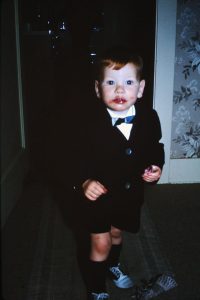
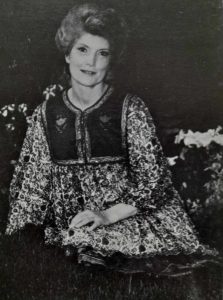
Today’s episode, “Anna Moffo und die leichte Muse,” continues the delicious theme of opera singers “letting down their hair” begun with “Hadley in Wien,” and it also forms a complement and a supplement to the “Anna Moffo Reappraised” episode that I published exactly two years ago. Anna Moffo’s recording career divides into three separate eras and markets: Italy in the late 1950s and early 1960s; which overlapped with the US in the 1960s; and finally Germany in the 1970s and beyond. Each of these eras in the Moffo career was represented on disc in different ways: jazz arrangements of standards from the Great American Songbook in her earliest (and rarest) Italian recordings, followed by breathy Italian pop songs (some even composed by Moffo herself); early twentieth century Broadway operettas and MGM movie musicals in the US when her voice was at its peak; and Viennese operetta for the German-speaking market, as her vocal instrument became more fragile, while it still represented her finest work of that period. Each of these eras and genres is thoroughly explored in this episode. She is partnered in all of this repertoire by some impressive co-stars: Sergio Franchi, René Kollo, Rudolf Schock, and Robert Merrill as duet partners, with musical direction by Ennio Morricone, Henri René, Lehman Engel, and Skitch Henderson. Recordings range from 1960 through 1983, with the vast majority coming from the 1960s. In spite of the vocal and technical frailty displayed in the later recordings, Moffo’s ability to communicate in this repertoire never flagged. And of course throughout her entire career, no singer so consistently presented a more striking image of vocal and physical glamour than did Anna Moffo.

Countermelody is a podcast devoted to the glory and the power of the human voice raised in song. Singer and vocal aficionado Daniel Gundlach explores great singers of the past and present focusing in particular on those who are less well-remembered today than they should be. Daniel’s lifetime in music as a professional countertenor, pianist, vocal coach, voice teacher, and journalist yields an exciting array of anecdotes, impressions, and “inside stories.” At Countermelody’s core is the celebration of great singers of all stripes, their instruments, and the connection they make to the words they sing. By clicking on the following link (https://linktr.ee/CountermelodyPodcast) you can find the dedicated Countermelody website which contains additional content including artist photos and episode setlists. The link will also take you to Countermelody’s Patreon page, where you can pledge your monthly or yearly support at whatever level you can afford.


Episode 320. Hadley in Wien


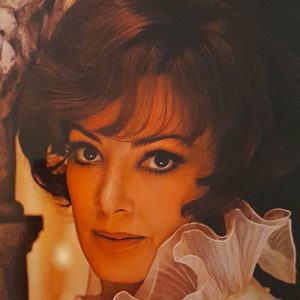
I can think of no more appropriate way to end this difficult year than with another episode lauding my late friend, the sublime American lyric tenor Jerry Hadley. I am of the firm belief that Jerry was one of the finest singers this country has ever produced. Everyone has their favorite among his performances, which display an eclecticism rare among opera singers, but I believe that his artistry found its fullest and truest expression in his performances of Viennese operetta. His bright, sunny vocal timbre, his capacity for vocal shading and dynamics, his sense of both humor and pathos, his ringing high notes, as well as of precision and acuity of his German diction make him an ideal interpreter of this music. The majority of the music heard on this episode comes from two albums of operetta arias that Jerry recorded in 1995 under the baton of Richard Bonynge. This is supplemented by two duets with Australian soprano Deborah Riedel from a series of English-language versions of Lehár operettas also conducted by Bonynge, as well as various live performances of Jerry in the music of Johann Strauss II and Erich Korngold. While Lehár is the most prominently featured composer, we also heard excerpts from work by Emmerich Kálmán, Carl Millöcker, Ralph Benatzky, Leo Fall, and that king of operetta tenors himself, Richard Tauber, who was also quite a capable composer. The episode concludes with reminiscences of my close friendship with Jerry, crowned by a magisterial live performance of “Dein ist mein ganzes Herz.”

Countermelody is a podcast devoted to the glory and the power of the human voice raised in song. Singer and vocal aficionado Daniel Gundlach explores great singers of the past and present focusing in particular on those who are less well-remembered today than they should be. Daniel’s lifetime in music as a professional countertenor, pianist, vocal coach, voice teacher, and journalist yields an exciting array of anecdotes, impressions, and “inside stories.” At Countermelody’s core is the celebration of great singers of all stripes, their instruments, and the connection they make to the words they sing. By clicking on the following link (https://linktr.ee/CountermelodyPodcast) you can find the dedicated Countermelody website which contains additional content including artist photos and episode setlists. The link will also take you to Countermelody’s Patreon page, where you can pledge your monthly or yearly support at whatever level you can afford.



Episode 266. Sisters in Sapho (Listeners’ Favorites)


It’s been a whirlwind of a week chez Gundlach and I find myself at the end of it without a new episode ready to post. In addition to that, we are already halfway through Pride Month and I realized this morning that I had no new queer material up my sleeve. So I’ll tell you what I’m gonna do: I am going to get to work on a brand new episode which will post sometime early next week. But in the meantime, I’m going to do my own Listener’s Favorite episode, one which I posted during the very first season of Countermelody, a wondrous compilation entitled “Sisters in Sappho.” It features not only two of my favorite mezzos of all time (Tatiana Troyanos and Brigitte Fassbaender – both of whom happen to have been lesbians); but also a sampling of the key figures in the Women’s Music Movement of the 1970s, including Meg Christian, Cris Williamson, Margie Adam, Holly Near, and Deidre McCalla. In celebrating these pop icons, I also pay tribute to those who, in turn, paved the way for them, including icons Janis Ian, Dusty Springfield, and Ronnie Gilbert, as well as tipping my hat to two of the queer Black singers (Toshi Reagon, Meshell Ndegeocello), that followed in the wake of these women. We all owe an enormous debt of gratitude to these extraordinary artists, who paved the way for us, their musical and artistic descendants, at the same time setting standards that will stand the test of time. Vocal guest stars include Janet Baker, Ileana Cotrubas, Cecilia Gasdia, Nicolai Gedda, Margaret Price, Gundula Janowitz, Arleen Augér, and Reri Grist.

Countermelody is a podcast devoted to the glory and the power of the human voice raised in song. Singer and vocal aficionado Daniel Gundlach explores great singers of the past and present focusing in particular on those who are less well-remembered today than they should be. Daniel’s lifetime in music as a professional countertenor, pianist, vocal coach, voice teacher, and journalist yields an exciting array of anecdotes, impressions, and “inside stories.” At Countermelody’s core is the celebration of great singers of all stripes, their instruments, and the connection they make to the words they sing. By clicking on the following link (https://linktr.ee/CountermelodyPodcast) you can find the dedicated Countermelody website which contains additional content including artist photos and episode setlists. The link will also take you to Countermelody’s Patreon page, where you can pledge your monthly support at whatever level you can afford.