Tag Archives: Karen Morrow

Episode 472. Ben Bagley Revisited: Lies Come True


A year ago I published an episode entitled “Gay Eccentrics,” which featured a number of the most delightfully peculiar personalities sprinkled across queer music history. The third of those characters, theatrical and record producer Ben Bagley, reappears on today’s episode. This time I feature selections from his record albums featuring two more gay eccenctrics, Lorenz Hart and Cole Porter! Bagley’s recordings uncovered and/or resuscitated trunk songs and other material by some of the most important Broadway composers and lyricists sung by a fascinating hodge-podge of some of the most prominent singers and actors of the era. In this episode alone we hear Tony Perkins, Gloria Swanson, Blossom Dearie, Charlotte Rae, Bobby Short, Sandy Stewart, Carmen Alvarez, Dorothy Loudon, Karen Morrow, David Allyn, Dolores Gray, Johnny Desmond, Ann Hampton Calloway, and Danny Meehan. These recordings were inevitably against all odds, seemingly tossed together, and on a shoestring budget, but the results were almost always surprisingly polished (and if not polished, at least fascinating!) One of the most notorious aspects of these releases was Bagley’s outrageously campy (and sometimes simply outrageous) liner notes, from which I quote extensively. I also read a 1974 profile of Bagley in which he espouses his ongoing credo of stretching the truth in order to make seemingly impossible dreams come true.

Countermelody is the podcast devoted to the glory and the power of the human voice raised in song. Singer and vocal aficionado Daniel Gundlach explores great singers of the past and present focusing in particular on those who are less well-remembered today than they should be. Daniel’s lifetime in music as a professional countertenor, pianist, vocal coach, voice teacher, and author yields an exciting array of anecdotes, impressions, and “inside stories.” At Countermelody’s core is the celebration of great singers of all stripes, their instruments, and the connection they make to the words they sing. By clicking on the following link (https://linktr.ee/CountermelodyPodcast) you can find the dedicated Countermelody website which contains additional content including artist photos and episode setlists. The link will also take you to Countermelody’s Patreon page, where you can pledge your monthly or yearly support at whatever level you can afford.

Episode 195. Forgotten Broadway III


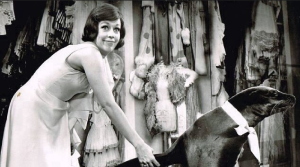
Last summer, I produced a miniseries of episodes on Countermelody entitled “Forgotten Broadway,” the third and final segment of which was originally published as a bonus episode for my Patreon supporters. This week, my last one for the moment in New York City, is a busy one, so I have decided to pay tribute to the city by publishing that third Forgotten Broadway episode for all of my listeners. As I was preparing the series last summer, I enlisted the input and expertise of my dear pal John Coughlan. Like the first two episodes in the sequence, this one is once again, a veritable potpourri of delights, vocal, interpretive, and musical. It begins with a tribute to birthday icon Carol Burnett, who, at the beginning of her career, appeared in two different Broadway musicals, the second of which, 1964’s Fade Out Fade In, is featured. Additional shows presented include, among many others, Salvation, Raisin, Mack and Mabel, Redhead, I Had a Ball, Breakfast at Tiffany’s, Baker Street, performed by such favorites as Lisa Kirk, Melba Moore, Gwen Verdon, Robert Weede, Mary Tyler Moore, Rosemary Clooney, Liz Callaway, and Peggy Lee, alongside such lesser-known lights as Diana Davila, Walter Willison, Salena Jones, and Gilbert Price. In addition, there is the “added plus” [sic] of Bea Arthur delivering a comic monologue from the 1955 Shoestring Revue that will have you in absolute stitches. And just for the gays (and all those with equally good taste), Judy and Liza each stop by, Judy to deliver a Frank Loesser show-stopper, while Liza offers more of “A Quiet Thing,” from her first Broadway show Flora the Red Menace.

Countermelody is a podcast devoted to the glory and the power of the human voice raised in song. Singer and vocal aficionado Daniel Gundlach explores great singers of the past and present focusing in particular on those who are less well-remembered today than they should be. Daniel’s lifetime in music as a professional countertenor, pianist, vocal coach, voice teacher, and journalist yields an exciting array of anecdotes, impressions, and “inside stories.” At Countermelody’s core is the celebration of great singers of all stripes, their instruments, and the connection they make to the words they sing. By clicking on the following link (https://linktr.ee/CountermelodyPodcast) you can find the dedicated Countermelody website which contains additional content including artist photos and episode setlists. The link will also take you to Countermelody’s Patreon page, where you can pledge your monthly support at whatever level you can afford. Bonus episodes available exclusively to Patreon supporters are currently available and further bonus content including interviews and livestreams is planned for the upcoming season.


Episode 98. John Raitt


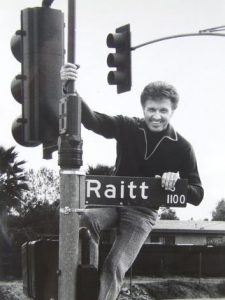
Today I feature as part of my summer series on Great Baritones, one of the greatest Broadway baritones of all time, John Raitt (1917-2005). Wait: did I say one of the greatest? Make that possibly the greatest! Along with Alfred Drake and a handful of others, John Raitt completely redefined the Broadway leading man: strapping, robust, virile, handsome, with an operatic caliber voice and splendid acting chops to match. His creation of the role of Billy Bigelow in Rodgers and Hammerstein’s magnum opus, Carousel, turned a deeply problematic character into a sympathetic one. In this episode we hear excerpts from this role, as well as some of Raitt’s other hits (and non-hits), both on—and away from—Broadway: The Pajama Game, Oklahoma!, Annie Get Your Gun, Three Wishes for Jamie, Show Boat, and others, as well as a bit of opera! I also feature tracks from four of his solo records, recorded and released between 1955 and 1970, which include Neopolitan songs, folk songs, and pure late 60s pop as well as Broadway standards not normally associated with him. Some of his duet partners include Barbara Cook, Rosemary Clooney, Florence Henderson, Doretta Morrow, Anne Jeffreys, as well as his daughter Bonnie, herself one of the great blues singers and guitarists of the late 20th century. We also hear Bonnie’s deeply personal song “Circle Dance,” which concerns their sometimes fraught—but eventually fully reconciled—relationship. Was he really a baritone, was he a tenor masquerading as a baritone, or was he a true “baritenor”? I consider all these possibilities but leave it to my listeners to draw their own conclusions. No matter how you assess John Raitt’s voice, in the end, it sustained him through a career that lasted seven decades; it is a thrill to present him to my listeners in his full baritenorial splendor.

Countermelody is a podcast devoted to the glory and the power of the human voice raised in song. Singer and vocal aficionado Daniel Gundlach explores great singers of the past and present focusing in particular on those who are less well-remembered today than they should be. Daniel’s lifetime in music as a professional countertenor, pianist, vocal coach, voice teacher, and journalist yields an exciting array of anecdotes, impressions, and “inside stories.” Occasional guests from the “business” (singers, conductors, composers, coaches, and teachers) lend their distinctive insights. At Countermelody’s core is the interaction between singers of all stripes, their instruments, and the connection they make to the words they sing. At Countermelody’s core is the interaction between singers of all stripes, their instruments, and the connection they make to the words they sing. Please visit the Countermelody website (www.countermelodypodcast.com) for additional content including artist photos and episode setlists. And please head to my Patreon page at www.patreon.com/countermelody to pledge your monthly support at whatever level you can afford. Bonus episodes available only to Patreon supporters are currently available.