Tag Archives: Martin Katz

Episode 497. The Luminous Judith Blegen [In Memoriam]


There are countless singers that I include among my favorites. In fact, it’s become a joke with some of my listeners about just how many “favorite singers” I actually have. (If you must attach a name to it, think of it as vocal polyamory.) Far too many of those well-loved singers, however, have not been as prominently featured on Countermelody as they might have been. Chief among these is the luminous Judith Blegen, who died last week at the age of 85. I heard her exactly once, singing Pamina in Chicago in the late 1980s. Both she and Francisco Araiza, her Tamino, were nearly ideal in their roles. And so was Blegen, a mainstay at the Metropolitan Opera until her early retirement in 1991, in so many of the operatic parts in which she excelled. Audio and video recordings amply document her in those roles, but today, I wanted to focus on several less obvious or familiar aspects of her career. First off, her exceptional singing of Mozart: scattered throughout the episode are recordings of her as Susanna, Pamina, Blondchen, and Zaide. Second, her early mentorship by Gian Carlo Menotti, and her remarkable recordings of two of his early operas. Third, her fascinating portrayal of Mélisande, unlike any other I’ve ever heard; and fourth, her commitment to art song: heard in the episode are songs of Grieg, Wolf, Milhaud, Strauss, and Ruggles. As well as her overall musical and stylistic versatility. The episode features collaborations with fellow singers Frederica von Stade, Thomas Stewart, Regina Resnik, and José Carreras; pianist Martin Katz; and conductors Christoph von Dohnányi, Colin Davis, Daniel Barenboim, Jorge Mester, Georg Solti, Eugene Ormandy, Carlo Felice Cillario, Leopold Hager, and Michael Tilson Thomas. She also reaches out to us from beyond the grave with an important message about the upcoming US elections.

Countermelody is the podcast devoted to the glory and the power of the human voice raised in song. Singer and vocal aficionado Daniel Gundlach explores great singers of the past and present focusing in particular on those who are less well-remembered today than they should be. Daniel’s lifetime in music as a professional countertenor, pianist, vocal coach, voice teacher, and author yields an exciting array of anecdotes, impressions, and “inside stories.” At Countermelody’s core is the celebration of great singers of all stripes, their instruments, and the connection they make to the words they sing. By clicking on the following link (https://linktr.ee/CountermelodyPodcast) you can find the dedicated Countermelody website which contains additional content including artist photos and episode setlists. The link will also take you to Countermelody’s Patreon page, where you can pledge your monthly or yearly support at whatever level you can afford.


Episode 406. Dan’s Belated Birthday Gals (Soprano Edition)


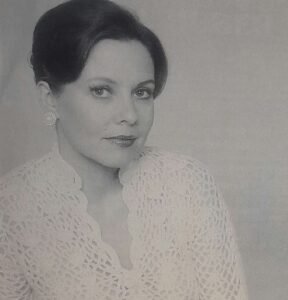
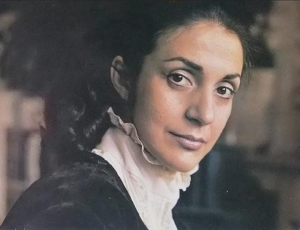
The last of my festive potpourri episodes for this, my birthday month, this episode focuses on a favorite vocal range of this opera queen: the soprano voice, in all its variety and glory. Included are such pristine lyric voices as Erika Köth, Benita Valente (who just departed us last weekend, shortly after celebrating her 91st birthday), Judith Raskin, Judith Blegen, Mattiwilda Dobbs, and Edith Mathis, among others; medium- to heavier-weight lyric voices such as Pilar Lorengar, Delia Rigal, Teresa Stratas, Taru Valjakka, Melitta Muszely, and Margarete Teschemacher; and “ambiguous” voices as Arleen Augér, Martha Flowers, Irmgard Seefried, Andrée Esposito, Jill Gomez (pictured), Faye Robinson, Hilde Güden, and Elizabeth Harwood which could, if you’ll pardon the term, “swing both ways,” at least in terms of vocal weight! They perform a wide range of material of material including vocal chamber music by Manuel de Falla and Miriam Gideon; art song by Brahms, Bridge, Poulenc, Beethoven, Bizet, Granados, Sibelius, and Mahler; operetta and musical selections by Arlen, Lehár, Stolz, and Kern; and full-throated operatic selections by Richard Strauss, Jacques Ibert, Leoncavallo, and Meyerbeer. It’s another jam-packed episode guaranteed (in a limited sense) to bring you the full-range of listening pleasure.

Countermelody is a podcast devoted to the glory and the power of the human voice raised in song. Singer and vocal aficionado Daniel Gundlach explores great singers of the past and present focusing in particular on those who are less well-remembered today than they should be. Daniel’s lifetime in music as a professional countertenor, pianist, vocal coach, voice teacher, and author yields an exciting array of anecdotes, impressions, and “inside stories.” At Countermelody’s core is the celebration of great singers of all stripes, their instruments, and the connection they make to the words they sing. By clicking on the following link (https://linktr.ee/CountermelodyPodcast) you can find the dedicated Countermelody website which contains additional content including artist photos and episode setlists. The link will also take you to Countermelody’s Patreon page, where you can pledge your monthly or yearly support at whatever level you can afford.


Episode 353. Canteloube Originals


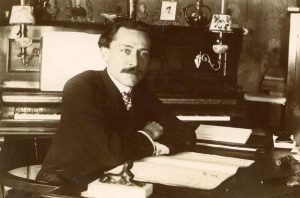
The composer Joseph-Marie Canteloube is primarily known for his lush orchestral arrangements of folk songs from his native Auvergne region. However, he also composed other work, including arrangements of French folk songs (from regions other than the Auvergne!) as well as original works including the lush orchestral song cycle Triptyque and a fascinating and unique cycle for voice and piano entitled L’arada (The Tilled Earth), set to poems in the Languedoc dialect. This work has been studied, promoted, and recorded by soprano Karen Coker Merritt, who deserves our especial thanks for bringing this unique work to our attention. Examples of all of these works are featured on this episode, which also does not shy away from exploring Canteloube’s difficult political legacy as a proud right-wing nationalist and supporter of the collaborationist Vichy government during World War II. I believe that we can and should decry such positions while at the same time exploring these works independently of and stripped (as much as possible) of their political associations. Performers (several accompanied by the composer himself) include Georges Thill, Karen Coker Merritt (performing two songs from L’arada with the exceptional pianist Sean Kennard), Geneviève Rex, Lucie Daullène, Véronique Gens, Netania Davrath, Bruno Laplante, María Bayo, and, transcendently, Frederica von Stade.

Countermelody is a podcast devoted to the glory and the power of the human voice raised in song. Singer and vocal aficionado Daniel Gundlach explores great singers of the past and present focusing in particular on those who are less well-remembered today than they should be. Daniel’s lifetime in music as a professional countertenor, pianist, vocal coach, voice teacher, and journalist yields an exciting array of anecdotes, impressions, and “inside stories.” At Countermelody’s core is the celebration of great singers of all stripes, their instruments, and the connection they make to the words they sing. By clicking on the following link (https://linktr.ee/CountermelodyPodcast) you can find the dedicated Countermelody website which contains additional content including artist photos and episode setlists. The link will also take you to Countermelody’s Patreon page, where you can pledge your monthly or yearly support at whatever level you can afford.


Episode 93. Evelyn Lear sings Sondheim and Bernstein (and other Queer Composers)


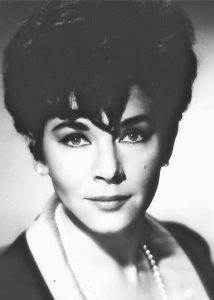
I had intended a no-holds-barred Queer Pride extravaganza for this week’s episode, but life got in the way, so I elected to do a more modest, chamber-music-sized celebration instead, which encompasses both the life and artistry of Evelyn Lear, the ninth anniversary of whose death we observe on July First. Her 1980 release Evelyn Lear sings Sondheim and Bernstein, recorded in collaboration with her most frequent recital partner, pianist Martin Katz, finds this artist lending her distinctive voice, style, and interpretive flair to ten songs by these two composers, who are seen today as, among other things, queer icons. I round out the episode with performances by Evelyn Lear and her husband Thomas Stewart, of songs by a number of other composers (Schubert, Hahn, Tchaikovsky, Copland and Foster) who are, by my assessment at least, also guiding beacons for the queer community.

Countermelody is a podcast devoted to the glory and the power of the human voice raised in song. Singer and vocal aficionado Daniel Gundlach explores great singers of the past and present focusing in particular on those who are less well-remembered today than they should be. Daniel’s lifetime in music as a professional countertenor, pianist, vocal coach, voice teacher, and journalist yields an exciting array of anecdotes, impressions, and “inside stories.” Occasional guests from the “business” (singers, conductors, composers, coaches, and teachers) lend their distinctive insights. At Countermelody’s core is the interaction between singers of all stripes, their instruments, and the connection they make to the words they sing. At Countermelody’s core is the interaction between singers of all stripes, their instruments, and the connection they make to the words they sing. Please visit the Countermelody website (www.countermelodypodcast.com) for additional content including artist photos and episode setlists. And please head to my Patreon page at www.patreon.com/countermelody to pledge your monthly support at whatever level you can afford. Bonus episodes available only to Patreon supporters are currently available.


Episode 58. Richard Strauss’s Vier letzte Lieder (Music for a World in Crisis IV)


As the worldwide pandemic renews its threat and creates general unrest, panic, anger, and depression, as well as illness and death for so many, we turn as always to music for solace. One of the central pieces that I have always turned to in times of personal turmoil has been Richard Strauss’s Vier letzte Lieder. Over the years I have listened to and derived comfort from dozens and dozens of recordings and live performances. In this episode, I feature eight different sopranos, (Elisabeth Söderström, Anna Tomowa-Sintow, Edda Moser, Soile Isokoski, Margaret Price, Teresa Żylis-Gara, Lucia Popp, and Sena Jurinac), each of whom makes her mark in a distinctive way on one of the four songs in the series. I also read each of the poems in my own English translation. These performances are supplemented by excerpts from Elektra, Daphne, and Die Ägyptische Helena performed by Rose Pauly, Hilde Güden, Christa Ludwig, and Walter Berry, as well as the world premiere 1985 performance of “Malven,” Strauss’s last completed work, sung by Kiri Te Kanawa; and the Oboe Concerto played by Léon Goossens in its first commercial recording from 1947.  Featured conductors in the episode include Claudio Abbado, Bernard Haitink, Zubin Mehta, Marek Janowski, Georg Solti, Karl Böhm, Heinrich Hollreiser, Fritz Busch, Alceo Galliera, and Milan Horvat. A bonus episode for my Patreon supporters will feature twelve more of my favorite sopranos, each one singing one of these autumnal Lieder. As we world citizens face the great unknown, these artists help lift our spirits and reorient our perspective.

Links to my previous Music for a World in Crisis episodes:

Episode 26: Calling You

Episode 27: That Time of Evening

Episode 29: A Social Isolation Schubertiade

Countermelody is a podcast devoted to the glory and the power of the human voice raised in song. Singer and vocal aficionado Daniel Gundlach explores great singers of the past and present focusing in particular on those who are less well-remembered today than they should be. Daniel’s lifetime in music as a professional countertenor, pianist, vocal coach, voice teacher, and journalist yields an exciting array of anecdotes, impressions, and “inside stories.” Occasional guests from the “business” (singers, conductors, composers, coaches, and teachers) lend their distinctive insights. At Countermelody’s core is the interaction between singers of all stripes, their instruments, and the connection they make to the words they sing. Please visit the Countermelody website (www.countermelodypodcast.com) for additional content. And please head to our Patreon page at www.patreon.com/countermelody to pledge your monthly support at whatever level you can afford. Bonus episodes available only to Patreon supporters are currently available, including a new extra episode further exploring today’s topic.