Category Archives: Black History Month 2026

Episode 443. Meet Klesie Kelly


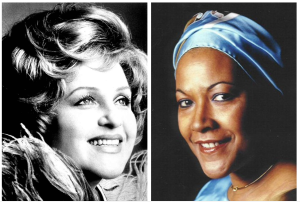
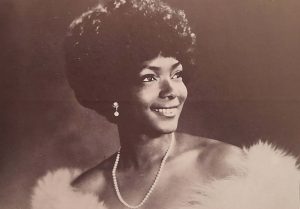
As a pendant to, and continuation of, my Black History Month 2026 series on Countermelody, I am pleased and honored to present to you the exquisite African American lyric soprano Klesie Kelly, who, as with numerous other singers that we have explored together this month, has made her life, career, and home abroad, in this case, Germany, where she came to pursue post-university studies in Detmold and from there simply put down roots. Though unlike me, Kelly was not born in Milwaukee, she did spend some of her formative years there, including pursuing her undergraduate degree at the University of Wisconsin Madison. In her years in Germany, Kelly was not only an active and deeply respected both on the operatic stage and the concert platform (where her performances of Bach were particularly lauded), but she also dedicated herself to the education of many of the finest singers to have come through the Musikhochschule in Köln. I have managed to unearth a number of invaluable sound documents of Klesie Kelly, including a number of recordings of Lieder and duets with instrumental obbligato accompaniment, and peerless performances of Bach cantatas, as well as a 1970 concert performance of Porgy and Bess in the Netherlands, and an ultrarare recording made during her undergraduate years in Wisconsin. Excerpts from all of these are heard on the episode, which salutes (and delivers flowers to) one of the most respected German-American musical figures of her generation.

Countermelody is the podcast devoted to the glory and the power of the human voice raised in song. Singer and vocal aficionado Daniel Gundlach explores great singers of the past and present focusing in particular on those who are less well-remembered today than they should be. Daniel’s lifetime in music as a professional countertenor, pianist, vocal coach, voice teacher, and author yields an exciting array of anecdotes, impressions, and “inside stories.” At Countermelody’s core is the celebration of great singers of all stripes, their instruments, and the connection they make to the words they sing. By clicking on the following link (https://linktr.ee/CountermelodyPodcast) you can find the dedicated Countermelody website which contains additional content including artist photos and episode setlists. The link will also take you to Countermelody’s Patreon page, where you can pledge your monthly or yearly support at whatever level you can afford.
Episode 442. Henry Wright Revisited


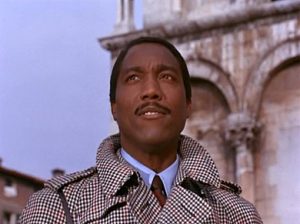
Last week I published an episode about Black Pop Singers who emigrated to Europe in the 1950s and 1960s. Most of these gentlemen settled in the German-speaking countries, where there was a ready market for the “otherness” and exoticism that they embodied. The one outlier on that episode was Henry Wright, born in 1933, who in the late 1950s toured Italy with Lionel Hampton’s band and elected to remain there. With a voice as suave and seductive as any of the great crooners of the 1950s and 1960s, Henry Wright first came to international prominence as the voice on the record to which Sophia Loren performed her legendary striptease in the 1962 film Ieri, oggi, domani [Yesterday, Today and Tomorrow]. He went on to make a great impact on Italian pop music throughout the 1960s. A couple years ago I began collecting the ultra-rare (and costly) records of Henry Wright, which formed the basis of two separate Countermelody episodes. Here is the second of those episodes, first published as a bonus episode nearly three years ago now, which is devoted to Henry Wright’s recordings of pop standards, most of them from the so-called Great American Songbook, but a few of them English-language adaptations of favorite songs originally in Italian. The program begins with one of Henry Wright’s first Italian recordings, which features standards by Duke Ellington and Harold Arlen. The majority of the music on the program, however, is from Henry Wright’s 1967 LP, Prisoner of Amore, in which he is joined by the doodling pianism of Romano Mussolini (youngest son of the late dictator), and the somewhat overwrought arrangements of Giulio Libano. In spite of the excesses of his colleagues, Henry Wright still manages to make a positive showing in this, (as far as I know!) his final recording. In the course of the episode, I go down a number of rabbit holes that go off in a number of interesting directions: the songs of Harry Warren, the early pop stylings of Gérard Souzay in the first flush of youth as a pop crooner on the French airwaves, and the fascinating life and times of the pre-hippie Eden Ahbez, best known as the composer of “Nature Boy,” whose further compositions were performed by (among others) the sophisticated and cosmopolitan Eartha Kitt and Ahbez himself.

Countermelody is the podcast devoted to the glory and the power of the human voice raised in song. Singer and vocal aficionado Daniel Gundlach explores great singers of the past and present focusing in particular on those who are less well-remembered today than they should be. Daniel’s lifetime in music as a professional countertenor, pianist, vocal coach, voice teacher, and author yields an exciting array of anecdotes, impressions, and “inside stories.” At Countermelody’s core is the celebration of great singers of all stripes, their instruments, and the connection they make to the words they sing. By clicking on the following link (https://linktr.ee/CountermelodyPodcast) you can find the dedicated Countermelody website which contains additional content including artist photos and episode setlists. The link will also take you to Countermelody’s Patreon page, where you can pledge your monthly or yearly support at whatever level you can afford.

Episode 441. A Cavalcade of Spirituals


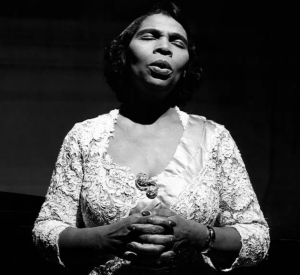
As the last official entry in Countermelody’s Black History Month 2026 series, I bring you a potpourri episode that has long been a dream of mine: one dedicated entirely to the Spiritual, that distinctly American musical form that was born in adversity (specifically enslavement, murder, torture, family separation) and yet by a confluence of miracles yielded the most transcendentally beautiful music ever heard on this beleaguered planet. This is no scholarly exegesis of the form (there are others much better-versed in its history than I); it is rather a celebration of nearly a century of great performances of these songs by the finest concert singers of the twentieth century, beginning with Harry Thacker Burleigh through Janet Williams and the late Roberta Alexander (it still hurts my heart to write this!) In between, many additional Countermelody favorites are heard, including Dorothy Maynor, Marian Anderson, Todd Duncan, Jules Bledsoe, Paul Robeson, Margaret Tynes, Muriel Smith, Gloria Davy, Roland Hayes, Veronica Tyler, Adele Addison, Charles Holland, Anne Wiggins Brown, Robert McFerrin, Camilla Williams, Inez Matthews, and Miss Leontyne Price in arrangements by such exceptional African American composers as Julia Perry, Nathaniel Dett, William Grant Still, Undine Smith Moore, Hall Johnson, and Florence Price. There was so much material that, with regret, I had to leave by the wayside that you can be sure that there will be an additional spirituals episode in the very near future! I dedicate this episode to my beloved mother, who loved these songs, and to all those who have recently lost loved ones.

Countermelody is the podcast devoted to the glory and the power of the human voice raised in song. Singer and vocal aficionado Daniel Gundlach explores great singers of the past and present focusing in particular on those who are less well-remembered today than they should be. Daniel’s lifetime in music as a professional countertenor, pianist, vocal coach, voice teacher, and author yields an exciting array of anecdotes, impressions, and “inside stories.” At Countermelody’s core is the celebration of great singers of all stripes, their instruments, and the connection they make to the words they sing. By clicking on the following link (https://linktr.ee/CountermelodyPodcast) you can find the dedicated Countermelody website which contains additional content including artist photos and episode setlists. The link will also take you to Countermelody’s Patreon page, where you can pledge your monthly or yearly support at whatever level you can afford.
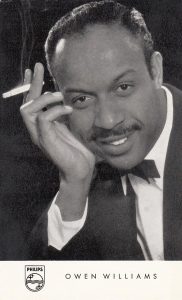

Episode 440. Black Baritone Expats


As the penultimate episode in my 2026 Black History Month series, I revisit the stories of African American performers who, for a variety of reasons, including seeking to improve their increase their opportunities as artists of color, made their way to Europe in the 1950s and 1960s. Today the focus is on the low-voiced males, baritones, bass-baritones, and basses, in a variety of musical genres, who found success overseas. Surely the most famous of these is the great operatic baritone Lawrence Winters, who leads off the episode, but there were many others as well, some in opera, some in pop music, and some in that magical and confusing world in between, who also experienced life in its fullness, not just in Germany, but in Austria, Italy, and Norway as well. A few of these singers, among them Kenneth Spencer and Thomas Carey, are still somewhat remembered today. Far too many others are virtually forgotten. Among those we also discuss William Ray, Owen Williams, Henry Wright, William Pearson, George Goodman, and Allan Evans. The musical selections are primarily focused on pop music and crossover, with some fascinating exceptions. Even within this somewhat circumscribed musical palette, however, there is much variety to be experienced, and celebrated.

Countermelody is the podcast devoted to the glory and the power of the human voice raised in song. Singer and vocal aficionado Daniel Gundlach explores great singers of the past and present focusing in particular on those who are less well-remembered today than they should be. Daniel’s lifetime in music as a professional countertenor, pianist, vocal coach, voice teacher, and author yields an exciting array of anecdotes, impressions, and “inside stories.” At Countermelody’s core is the celebration of great singers of all stripes, their instruments, and the connection they make to the words they sing. By clicking on the following link (https://linktr.ee/CountermelodyPodcast) you can find the dedicated Countermelody website which contains additional content including artist photos and episode setlists. The link will also take you to Countermelody’s Patreon page, where you can pledge your monthly or yearly support at whatever level you can afford.
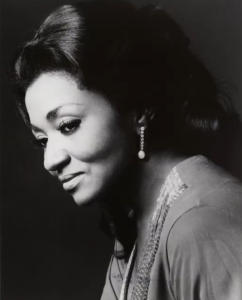


Episode 439. Grace Bumbry, Proud Soprano [Studio Edition]


As we hurtle toward the third anniversary (in May already!) of Grace Bumbry’s death, I have had her very much on my mind. It’s true that I consider her greatest achievement to have been as a Liedersängerin. Others opine that her operatic roles as a mezzo (Carmen, Eboli, Amneris among others) represent her at her very finest. There are fewer who focus on her work as a soprano. And yet, when she sang the most taxing roles in that fach, she often revealed a fearlessness, a fortitude, a determination, a pride that brought out her very best. If one examines her recorded output, one finds her essaying soprano arias almost from her very earliest recordings. I thought it might be fun to continue Diva Week on Countermelody’s Black History Month celebratory episodesby examining her enduring legacy of her recorded output as a soprano. This time I focus exclusively on her studio recordings as a soprano, sometimes (but not always) in roles that she also sang onstage (Norma, Tosca, Gioconda, even Medea). (There’s even a little operetta and a pop standard tossed in for fun.) When La Bumbry first began singing the soprano repertoire, some naysayers predicted irreparable vocal burnout. But they were wrong: until the very end, Grace retained, by virtue of both solid technique and enormous willpower, the same vocal richness and musical and artistic fingerprint that she possessed for more than six decades and which we celebrate in this episode.

Countermelody is the podcast devoted to the glory and the power of the human voice raised in song. Singer and vocal aficionado Daniel Gundlach explores great singers of the past and present focusing in particular on those who are less well-remembered today than they should be. Daniel’s lifetime in music as a professional countertenor, pianist, vocal coach, voice teacher, and author yields an exciting array of anecdotes, impressions, and “inside stories.” At Countermelody’s core is the celebration of great singers of all stripes, their instruments, and the connection they make to the words they sing. By clicking on the following link (https://linktr.ee/CountermelodyPodcast) you can find the dedicated Countermelody website which contains additional content including artist photos and episode setlists. The link will also take you to Countermelody’s Patreon page, where you can pledge your monthly or yearly support at whatever level you can afford.
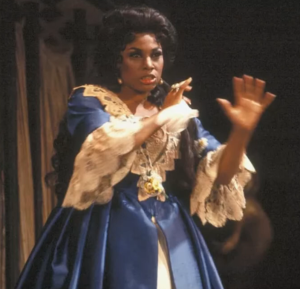

Episode 438. Leontyne Price Sings Richard Strauss Heroines


Last week the opera world joined in unanimous celebration as Leontyne Price celebrated her 99th birthday. Though I’m a trifle late to the party, I do have a Price episode today, and one with a twist, featuring the beloved diva in a repertoire she only occasionally performed: the operas of Richard Strauss. Today let’s imagine ourselves back in the 1960s and early 1970s in an alternate universe, one in which Leontyne Price was one of the leading interpreters of the operas of Richard Strauss. Fortunately, there are enough live and studio recordings for us to create such a universe: over the course of her career, Price performed and recorded Strauss repertoire ranging from Guntram, his first opera from 1893, through his penultimate opera, Die Liebe der Danae, completed in 1940, but first officially premiered posthumously in 1952. The excerpts heard range from an early British radio recording of Danae in 1959, through a remarkably viable performance of the final scene of Salome from as late as1986. She is also heard in an extended live excerpt from Ariadne auf Naxos, the one Strauss role she performed onstage. I have remarked repeatedly elsewhere that the music of Strauss seemed to bring out the very best in Leontyne Price, and that is certainly true of the performances heard here, tantalizing teasers of what might have been, had she chosen to explore more of these roles onstage.

Countermelody is the podcast devoted to the glory and the power of the human voice raised in song. Singer and vocal aficionado Daniel Gundlach explores great singers of the past and present focusing in particular on those who are less well-remembered today than they should be. Daniel’s lifetime in music as a professional countertenor, pianist, vocal coach, voice teacher, and author yields an exciting array of anecdotes, impressions, and “inside stories.” At Countermelody’s core is the celebration of great singers of all stripes, their instruments, and the connection they make to the words they sing. By clicking on the following link (https://linktr.ee/CountermelodyPodcast) you can find the dedicated Countermelody website which contains additional content including artist photos and episode setlists. The link will also take you to Countermelody’s Patreon page, where you can pledge your monthly or yearly support at whatever level you can afford.
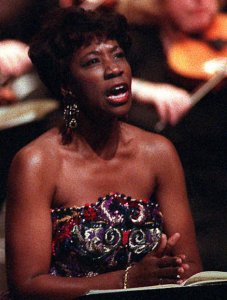

Episode 437. Get to Know Faye Robinson


Today’s Black History Month episode serves also as a belated birthday tribute to the exceptional African American soprano Faye Robinson, who was born in Houston on 2 November 1943. Robinson has a voice that transcends genre, encompassing both lyric-coloratura roles at one end and pure dramatic soprano repertoire on the other. In addition, she has been created vocal works by some of the greatest twentieth-century composers, including Michael Tippett, two of whose major vocal works she premiered, and with whose compositions she is especially associated, and George Walker, whose Lilacs she premiered in 1996 with the Boston Symphony Orchestra, and which subsequently won the 1996 Pulitzer Prize by the judges’ unanimous decision. Robinson’s immediately recognizable voice presented in a wide-range of repertoire, including the works referenced above and also including arias by Handel, Gounod, Offenbach, Bellini, and Handel, as well as the Chevalier de Saint-Georges; as well as concert work by Schoenberg and Barber. All in all, Faye Robinson’s is a voice and artistic presence well worth getting to know better! Happy Belated Birthday, Diva!

Countermelody is the podcast devoted to the glory and the power of the human voice raised in song. Singer and vocal aficionado Daniel Gundlach explores great singers of the past and present focusing in particular on those who are less well-remembered today than they should be. Daniel’s lifetime in music as a professional countertenor, pianist, vocal coach, voice teacher, and author yields an exciting array of anecdotes, impressions, and “inside stories.” At Countermelody’s core is the celebration of great singers of all stripes, their instruments, and the connection they make to the words they sing. By clicking on the following link (https://linktr.ee/CountermelodyPodcast) you can find the dedicated Countermelody website which contains additional content including artist photos and episode setlists. The link will also take you to Countermelody’s Patreon page, where you can pledge your monthly or yearly support at whatever level you can afford.
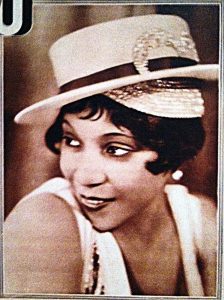

Episode 436. Adelaide Hall, Sophisticated Lady


Adelaide Hall (1901 – 1993), entertainer extraordinaire, really had it all: voice, talent, beauty, dancing chops, charisma, joie de vivre and sophistication. She was the first Black performer to attain international stardom, even before Joséphine Baker, with whom she shared a number of similarities (though Hall probably had the superior voice). She was the first singer to scat on record; she helped popularize both the Charleston and the Black Bottom and was considered the epitome of the Flapper; she introduced the world to a number of now-standard songs from the Great American Songbook; she appeared on a rare 1935 Vitaphone short that featured all Black performers; she and her husband owned and ran various night clubs in three different countries, as well as headlining at the legendary Cotton Club; and she headlined the sensational revue Blackbirds of 1928 and several other ground-breaking shows in the 1920s and 1930s. I got to know her work many years back when I happened to find a late-career LP of hers in the basement of an apartment building I was living in. I have been a fan ever since. The number of great musicians with whom she rubbed shoulders is almost mind-boggling (Duke Ellington, Fats Waller, Louis Armstrong, Fela Sowande, Joe Turner, and Art Tatum, for starters), and she continued to perform with gusto and sophistication into her late eighties, occasionally returning to her native US from London, where she settled in 1938 and lived until her death. Her range of influence is truly far-flung and her many recordings, made between 1927 and 1989, a generous sampling of which are offered on this episode, continue to bring consistent delight and surprise.

Countermelody is the podcast devoted to the glory and the power of the human voice raised in song. Singer and vocal aficionado Daniel Gundlach explores great singers of the past and present focusing in particular on those who are less well-remembered today than they should be. Daniel’s lifetime in music as a professional countertenor, pianist, vocal coach, voice teacher, and author yields an exciting array of anecdotes, impressions, and “inside stories.” At Countermelody’s core is the celebration of great singers of all stripes, their instruments, and the connection they make to the words they sing. By clicking on the following link (https://linktr.ee/CountermelodyPodcast) you can find the dedicated Countermelody website which contains additional content including artist photos and episode setlists. The link will also take you to Countermelody’s Patreon page, where you can pledge your monthly or yearly support at whatever level you can afford.
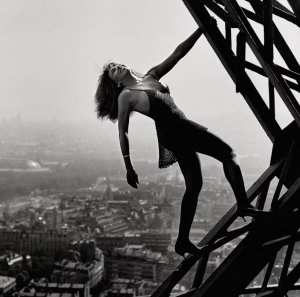

Episode 435. Tina and the Expats


I first published this episode two and a half years ago in June 2023, in commemoration of the death of the great Tina Turner. As always when I take on such an iconic figure, I try to give a different perspective on the artist in question than one would normally encounter. For this reason, I chose to frame Tina within the context of the many other female pop artists of color who emigrated to Europe and the UK. I have devoted a lot of time, space, and research to the Black opera singers who came here, but there is an equally fascinating story to be told about the pop singers of many eras and genres, who also chose to make Europe their home. Though this episode focuses primarily on Tina and some of the less-explored material throughout her career, I seek to contextualize her by also discussing the many African American singers, from Joséphine Baker to Donna Summer to Nina Simone to Dee Dee Bridgewater, who either spent formative time in Europe or settled there permanently. Along with the aforementioned favorites, I also focus on lesser-known artists such as Beauty Milton, Vickie Henderson, and Betty Dorsey, including a brief introduction to each of four singers who will be featured in their own episodes during Black History Month: Adelaide Hall (coming on Monday!), Elisabeth Welch, Bertice Reading, and Salena Jones (who just recently celebrated her 82nd birthday). Count on Countermelody (and me!) to always bring you something a little different!

Countermelody is the podcast devoted to the glory and the power of the human voice raised in song. Singer and vocal aficionado Daniel Gundlach explores great singers of the past and present focusing in particular on those who are less well-remembered today than they should be. Daniel’s lifetime in music as a professional countertenor, pianist, vocal coach, voice teacher, and author yields an exciting array of anecdotes, impressions, and “inside stories.” At Countermelody’s core is the celebration of great singers of all stripes, their instruments, and the connection they make to the words they sing. By clicking on the following link (https://linktr.ee/CountermelodyPodcast) you can find the dedicated Countermelody website which contains additional content including artist photos and episode setlists. The link will also take you to Countermelody’s Patreon page, where you can pledge your monthly or yearly support at whatever level you can afford.
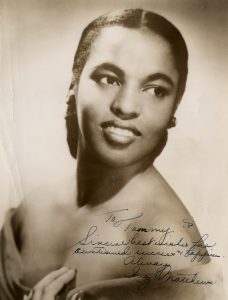

Episode 434. Inez Matthews Sings Schubert (and More!)


To kick off Black History Month 2026 (which, contrary to the current US administration, is still a thing, and not just on Countermelody, either!), I present to you another Zwischenfach singer, the (mezzo-)soprano Inez Matthews. She was born in Ossining, NY on 23 August 1917 and died in the Bronx on 28 March 2004. She is probably most famous for singing the role of Serena on the legendary 1951 (nearly) complete recording of Porgy and Bess (as well as lending her voice to the 1959 Otto Preminger film) which was conducted by Lehman Engel and starred icons Lawrence Winters and Camilla Williams. She also created the role of Irina in Kurt Weill’s Lost in the Stars (opposite Todd Duncan, who created the role of Porgy in 1935). She also sang in the 1952 revival of Virgil Thomson and Gertrude Stein’s Four Saints in Three Acts, alongside her brother Edward, who created the role of Saint Ignatius in the work’s 1934 premiere. In spite of these impressive credentials, Inez Matthews today is not nearly as well-remembered as, say, either Winters or Williams. In addition to these accomplishments, Matthews also recorded in 1954 Schubert’s two major song cycles Schöne Müllerin and Winterreise as well as the posthumous Schwanengesang collection. That as early the mid-1950s Inez Matthews was the first Black artist (and only the second woman after Lotte Lehmann) to record those Schubert cycles, is extroardinary; that her performances are so exceptionally good, lends these recordings more than mere historical value. However, until the song cycles were recently reissued by Parnassus Records as part of their “Black Swans” series, these remained virtually inaccessible to listeners. Today’s episode includes selections from almost all the above-mentioned recordings, as well as an exceptional 1953 recording of spirituals accompanied by Jonathan Brice, brother of the esteemed contralto Carol Brice. And let us also tip our hats to Herr Schubert, who just celebrated his 229th birthday!

Countermelody is the podcast devoted to the glory and the power of the human voice raised in song. Singer and vocal aficionado Daniel Gundlach explores great singers of the past and present focusing in particular on those who are less well-remembered today than they should be. Daniel’s lifetime in music as a professional countertenor, pianist, vocal coach, voice teacher, and author yields an exciting array of anecdotes, impressions, and “inside stories.” At Countermelody’s core is the celebration of great singers of all stripes, their instruments, and the connection they make to the words they sing. By clicking on the following link (https://linktr.ee/CountermelodyPodcast) you can find the dedicated Countermelody website which contains additional content including artist photos and episode setlists. The link will also take you to Countermelody’s Patreon page, where you can pledge your monthly or yearly support at whatever level you can afford.
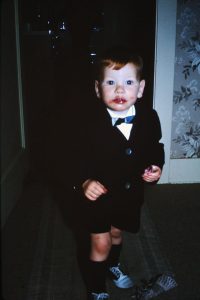

Episode 432. Dan Picks YET AGAIN!


One of the things about my podcast that brings me the greatest joy is when I can introduce my listeners to a wide range of singers that need to be better-known. Back when I was preparing birthday episodes in October, I chose literally hundreds of tracks that I wanted to share with my listeners. At the time I made use of only a handful of them, so today I have once again dipped into that vat of gorgeous, expressive voices to bring another foretaste of what’s to come on the podcast. There’s a special section on some amazing tenors (Alain Vanzo, Wiesław Ochman, George Thill, Anton de Ridder, Richard Lewis, Charles Kullman and many others); I also introduce a plethora of singers of color who will be appearing throughout Black History Month (Madeline Bell, Bertice Reading, Maxine Sullivan, the late Iris Williams, Adelaide Hall, Roland Hayes, Faye Robinson, and Toni Harper, along with many others). It’s offered in a spirit of solidarity, communal sharing, and generosity as we face together the tough times ahead.

Countermelody is the podcast devoted to the glory and the power of the human voice raised in song. Singer and vocal aficionado Daniel Gundlach explores great singers of the past and present focusing in particular on those who are less well-remembered today than they should be. Daniel’s lifetime in music as a professional countertenor, pianist, vocal coach, voice teacher, and author yields an exciting array of anecdotes, impressions, and “inside stories.” At Countermelody’s core is the celebration of great singers of all stripes, their instruments, and the connection they make to the words they sing. By clicking on the following link (https://linktr.ee/CountermelodyPodcast) you can find the dedicated Countermelody website which contains additional content including artist photos and episode setlists. The link will also take you to Countermelody’s Patreon page, where you can pledge your monthly or yearly support at whatever level you can afford.