Tag Archives: Paul Knepler

Episode 426. Teresa Stratas [Season Seven Premiere]


I wanted to start off the year (and the new season of the podcast) with something momentous, and who better to take us there than one of the great operatic artists of the twentieth century: Canadian soprano Teresa Stratas. I have not yet done a full episode on this artist, though she provided me with what was probably my greatest night in the opera house (I get into that in the episode, as well as featuring a rare excerpt of her in that shattering performance). As always with my podcast, I like to provide unexpected glimpses of such a great singer, alongside many of her most legendary moments. So not only do we hear Stratas’ legendary interpretations of her favorite roles (Mimì, Mélisande, Lulu, Violetta, and Salome [the latter a role she never portrayed onstage]), we also hear her in Mozart, her favorite composer, as an operetta singer, as an interpreter of Lieder, in her single Broadway role in the short-lived Rags, and in another of her creations, the title role in Australian composer Peggy Glanville-Hicks’ Nausicaa, as well as two late career Met roles, Liù and the Komponist, roles she had sung there at the beginning of her career, more than thirty years earlier. Along the way, we hear her with artists who have already been featured in previous seasons (Gabriel Bacquier, Florence Quivar and Fritz Wunderlich), but also singers who will each be featured in the upcoming series of the podcast, including Tom Krause, Wiesław Ochman, Bernd Weikl, Elizabeth Harwood, and Vasile Moldoveanu. Also much discussion also about what makes Stratas unique as an interpreter, and why she deserves to be ranked among the very greatest. Welcome to Season Seven!

Countermelody is the podcast devoted to the glory and the power of the human voice raised in song. Singer and vocal aficionado Daniel Gundlach explores great singers of the past and present focusing in particular on those who are less well-remembered today than they should be. Daniel’s lifetime in music as a professional countertenor, pianist, vocal coach, voice teacher, and author yields an exciting array of anecdotes, impressions, and “inside stories.” At Countermelody’s core is the celebration of great singers of all stripes, their instruments, and the connection they make to the words they sing. By clicking on the following link (https://linktr.ee/CountermelodyPodcast) you can find the dedicated Countermelody website which contains additional content including artist photos and episode setlists. The link will also take you to Countermelody’s Patreon page, where you can pledge your monthly or yearly support at whatever level you can afford.
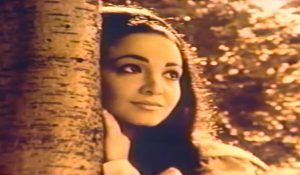
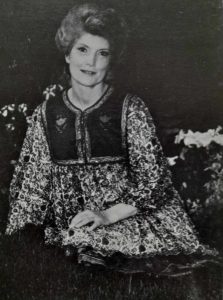


Episode 425. Mady Mesplé chante l’Opérette viennoise


For the final episode of 2025, and of Season Six of the podcast, I present pure frothy escapism from the delectable Mady Mesplé, the finest French coloratura of her generation. My original intention was to feature her exclusively in operetta repertoire, and I’ve stuck to that. But as I began to compile a setlist I realized that there was a subset of her recordings of this repertoire that presented her at her absolute finest: Viennese operetta, as translated into French. From her earliest recordings, operetta was central to her recorded canon, and from 1969 through 1980, she made a choice selection of complete recordings of operetta in French for the Pathé label. Throughout her recorded legacy, there are selections from works such as La veuve joyeuse, (Die lustige Witwe) Trois valses (Drei Walzer), Le pays du sourire (Das Land des Lächelns), Sang viennois (Wiener Blut) and others, which made such a smooth transition into French that they often sounded as if they were could originally have been set in that language. In addition, in the year 1971, Mesplé made a high-flying recording of Johann Strauss waltzes set to French texts that represents her at her vocal zenith. From all of these aforementioned sources, as well as from a 1980 recording of operetta arias with conductor Pierre Dervaux, come the selections for this episode. And for those who would like some Viennese operetta in its original language, the episode begins with the creator records from Franz Lehár’s final original operetta Giuditta, as recorded by Richard Tauber and Jarmila Novotná with Lehár himself conducting the Wiener Philharmoniker. In whichever language you choose, let us waltz our way out of this horrific year into a more humane and livable 2026!

Countermelody is the podcast devoted to the glory and the power of the human voice raised in song. Singer and vocal aficionado Daniel Gundlach explores great singers of the past and present focusing in particular on those who are less well-remembered today than they should be. Daniel’s lifetime in music as a professional countertenor, pianist, vocal coach, voice teacher, and author yields an exciting array of anecdotes, impressions, and “inside stories.” At Countermelody’s core is the celebration of great singers of all stripes, their instruments, and the connection they make to the words they sing. By clicking on the following link (https://linktr.ee/CountermelodyPodcast) you can find the dedicated Countermelody website which contains additional content including artist photos and episode setlists. The link will also take you to Countermelody’s Patreon page, where you can pledge your monthly or yearly support at whatever level you can afford.


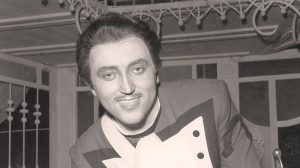
Episode 419. Wunderlich in Duet


Anytime I do an episode on Fritz Wunderlich, the sun breaks through the clouds, emotionally speaking. Possessor of a bright-timbred voice of such exquisite beauty anchored by a profoundly satisfying musical sensibility, he and his legacy inspire rather than sadden me. Today I’ve chosen a duet program, because it allows me to showcase Fritz’s effortless stylistic flexibility, while at the same time highlighting a rainbow of singing partners, some of whom are old favorites, and others of whom might not yet be well-known to my listeners. Today’s treasure-trove of singers includes sopranos Maria Stader, Lucia Popp, Teresa Stratas, Erika Köth, Edith Mathis, Stefania Woytowicz, Pilar Lorengar, Melitta Muszely, Trude Eipperle, Hilde Güden, Anneliese Rothenberger, and Ruth-Margret Pütz; mezzo-soprano Christa Ludwig; and baritones Hermann Prey and Marcel Cordes, among others. Wunderlich and his co-stars sing repertoire ranging from the early Baroque through Janáček, including a particularly generous helping of Italian opera (albeit sung mostly in German), German Singspiel and Viennese operetta. It’s a long episode, so don’t hesitate to divide the episode up into bite-sized segments. No matter how you slice it up, I forecast a blissful response to these clarion tones!

Countermelody is a podcast devoted to the glory and the power of the human voice raised in song. Singer and vocal aficionado Daniel Gundlach explores great singers of the past and present focusing in particular on those who are less well-remembered today than they should be. Daniel’s lifetime in music as a professional countertenor, pianist, vocal coach, voice teacher, and author yields an exciting array of anecdotes, impressions, and “inside stories.” At Countermelody’s core is the celebration of great singers of all stripes, their instruments, and the connection they make to the words they sing. By clicking on the following link (https://linktr.ee/CountermelodyPodcast) you can find the dedicated Countermelody website which contains additional content including artist photos and episode setlists. The link will also take you to Countermelody’s Patreon page, where you can pledge your monthly or yearly support at whatever level you can afford.
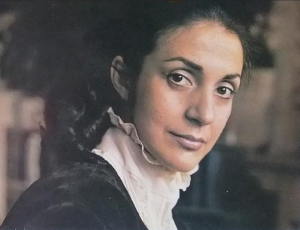

Episode 406. Dan’s Belated Birthday Gals (Soprano Edition)


The last of my festive potpourri episodes for this, my birthday month, this episode focuses on a favorite vocal range of this opera queen: the soprano voice, in all its variety and glory. Included are such pristine lyric voices as Erika Köth, Benita Valente (who just departed us last weekend, shortly after celebrating her 91st birthday), Judith Raskin, Judith Blegen, Mattiwilda Dobbs, and Edith Mathis, among others; medium- to heavier-weight lyric voices such as Pilar Lorengar, Delia Rigal, Teresa Stratas, Taru Valjakka, Melitta Muszely, and Margarete Teschemacher; and “ambiguous” voices as Arleen Augér, Martha Flowers, Irmgard Seefried, Andrée Esposito, Jill Gomez (pictured), Faye Robinson, Hilde Güden, and Elizabeth Harwood which could, if you’ll pardon the term, “swing both ways,” at least in terms of vocal weight! They perform a wide range of material of material including vocal chamber music by Manuel de Falla and Miriam Gideon; art song by Brahms, Bridge, Poulenc, Beethoven, Bizet, Granados, Sibelius, and Mahler; operetta and musical selections by Arlen, Lehár, Stolz, and Kern; and full-throated operatic selections by Richard Strauss, Jacques Ibert, Leoncavallo, and Meyerbeer. It’s another jam-packed episode guaranteed (in a limited sense) to bring you the full-range of listening pleasure.

Countermelody is a podcast devoted to the glory and the power of the human voice raised in song. Singer and vocal aficionado Daniel Gundlach explores great singers of the past and present focusing in particular on those who are less well-remembered today than they should be. Daniel’s lifetime in music as a professional countertenor, pianist, vocal coach, voice teacher, and author yields an exciting array of anecdotes, impressions, and “inside stories.” At Countermelody’s core is the celebration of great singers of all stripes, their instruments, and the connection they make to the words they sing. By clicking on the following link (https://linktr.ee/CountermelodyPodcast) you can find the dedicated Countermelody website which contains additional content including artist photos and episode setlists. The link will also take you to Countermelody’s Patreon page, where you can pledge your monthly or yearly support at whatever level you can afford.

Episode 321. Anna Moffo und die leichte Muse


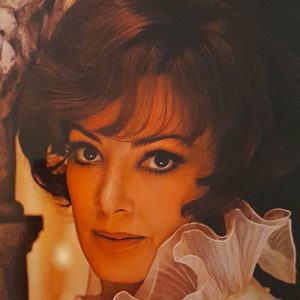
Today’s episode, “Anna Moffo und die leichte Muse,” continues the delicious theme of opera singers “letting down their hair” begun with “Hadley in Wien,” and it also forms a complement and a supplement to the “Anna Moffo Reappraised” episode that I published exactly two years ago. Anna Moffo’s recording career divides into three separate eras and markets: Italy in the late 1950s and early 1960s; which overlapped with the US in the 1960s; and finally Germany in the 1970s and beyond. Each of these eras in the Moffo career was represented on disc in different ways: jazz arrangements of standards from the Great American Songbook in her earliest (and rarest) Italian recordings, followed by breathy Italian pop songs (some even composed by Moffo herself); early twentieth century Broadway operettas and MGM movie musicals in the US when her voice was at its peak; and Viennese operetta for the German-speaking market, as her vocal instrument became more fragile, while it still represented her finest work of that period. Each of these eras and genres is thoroughly explored in this episode. She is partnered in all of this repertoire by some impressive co-stars: Sergio Franchi, René Kollo, Rudolf Schock, and Robert Merrill as duet partners, with musical direction by Ennio Morricone, Henri René, Lehman Engel, and Skitch Henderson. Recordings range from 1960 through 1983, with the vast majority coming from the 1960s. In spite of the vocal and technical frailty displayed in the later recordings, Moffo’s ability to communicate in this repertoire never flagged. And of course throughout her entire career, no singer so consistently presented a more striking image of vocal and physical glamour than did Anna Moffo.

Countermelody is a podcast devoted to the glory and the power of the human voice raised in song. Singer and vocal aficionado Daniel Gundlach explores great singers of the past and present focusing in particular on those who are less well-remembered today than they should be. Daniel’s lifetime in music as a professional countertenor, pianist, vocal coach, voice teacher, and journalist yields an exciting array of anecdotes, impressions, and “inside stories.” At Countermelody’s core is the celebration of great singers of all stripes, their instruments, and the connection they make to the words they sing. By clicking on the following link (https://linktr.ee/CountermelodyPodcast) you can find the dedicated Countermelody website which contains additional content including artist photos and episode setlists. The link will also take you to Countermelody’s Patreon page, where you can pledge your monthly or yearly support at whatever level you can afford.


Episode 320. Hadley in Wien


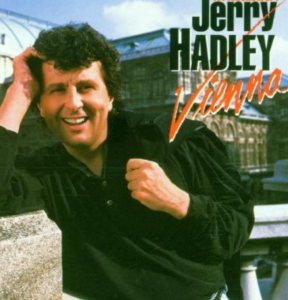
I can think of no more appropriate way to end this difficult year than with another episode lauding my late friend, the sublime American lyric tenor Jerry Hadley. I am of the firm belief that Jerry was one of the finest singers this country has ever produced. Everyone has their favorite among his performances, which display an eclecticism rare among opera singers, but I believe that his artistry found its fullest and truest expression in his performances of Viennese operetta. His bright, sunny vocal timbre, his capacity for vocal shading and dynamics, his sense of both humor and pathos, his ringing high notes, as well as of precision and acuity of his German diction make him an ideal interpreter of this music. The majority of the music heard on this episode comes from two albums of operetta arias that Jerry recorded in 1995 under the baton of Richard Bonynge. This is supplemented by two duets with Australian soprano Deborah Riedel from a series of English-language versions of Lehár operettas also conducted by Bonynge, as well as various live performances of Jerry in the music of Johann Strauss II and Erich Korngold. While Lehár is the most prominently featured composer, we also heard excerpts from work by Emmerich Kálmán, Carl Millöcker, Ralph Benatzky, Leo Fall, and that king of operetta tenors himself, Richard Tauber, who was also quite a capable composer. The episode concludes with reminiscences of my close friendship with Jerry, crowned by a magisterial live performance of “Dein ist mein ganzes Herz.”

Countermelody is a podcast devoted to the glory and the power of the human voice raised in song. Singer and vocal aficionado Daniel Gundlach explores great singers of the past and present focusing in particular on those who are less well-remembered today than they should be. Daniel’s lifetime in music as a professional countertenor, pianist, vocal coach, voice teacher, and journalist yields an exciting array of anecdotes, impressions, and “inside stories.” At Countermelody’s core is the celebration of great singers of all stripes, their instruments, and the connection they make to the words they sing. By clicking on the following link (https://linktr.ee/CountermelodyPodcast) you can find the dedicated Countermelody website which contains additional content including artist photos and episode setlists. The link will also take you to Countermelody’s Patreon page, where you can pledge your monthly or yearly support at whatever level you can afford.


Episode 206. Jerry Hadley


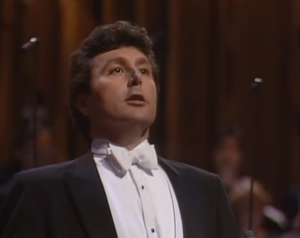
Jerry Hadley (16 June 1952 – 18 July 2007) is regarded by many as the most gifted American lyric tenor of the late 20th century. Last month he would have celebrated his 71st birthday. And today is the sixteenth anniversary of his untimely death. I knew Jerry well in the early 2000s when he was dating one of my best friends. Our friendship developed separately from that: in those years in which he was working at rebuilding his voice and career we worked together on a cross-section of his old and new repertoire. At the time of his death, he was no longer romantically involved with my friend, so he and I had drifted apart. Nevertheless, it hit me very, very hard, and I mourn his loss to this day. On that front, I have quite a few things to say about singers and mental illness, and the ruthlessness, implacability, and heartlessness of a profession which so often chews up the most vulnerable of us and spits them back out. When Jerry was at his best, his art sustained him, but the challenges ultimately became too much for him to face. But this episode is primarily a celebration: my primary objective is to present my friend at his exceptional best, in performances, both live and studio, which celebrate his voice, artistry, and spirit, performances which provided his public with some of the finest tenor singing they would ever hear, in that, or any other, era.

WARNING: THIS EPISODE CONTAINS A DISCUSSION OF SUICIDE AND SUICIDAL IDEATION.

Countermelody is a podcast devoted to the glory and the power of the human voice raised in song. Singer and vocal aficionado Daniel Gundlach explores great singers of the past and present focusing in particular on those who are less well-remembered today than they should be. Daniel’s lifetime in music as a professional countertenor, pianist, vocal coach, voice teacher, and journalist yields an exciting array of anecdotes, impressions, and “inside stories.” At Countermelody’s core is the celebration of great singers of all stripes, their instruments, and the connection they make to the words they sing. By clicking on the following link (https://linktr.ee/CountermelodyPodcast) you can find the dedicated Countermelody website which contains additional content including artist photos and episode setlists. The link will also take you to Countermelody’s Patreon page, where you can pledge your monthly support at whatever level you can afford. Bonus episodes available exclusively to Patreon supporters are currently available and further bonus content including interviews and livestreams is planned for the upcoming season.

Episode 180. Anna Moffo Reappraised


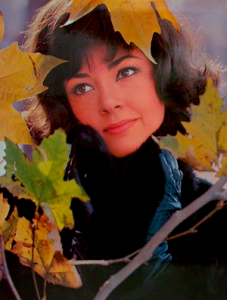
The Italian-American lyric coloratura soprano Anna Moffo (1932-2006) is, for many, one of the great singers of the past century. My first exposure to this artist was one of two, frankly, disastrous recordings released in the mid-1970s, in which the voice was a mere shadow of its former self, and in which her vocal defects and mannerisms had overtaken the intrinsic beauty of her voice. But there are so many exceptional qualities to Moffo as an artist, musician, and media star, that I felt compelled to do a frank reappraisal of her contribution to the lyric art. And am I glad that I did! I discovered an artist of great integrity who, in her best work, attained a similar level to any of the other great singers performing during that period. Unlike any other opera singer that I can think of, she conquered three distinct markets with equal success: first in Italy (where she rose to overnight stardom in the late 1950s and went on in the 1960s to become the star of her own eponymous television series); then in the United States throughout the 1960s; and finally, in the late 1960s and 70s, in Germany. But hers is also a cautionary tale of “too much, too soon” and the potentially destructive power of the media which has significance also in today’s opera world. Throughout the episode, live and studio examples of Moffo’s work, both bad and (mostly) good over the course of more than twenty years, are offered to support my discussion of her importance and influence as an artist, one that continues to this day. Vocal guest stars include tenors Carlo Bergonzi, Rudolf Schock, Giuseppe di Stefano, and Sergio Franchi, and musical collaborators include Tullio Serafin, Gerald Moore, Lorin Maazel, Hans Rosbaud, Fernando Previtali, Lehman Engel, Oliviero de Fabritiis, René Leibowitz, Kurt Eichhorn, Berislav Klobučar, and Franco Ferrara. For those who love Moffo, for those who hate her, and for those who find themselves somewhere in between, this episode is (dare I say it?) required listening.

Countermelody is a podcast devoted to the glory and the power of the human voice raised in song. Singer and vocal aficionado Daniel Gundlach explores great singers of the past and present focusing in particular on those who are less well-remembered today than they should be. Daniel’s lifetime in music as a professional countertenor, pianist, vocal coach, voice teacher, and journalist yields an exciting array of anecdotes, impressions, and “inside stories.” At Countermelody’s core is the celebration of great singers of all stripes, their instruments, and the connection they make to the words they sing. By clicking on the following link (https://linktr.ee/CountermelodyPodcast) you can find the dedicated Countermelody website which contains additional content including artist photos and episode setlists. The link will also take you to Countermelody’s Patreon page, where you can pledge your monthly support at whatever level you can afford. Bonus episodes available exclusively to Patreon supporters are currently available and further bonus content including interviews and livestreams is planned for the upcoming season.


Episode 114. James King


This week I turn my attention once again to the tenors, who have been getting rather short shrift of late. This week I feature the US-American jugendlicher heldentenor James King, who died 16 years ago this month. Trained as a baritone, he “converted” to tenor in his early thirties under the tutelage of the great French baritone and teacher Martial Singher. In the very early 1960s, he ended up in the ensemble of the Deutsche Oper Berlin, where he quickly established himself as a talent to be reckoned with. He sang countless performances of a relatively small number of roles, beginning with Florestan in Fidelio and including Wagner (Lohengrin, Walther in Meistersinger, Parsifal, Siegmund), Strauss (the Kaiser in Frau ohne Schatten, Bacchus, Apollo, Aegisth, and Herodes), Verdi (Otello, Don Carlo, Radames) Puccini (Cavaradossi, Calaf, Rodolfo), and a select number of French roles (Don José, Samson). I am letting Mr. King do the heavy lifting today: I have four LPs in my collection that have never been reissued since their original release in the 1960s: two operatic recital recordings, an operetta album, and a volume of songs by Schubert and Strauss. I feature generous excerpts from each of these, as well as an excerpt from his recording with the late Bernard Haitink of Mahler’s Das Lied von der Erde. It is my joy to bring this exceptional singer to your attention: a superb technician who combines powerful utterance with interpretive sensitivity and musical nuance.

Countermelody is a podcast devoted to the glory and the power of the human voice raised in song. Singer and vocal aficionado Daniel Gundlach explores great singers of the past and present focusing in particular on those who are less well-remembered today than they should be. Daniel’s lifetime in music as a professional countertenor, pianist, vocal coach, voice teacher, and journalist yields an exciting array of anecdotes, impressions, and “inside stories.” At Countermelody’s core is the celebration of great singers of all stripes, their instruments, and the connection they make to the words they sing. By clicking on the following link (https://linktr.ee/CountermelodyPodcast) you can find the dedicated Countermelody website which contains additional content including artist photos and episode setlists. The link will also take you to Countermelody’s Patreon page, where you can pledge your monthly support at whatever level you can afford. Bonus episodes available exclusively to Patreon supporters are currently available and further bonus content including interviews and livestreams is planned for the upcoming season.