Category Archives: Forgotten Divas

Episode 415. Our Feathered Friends (Stage Edition)


As I sat yesterday pondering all my friends, family, and compatriots celebrating Thanksgiving, my thoughts turned to the turkey, the traditional sacrificial creature for this event. And whatever the avian counterpart of a rabbit hole is, that’s where my thoughts turned as I realized that a tribute to our feathered friends in general would make a nice, lightweight, potpourri episode as we once again hurtle into the final preparations for the holiday season. As my list of possible repertoire exploded, I decided to limit myself only to stage works in which a bird is somehow involved: as a character, as a symbol, as a metaphor, perhaps even as all three simultaneously. So, with composers ranging from Rameau to Sondheim, including such forgotten figures as Walter Braunfels, Victor Massé, and Félicien David, I have put together a wonderful program that focuses particularly but not exclusively on the florid French repertoire, performed by such favorites as Reri Grist, James King, Ileana Cotrubas, Fritz Wunderlich, Sylvia Sass, and Mattiwilda Dobbs, bolstered by such relative newcomers to Countermelody as Léïla Ben Sédira, Ninon Vallin, Janine Micheau, Harolyn Blackwell, Emma Calvé, Endrik Wottrich, Liz Callaway, and Flore Wend. In addition, I am particularly thrilled to present a sublime singer whom I’d not yet encountered before yesterday: the British-Swedish songbird Jacqueline Delman, singing Granados!

Countermelody is a podcast devoted to the glory and the power of the human voice raised in song. Singer and vocal aficionado Daniel Gundlach explores great singers of the past and present focusing in particular on those who are less well-remembered today than they should be. Daniel’s lifetime in music as a professional countertenor, pianist, vocal coach, voice teacher, and author yields an exciting array of anecdotes, impressions, and “inside stories.” At Countermelody’s core is the celebration of great singers of all stripes, their instruments, and the connection they make to the words they sing. By clicking on the following link (https://linktr.ee/CountermelodyPodcast) you can find the dedicated Countermelody website which contains additional content including artist photos and episode setlists. The link will also take you to Countermelody’s Patreon page, where you can pledge your monthly or yearly support at whatever level you can afford.

Episode 411. Orchestral Song [International Edition]


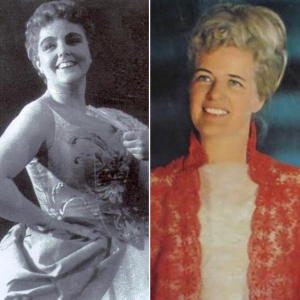
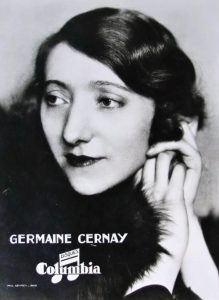
An old LP of Tōru Takemitsu’s Coral Island and a conversation with a new friend about American Exceptionalism inspired today’s episode, the “International Edition” of my ongoing series on Orchestral Song. Coral Island is still here, although I ended up using a later (and better) recording than the one in my collection. I also feature the work of composers Karol Szymanowski, Augustyn Bloch, Aminollah Hossein, Kaija Saariaho, Frederic Mompou, Ottorino Respighi, Fartein Valen, Bohuslav Martinů, and many others, performed by Gerald Finley, Andréa Guiot, Robert Tear, Dorothy Dorow, Halina Łukomska, Victoria de los Ángeles, Andrzej Hiolski, Bernard Kruysen, and Marianne Crebassa, for starters! I have been enjoying so much preparing these recent “potpourri” episodes, and this one is particularly chock full of surprises and discoveries!

Countermelody is a podcast devoted to the glory and the power of the human voice raised in song. Singer and vocal aficionado Daniel Gundlach explores great singers of the past and present focusing in particular on those who are less well-remembered today than they should be. Daniel’s lifetime in music as a professional countertenor, pianist, vocal coach, voice teacher, and author yields an exciting array of anecdotes, impressions, and “inside stories.” At Countermelody’s core is the celebration of great singers of all stripes, their instruments, and the connection they make to the words they sing. By clicking on the following link (https://linktr.ee/CountermelodyPodcast) you can find the dedicated Countermelody website which contains additional content including artist photos and episode setlists. The link will also take you to Countermelody’s Patreon page, where you can pledge your monthly or yearly support at whatever level you can afford.

Episode 409. Arie antiche [Schirmer Edition]


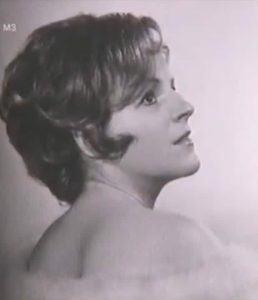
Today’s potpourri episode is a special one for anyone who has ever studied voice in a college, university or conservatory. One of the primary sources of repertoire for instructors of singing has been a book first published by G. Schirmer in 1894 entitled Twenty-Four Italian Songs and Arias, consisting primarily of arie antiche, i.e. songs from the Italian baroque (Caldara, Monteverdi, Scarlatti, Durante, and others), heavily edited, and often virtually rewritten, by musicologist Theodore Baker. Many of the works were also falsely attributed to composers (Pergolesi, Stradella, and Marcello in particular) who had nothing to do with the pieces in question. In spite of those editorial issues, these songs have figured prominently ever since in the early repertoire of most young singers. They have also been a staple of the concert platform for as long (and, truth be told, even longer), and remain so to this day. Today’s episode focuses on this repertoire as recorded by some of the greatest singers of the twentieth century. Some of these artists are Countermelody favorites (Claudia Muzio, Elly Ameling, Igor Gorin, Roberta Alexander, Irina Arkhipova, Gérard Souzay) but many others have, in spite of their stature, received relatively little exposure on the podcast (Luciano Pavarotti, Suzanne Danco, Roland Hayes, Georges Thill, Montserrat Caballé, John McCormack, Dmitri Hvorostovsky, Nigel Rogers, and Beniamino Gigli, among many others presented in the episode). And let us not forget to raise a glass to Joan Sutherland, whose 99th birthday is observed today, and whose voice is the last one heard on the episode, in a rare 1960 radio recording, stunningly vocalized, that might surprise you.

Countermelody is a podcast devoted to the glory and the power of the human voice raised in song. Singer and vocal aficionado Daniel Gundlach explores great singers of the past and present focusing in particular on those who are less well-remembered today than they should be. Daniel’s lifetime in music as a professional countertenor, pianist, vocal coach, voice teacher, and author yields an exciting array of anecdotes, impressions, and “inside stories.” At Countermelody’s core is the celebration of great singers of all stripes, their instruments, and the connection they make to the words they sing. By clicking on the following link (https://linktr.ee/CountermelodyPodcast) you can find the dedicated Countermelody website which contains additional content including artist photos and episode setlists. The link will also take you to Countermelody’s Patreon page, where you can pledge your monthly or yearly support at whatever level you can afford.


Episode 408. Rachel Yakar, Artiste Lyrique Française


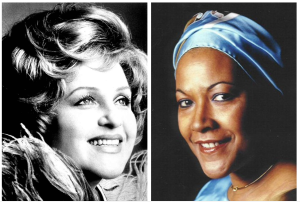
The great French soprano Rachel Yakar died on 24 June 2023 at the age of 87. As she frequently performed opposite our last subject, Swiss tenor Eric Tappy, this episode makes a suitable pendant to that one. Celebrated for her transcendent performances of Baroque music, (Monteverdi and the French Baroque in particular), Yakar was (like previous podcast subjects Eugene Holmes, Oralia Domínguez, Hana Janků, Gwendolyn Killebrew, and Teresa Żylis-Gara) also a member of ensemble of the Deutsche Oper am Rhein in Düsseldorf and Duisburg, with which company she performed for more than 25 years, singing a dizzying range of repertoire, everything from Mélisande to Arabella, Liù to Rusalka, Euridice to Desdemona. She also performed Donna Elvira and the Marschallin at Glyndebourne; and was an unforgettable Poppea in the Ponnelle-Harnoncourt Monteverdi cycle filmed for Unitel. In her prime she was also a frequent visitor to the recording studio, singing everything from Rameau to Varèse, Mozart to Messiaen, with conductors from Harnoncourt to Boulez, Leonhardt to Nagano. She was also a devoted song recitalist and in the later years of her career, she made two recordings of melodies for Virgin Records with the admirable support of her long-term accompanist Claude Lavoix. For the majority of this episode, I have chosen excerpts from both of those recordings, featuring the songs of Fauré and Hahn, which include settings of poets central to their output, including Paul Verlaine, Armand Silvestre, Léconte de Lisle, and Théodore de Banville, supplementing it with additional material in French by Ravel, Lekeu, Clérambault, Messiaen, and Poulenc. Yakar, who, like Régine Crespin and Nadine Denize, studied under the French dramatic soprano Germaine Lubin, was renowned for her faultless technique, her acting prowess, her peerless French diction, and her communicative artistic sensibility, traits of which are all in evidence in all of her recordings from the 1960s through the end of her career in the mid-1990s. Yakar was especially treasured by her colleagues, friends, and students for the warmth and effervescence of her personality, and her devotion to passing on her knowledge and experience to a younger generation of singers. May you delight in the delicacy, humor, precision, and pathos of one of the most prodigiously gifted and versatile vocal artists of her generation.

Countermelody is a podcast devoted to the glory and the power of the human voice raised in song. Singer and vocal aficionado Daniel Gundlach explores great singers of the past and present focusing in particular on those who are less well-remembered today than they should be. Daniel’s lifetime in music as a professional countertenor, pianist, vocal coach, voice teacher, and author yields an exciting array of anecdotes, impressions, and “inside stories.” At Countermelody’s core is the celebration of great singers of all stripes, their instruments, and the connection they make to the words they sing. By clicking on the following link (https://linktr.ee/CountermelodyPodcast) you can find the dedicated Countermelody website which contains additional content including artist photos and episode setlists. The link will also take you to Countermelody’s Patreon page, where you can pledge your monthly or yearly support at whatever level you can afford.

Episode 406. Dan’s Belated Birthday Gals (Soprano Edition)


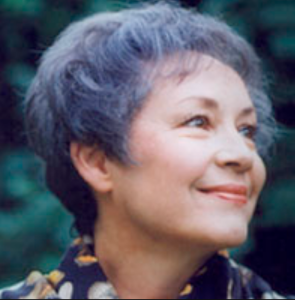
The last of my festive potpourri episodes for this, my birthday month, this episode focuses on a favorite vocal range of this opera queen: the soprano voice, in all its variety and glory. Included are such pristine lyric voices as Erika Köth, Benita Valente (who just departed us last weekend, shortly after celebrating her 91st birthday), Judith Raskin, Judith Blegen, Mattiwilda Dobbs, and Edith Mathis, among others; medium- to heavier-weight lyric voices such as Pilar Lorengar, Delia Rigal, Teresa Stratas, Taru Valjakka, Melitta Muszely, and Margarete Teschemacher; and “ambiguous” voices as Arleen Augér, Martha Flowers, Irmgard Seefried, Andrée Esposito, Jill Gomez (pictured), Faye Robinson, Hilde Güden, and Elizabeth Harwood which could, if you’ll pardon the term, “swing both ways,” at least in terms of vocal weight! They perform a wide range of material of material including vocal chamber music by Manuel de Falla and Miriam Gideon; art song by Brahms, Bridge, Poulenc, Beethoven, Bizet, Granados, Sibelius, and Mahler; operetta and musical selections by Arlen, Lehár, Stolz, and Kern; and full-throated operatic selections by Richard Strauss, Jacques Ibert, Leoncavallo, and Meyerbeer. It’s another jam-packed episode guaranteed (in a limited sense) to bring you the full-range of listening pleasure.

Countermelody is a podcast devoted to the glory and the power of the human voice raised in song. Singer and vocal aficionado Daniel Gundlach explores great singers of the past and present focusing in particular on those who are less well-remembered today than they should be. Daniel’s lifetime in music as a professional countertenor, pianist, vocal coach, voice teacher, and author yields an exciting array of anecdotes, impressions, and “inside stories.” At Countermelody’s core is the celebration of great singers of all stripes, their instruments, and the connection they make to the words they sing. By clicking on the following link (https://linktr.ee/CountermelodyPodcast) you can find the dedicated Countermelody website which contains additional content including artist photos and episode setlists. The link will also take you to Countermelody’s Patreon page, where you can pledge your monthly or yearly support at whatever level you can afford.
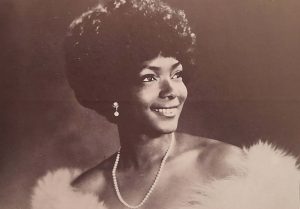

Episode 405. Rescue Mission (Belated Birthday Edition)


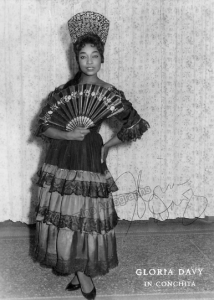
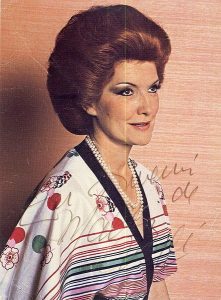
Today’s episode is the latest installment in my series entitled “Rescue Mission,” which reintroduces great singers who have already been featured on the podcast. This is the Belated Birthday edition of that series, which reintroduces us to a wide range of Countermelody favorites, including jazz singer Ethel Ennis; baritones Robert Massard, Gérard Souzay, and Andrzej Hiolski; sopranos Sylvia Sass (pictured), Veronica Tyler, April Cantelo, Elly Ameling, Gloria Davy, Margaret Marshall, Rosanna Carteri, Sarah Reese, Ilse Wolf, and Carol Neblett; mezzo-sopranos Jennie Tourel, Maureen Lehane, and Shannon Bolin; and tenors David Rendall and Stuart Burrows. The repertoire is as varied and rare as are the artists featured, including songs by Rimsky-Korsakov, Chopin, Malcolm Williamson, and Alec Wilder; opera arias by Schreker, Mozart, Mascagni, and Verdi; and selections by Bach and Schütz. I love doing this kind of episode, because it allows me to cast my net wide and share with you the kinds of singers and repertoire that are bringing me comfort and joy in these trying times.

Countermelody is a podcast devoted to the glory and the power of the human voice raised in song. Singer and vocal aficionado Daniel Gundlach explores great singers of the past and present focusing in particular on those who are less well-remembered today than they should be. Daniel’s lifetime in music as a professional countertenor, pianist, vocal coach, voice teacher, and author yields an exciting array of anecdotes, impressions, and “inside stories.” At Countermelody’s core is the celebration of great singers of all stripes, their instruments, and the connection they make to the words they sing. By clicking on the following link (https://linktr.ee/CountermelodyPodcast) you can find the dedicated Countermelody website which contains additional content including artist photos and episode setlists. The link will also take you to Countermelody’s Patreon page, where you can pledge your monthly or yearly support at whatever level you can afford.
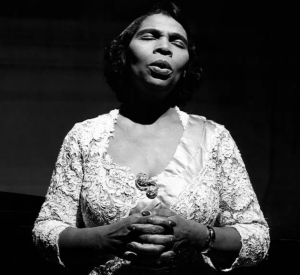

Episode 402. Ina Souez Revisited


The extraordinary Ina Souez (1903 – 1992), was one of the few Native American singers to achieve worldwide fame on the operatic stage. Though her career was truncated by the collapse of her European career because of the impending World War, Souez’s place in the history of recorded sound is assured by virtue of her participation in the series of Mozart operas as produced by HMV in the mid-1930s as souvenirs of the first seasons of the Glyndebourne Festival. Indeed, one could argue that her Fiordiligi remains the standard by which all other interpreters are judged. Souez, the 33rd anniversary of whose death is observed in December, was one of the few Native American singers to achieve worldwide fame on the operatic stage. This episode focuses on an ultra-rare 1957 self-titled album of songs and arias that marked a comeback of sorts for Souez, who upon escaping Europe as a star found herself a virtual non-entity when she returned to her native country. I also play excerpts from the classic mid-1930’s recordings of Don Giovanni and Così fan tutte from Glyndebourne which have forever cemented the reputation of Souez in the hearts and minds of lovers of great singing. In addition, we hear 1935 recordings of Micaela’s aria as well as the “Casta diva” from Norma and a pair of light classical 78s in which Souez’s voice rings out with youthful vigor and enthusiasm. Other singers heard on these recordings include soprano Luise Helletsgruber; tenors Heddle Nash, Webster Booth, and Koloman von Pátaky; contralto Lore Fischer; and baritones John Brownlee and Willi Domgraf-Fassbaender. Conductors include John Barbirolli, Carl Schuricht, and, of course, the great Fritz Busch.

Countermelody is a podcast devoted to the glory and the power of the human voice raised in song. Singer and vocal aficionado Daniel Gundlach explores great singers of the past and present focusing in particular on those who are less well-remembered today than they should be. Daniel’s lifetime in music as a professional countertenor, pianist, vocal coach, voice teacher, and author yields an exciting array of anecdotes, impressions, and “inside stories.” At Countermelody’s core is the celebration of great singers of all stripes, their instruments, and the connection they make to the words they sing. By clicking on the following link (https://linktr.ee/CountermelodyPodcast) you can find the dedicated Countermelody website which contains additional content including artist photos and episode setlists. The link will also take you to Countermelody’s Patreon page, where you can pledge your monthly or yearly support at whatever level you can afford.
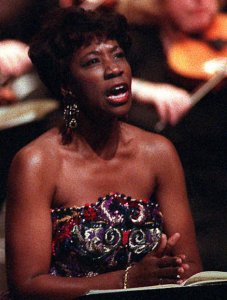


Episode 400. Meet Ilse Wolf


German-British soprano Ilse Wolf (07 June 1921 – 06 September 1999) was another fine lyric soprano active primarily in Britain from the 1950s through the early 1980s. One of the reasons she is remembered today is because she recommended a very young Janet Baker to her own teacher, Helene Isepp, which began a long association between the two which lasted until Isepp’s death in 1968. But Wolf was a fine singer in her own right and was a particularly cogent and expressive singer of Lieder as well as Baroque music. My listeners may remember that during Holy Week this year I played a live recording of Wolf singing the Johannes-Passion under the baton of Pablo Casals. I knew of Wolf because she is the soprano on a delightful 1967 recording of Monteverdi madrigals led by Raymond Leppard. In 1969 she also made a delightful recording of Lieder, her one solo disc, with Martin Isepp, Helene Isepp’s son and also an early collaborator of Janet Baker’s. I decided to scour the interwebs to see what other Ilse Wolf material I could come up with to feature her in her own episode. The answer, beyond these few examples, is: not much, but there were a few additional choice items, and in listening and relistening to the Lieder recording in particular, I discovered that Ilse Wolf was a very fine interpreter, indeed. Her life story is also a compelling one, and I’m privileged to share it (and her delectable singing) with my beloved listeners.

Countermelody is a podcast devoted to the glory and the power of the human voice raised in song. Singer and vocal aficionado Daniel Gundlach explores great singers of the past and present focusing in particular on those who are less well-remembered today than they should be. Daniel’s lifetime in music as a professional countertenor, pianist, vocal coach, voice teacher, and author yields an exciting array of anecdotes, impressions, and “inside stories.” At Countermelody’s core is the celebration of great singers of all stripes, their instruments, and the connection they make to the words they sing. By clicking on the following link (https://linktr.ee/CountermelodyPodcast) you can find the dedicated Countermelody website which contains additional content including artist photos and episode setlists. The link will also take you to Countermelody’s Patreon page, where you can pledge your monthly or yearly support at whatever level you can afford.
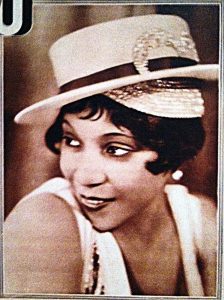


Episode 397. Anna Reynolds Sings Bach and Mahler


As many of you know, my beloved mother died this past week. I’ve been trying for two days now to put together a memorial episode that would do justice to the many divergent aspects of the woman that she was. Alas, I have not yet been able to rise to the challenge, so instead, I offer a recently published bonus episode devoted to the exceptional English contralto Anna Reynolds (05 June 1930 – 24 February 2014), a true servant of her art. She was an extraordinarily eclectic interpreter, blessed with a caramel voice and a vivid interpretive sense. I have chosen music by Bach and Mahler to highlight the qualities that made her so special, and which served the ethos of both of these composers remarkably well. These are among the finest interpretations of the vocal music of either Bach or Mahler that you will ever encounter. Today’s guest artists include soprano Helen Donath and tenor Peter Schreier, pianist Geoffrey Parsons, and conductors Hermann Scherchen, Josef Krips, Lorin Maazel, Benjamin Britten, Wyn Morris, Rudolf Kempe, and Karl Richter. May this exceptional artist and her colleagues bring a sense of peace, grace, and repose to all of us who so desperately need it.

Countermelody is a podcast devoted to the glory and the power of the human voice raised in song. Singer and vocal aficionado Daniel Gundlach explores great singers of the past and present focusing in particular on those who are less well-remembered today than they should be. Daniel’s lifetime in music as a professional countertenor, pianist, vocal coach, voice teacher, and author yields an exciting array of anecdotes, impressions, and “inside stories.” At Countermelody’s core is the celebration of great singers of all stripes, their instruments, and the connection they make to the words they sing. By clicking on the following link (https://linktr.ee/CountermelodyPodcast) you can find the dedicated Countermelody website which contains additional content including artist photos and episode setlists. The link will also take you to Countermelody’s Patreon page, where you can pledge your monthly or yearly support at whatever level you can afford.


Episode 396. Meet Shannon Bolin


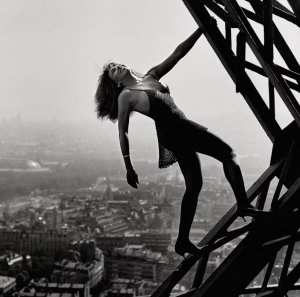
Today’s episode celebrates a prime example of that rara avis, the Broadway contralto, the fascinating and little-remembered Shannon Bolin (01 January 1917 – 25 March 2016). Her career covered the gamut from opera to Broadway covering all points along that continuum. In the year 1955, she and her husband, pianist, composer, and conductor Milton Kaye made two albums covering a range of material. The first, entitled Rare Wine, consists of “a bouquet of rare vintage,” lesser-known songs by Rodgers and Hart (and Rodgers and Hammerstein), George and Ira Gershwin, Jerome Kern and Dorothy Fields, Vernon Duke and Ogden Nash, Bart Howard, Noël Coward, and Alec Wilder; the second LP consists entirely of songs of Alec Wilder, including his song cycle Songs for Patricia, composed to poems by Norman Rosten dedicated to his young daughter. The episode also includes two highlights from Bolin’s stage career, from Damn Yankees and the 1969 off-Broadway smash Promenade, and closes with my favorite Alec Wilder song, the heartbreaking “Did You Ever Cross Over to Sneden’s?” that serves as a memorial tribute to my dear friend from years gone by, Matthew Lau, whose death was just announced this past week.

Countermelody is a podcast devoted to the glory and the power of the human voice raised in song. Singer and vocal aficionado Daniel Gundlach explores great singers of the past and present focusing in particular on those who are less well-remembered today than they should be. Daniel’s lifetime in music as a professional countertenor, pianist, vocal coach, voice teacher, and author yields an exciting array of anecdotes, impressions, and “inside stories.” At Countermelody’s core is the celebration of great singers of all stripes, their instruments, and the connection they make to the words they sing. By clicking on the following link (https://linktr.ee/CountermelodyPodcast) you can find the dedicated Countermelody website which contains additional content including artist photos and episode setlists. The link will also take you to Countermelody’s Patreon page, where you can pledge your monthly or yearly support at whatever level you can afford.


Episode 392. Ernst Kozub Revisited [Verdi Edition]


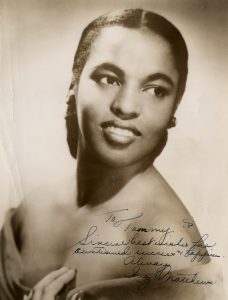
Since posting a tribute to German heldentenor Ernst Kozub last year, I have continued combing through both his live and studio output and I have concluded that his work in Verdi is at least as good as his work in Wagner. And that’s saying something! I have a wonderful setlist here which features the great Heldentenor singing everything from the lyric tenor parts of Alfredo in La Traviata and the Duke (or should I say the Herzog?!) in Rigoletto to the dramatic roles of Manrico in Der Troubadour, Radames in Aida and the title role of Otello. Between these two extremes, arias from Luisa Miller, Macbeth, and Ein Maskenball ring out with vigor and even some occasional subtlety! Excerpts from live performances of Don Carlos and La forza del destino (the only Verdi heard here in Italian) from the stage of the Hamburg Opera (where Kozub was fest between 1962 and his premature death in 1971) are a special treat, especially with in duet with phenomenal (though nearly forgotten) colleagues Norman Mittelmann, Vladimir Ruždjak, and Edith Lang (who will be featured next week in an upcoming episode). Legendary German stars Rita Streich and Franz Crass are also heard opposite Kozub in the recording studio. The episode opens with George London singing an excerpt from Mendelssohn’s Elias under the baton of the late Christoph von Dohnányi, who died over the weekend two days before his 96th birthday.

Countermelody is a podcast devoted to the glory and the power of the human voice raised in song. Singer and vocal aficionado Daniel Gundlach explores great singers of the past and present focusing in particular on those who are less well-remembered today than they should be. Daniel’s lifetime in music as a professional countertenor, pianist, vocal coach, voice teacher, and author yields an exciting array of anecdotes, impressions, and “inside stories.” At Countermelody’s core is the celebration of great singers of all stripes, their instruments, and the connection they make to the words they sing. By clicking on the following link (https://linktr.ee/CountermelodyPodcast) you can find the dedicated Countermelody website which contains additional content including artist photos and episode setlists. The link will also take you to Countermelody’s Patreon page, where you can pledge your monthly or yearly support at whatever level you can afford.

Episode 391. Ben Bagley’s Three-Dollar Bills [Porter and Hart Edition]


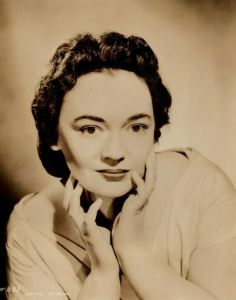
Two months ago I posted an episode on Gay Eccentrics, which included a profile of Ben Bagley, the theatrical and record producer who most certainly fit that designation. I believe that Bagley’s most lasting contribution was the 60 or so albums he produced of Great Broadway Composers Revisited, which presented unknown gems from the deep inside the trunks of these figures. For today’s episode, I am putting a particularly queer spin on that series by featuring a cross-section of the songs offered on Bagley’s ten albums devoted to songs of Cole Porter and Rodgers and Hart. There are so many remarkable treasures to be found on these recordings, which, in spite of (and perhaps even partially because of) the slapdash nature of the recording sessions and the shoestring budgets, remain some of the most important collections of forgotten songs by composers and lyricists of Broadway’s Golden Age. The other extraordinary thing about these collections was the variety of the singers that lent their voices to this music. Today’s selection, a mere cross-section, offers the vocal talents of Dorothy Loudon, Kay Ballard, Bobby Short, Lynn Redgrave, Tony Perkins, Mary Cleere Haran, Estelle Parsons, Blossom Dearie, Harold Lang, and Alice Playten, among many others. Choice excerpts from Bagley’s notorious liner notes are amply interspersed between the songs. I hope you enjoy the glitter, barbs, and even occasional Weltschmerz of this episode.

Countermelody is a podcast devoted to the glory and the power of the human voice raised in song. Singer and vocal aficionado Daniel Gundlach explores great singers of the past and present focusing in particular on those who are less well-remembered today than they should be. Daniel’s lifetime in music as a professional countertenor, pianist, vocal coach, voice teacher, and author yields an exciting array of anecdotes, impressions, and “inside stories.” At Countermelody’s core is the celebration of great singers of all stripes, their instruments, and the connection they make to the words they sing. By clicking on the following link (https://linktr.ee/CountermelodyPodcast) you can find the dedicated Countermelody website which contains additional content including artist photos and episode setlists. The link will also take you to Countermelody’s Patreon page, where you can pledge your monthly or yearly support at whatever level you can afford.

Episode 389. Rescue Mission (Operatic Duet Edition)


I have spent the past week planning forthcoming episodes and last night I realized I had to “throw together” something for this weekend’s episode. When this happens, it can often result in a very eclectic program, indeed, and one which many of my listeners find to be among the most enjoyable Countermelody episodes. I have collected more than enough material for at least a dozen of my so-called “Rescue Mission” episodes, in which I feature artists to whom an entire episode has already been devoted, but for whom I have unearthed additional recordings. For today’s episode, I decided to focus exclusively on duets, featuring at least one singer of each pair who has already been heard (sometimes quite recently) on the podcast. And thus we have David Rendall singing Erik in The Flying Dutchman opposite Rita Cullis; Renata Scotto (with Carlo Bergonzi) in Elisir; April Cantelo in Paul Hindemith’s Cardillac; Maureen Lehane as Penelope in Il ritorno d’Ulisse in Patria; Carol Neblett as Donna Elvira; and Helen Donath (with Deborah Voigt in Strauss’s rare Die ägyptische Helena). Also heard are operas by Gottfried von Einem, Giuseppe Verdi, Lee Hoiby, and Carl Orff featuring Christa Ludwig, John Reardon, Grace Bumbry, Edda Moser, and upcoming Countermelody featured artists John Bröcheler, Roland Hermann, and Eberhard Wächter. The episode concludes with the unlikely pair of Ileana Cotrubaş (pictured) and Jorma Hynninen (two of my most revered singers) as the title characters in a transcendent live recording of Pelléas et Mélisande.

Countermelody is a podcast devoted to the glory and the power of the human voice raised in song. Singer and vocal aficionado Daniel Gundlach explores great singers of the past and present focusing in particular on those who are less well-remembered today than they should be. Daniel’s lifetime in music as a professional countertenor, pianist, vocal coach, voice teacher, and author yields an exciting array of anecdotes, impressions, and “inside stories.” At Countermelody’s core is the celebration of great singers of all stripes, their instruments, and the connection they make to the words they sing. By clicking on the following link (https://linktr.ee/CountermelodyPodcast) you can find the dedicated Countermelody website which contains additional content including artist photos and episode setlists. The link will also take you to Countermelody’s Patreon page, where you can pledge your monthly or yearly support at whatever level you can afford.

Episode 388. Sopranos en détresse, Part Deux


A few months ago I published the first of a series of episodes honoring “Over the Top Sopranos,” which presented French repertoire performed by a batch of supremely distressed divas. And today is a follow-up, again featuring “sopranos en détresse” in which I spread the net even wider, featuring every type of soprano from perky coloratura to hefty dramatic and everything in between. The characters represented range from reformed Alexandrian courtesans to vampiric Hungarian murderers. And the chronological spread is wide, too: we sample a wide variety of singers from Félia Litvinne, recorded in 1902, to Anna Caterina Antonacci, recorded in 2009. In between we hear, among others, Germaine Féraldy, Beverly Sills, Emma Calvé, Lucia Popp, Christiane Eda-Pierre (pictured), Patricia Brooks, Germaine Martinelli, Jacqueline Brumaire, Carol Vaness, Nelly Miricioiu, and Janine Micheau. Works range from the familiar (Mignon by Thomas, Manon by Massenet, and Faust by Gounod) to the obscure (Ivan IV by Bizet, Salammbô by Ernest Reyer, Erzsébet by Charles Chaynes, and Virginie by Alfred Bruneau). Attachez vos ceintures; ce sera encore une soirée extravagante!

Countermelody is a podcast devoted to the glory and the power of the human voice raised in song. Singer and vocal aficionado Daniel Gundlach explores great singers of the past and present focusing in particular on those who are less well-remembered today than they should be. Daniel’s lifetime in music as a professional countertenor, pianist, vocal coach, voice teacher, and author yields an exciting array of anecdotes, impressions, and “inside stories.” At Countermelody’s core is the celebration of great singers of all stripes, their instruments, and the connection they make to the words they sing. By clicking on the following link (https://linktr.ee/CountermelodyPodcast) you can find the dedicated Countermelody website which contains additional content including artist photos and episode setlists. The link will also take you to Countermelody’s Patreon page, where you can pledge your monthly or yearly support at whatever level you can afford.



Episode 387. Zauberwelt der Oper [Black Diva Edition]


I’m on holiday this week, but it would be most unGundlachian of me not to provide an episode to sustain my listeners in my absence. I recently purchased a mammoth 13-LP set on the Concert Hall Society label. The release promises a variety of excerpts that illustrate the history of opera from Monteverdi through Puccini. As such it makes use of a number of complete operatic recordings made for the now-nearly-forgotten label, as well as some impressive individual performances recorded in the early 1960s. One of the attractions of this release to me is that it presents rare recordings by three of the supreme African American divas of that era: Mattiwilda Dobbs, Reri Grist, and Felicia Weathers, the latter two at the very beginning of their international careers in the early 1960s, when they were both fest at the Zürich Opera (where, my astute listeners will remember, contralto Carol Smith) was also ensconced. None of these recordings has received wide distribution (in fact, to my knowledge the majority of them were never re-released in any form). So it is my particularly pleasure to present to you each of these three estimable artists in peak form on recordings that I (at least) had never before encountered: Dobbs as Zerlina in Don Giovanni and Olympia and Antonia in Tales of Hoffmann; Grist as Norina in Don Pasquale; and Weathers as Dido, Manon (by Massenet, not Puccini!), and Butterfly! A number of interesting male singers are nearby to provide assistance in duets: the Swiss tenor Fritz Peters, the American Glade Peterson (both of whom were also fest in Zürich at that time), the legendary French-Canadian Léopold Simoneau and Italian dramatic baritone Scipio Colombo. Far be it from me to throw together an episode that was not as fascinating as some of my more deeply-researched efforts! I’m also celebrating this week 100,000 downloads of the podcast. I’ve often referred to Countermelody as “the Little Podcast that Could,” so this milestone is particularly gratifying to me. Finally, this episode also serves as a belated birthday tribute to Felicia Weathers, who just last week turned 88 years old.

Countermelody is a podcast devoted to the glory and the power of the human voice raised in song. Singer and vocal aficionado Daniel Gundlach explores great singers of the past and present focusing in particular on those who are less well-remembered today than they should be. Daniel’s lifetime in music as a professional countertenor, pianist, vocal coach, voice teacher, and author yields an exciting array of anecdotes, impressions, and “inside stories.” At Countermelody’s core is the celebration of great singers of all stripes, their instruments, and the connection they make to the words they sing. By clicking on the following link (https://linktr.ee/CountermelodyPodcast) you can find the dedicated Countermelody website which contains additional content including artist photos and episode setlists. The link will also take you to Countermelody’s Patreon page, where you can pledge your monthly or yearly support at whatever level you can afford.
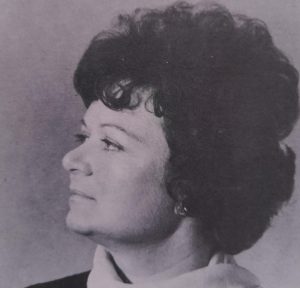

Episode 384. Vera Little Revisited


On June 3, 2024, the Berlin Senate’s Department of Culture installed a memorial plaque in honor of African American contralto and Deutsche Oper star Vera Little at her former residence. Little, who lived from 1927 to 2012, and spent the majority of her adult life in Berlin, was a dazzlingly gifted singing actress who sang everything from bel canto to Carmen to creating two roles in operas by Hans Werner Henze. This episode makes use of newly-acquired recordings of Little singing Carmen and Dame Quickly in Falstaff. We also sample the work of Little’s extraordinarily gifted brother, the tragically short-lived jazz trumpeter Booker Little, as well as several excerpts (read by your host) from Tears in My Eyes, published in 1978, the first of Vera Little’s several published books of memoirs and poetry. The episode concludes with the majority of Little’s 1957 single solo recording, Twelve Spirituals, on Decca Records, containing arrangements by Harry Burleigh, William Dawson, and Hall Johnson accompanied by Domincan-French pianist Andrès Wheatley.

Countermelody is a podcast devoted to the glory and the power of the human voice raised in song. Singer and vocal aficionado Daniel Gundlach explores great singers of the past and present focusing in particular on those who are less well-remembered today than they should be. Daniel’s lifetime in music as a professional countertenor, pianist, vocal coach, voice teacher, and journalist yields an exciting array of anecdotes, impressions, and “inside stories.” At Countermelody’s core is the celebration of great singers of all stripes, their instruments, and the connection they make to the words they sing. By clicking on the following link (https://linktr.ee/CountermelodyPodcast) you can find the dedicated Countermelody website which contains additional content including artist photos and episode setlists. The link will also take you to Countermelody’s Patreon page, where you can pledge your monthly or yearly support at whatever level you can afford.
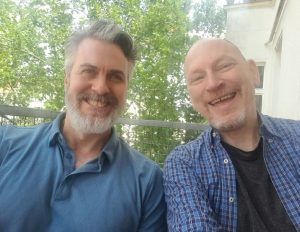

Episode 383. Get to Know Carol Smith


If the exceptional Illinois-born contralto Carol Smith (20 February 1926 – 06 June 2021) has previously escaped your notice, now is the perfect opportunity to get to know her better. She began her career singing the music of Bach with the legendary Bach Aria Group, founded in 1946 by philanthropist, scholar, and collector William H. Scheide. Smith then went on for further vocal training in Italy, making her operatic stage debut in 1961 in Napoli. There followed a glorious operatic career as one of the world’s leading dramatic mezzo-sopranos, with performances throughout Italy and Germany as well as with her home company in Zürich. She went on to become an esteemed and highly respected voice teacher on two continents. This episode digs deep into her recorded legacy, featuring cantata arias of Bach, Lieder of Brahms, arias by Gluck, Verdi, and Saint-Saëns, and scenes from Cavalleria rusticana, Roberto Devereux, and Penthesilea, a hidden early 20th-century masterpiece by Swiss composer Othmar Schoeck. No matter what repertoire Smith was singing, she was, by virtue of her chocolate-timbred voice, dramatic flair, and vocal glamour, power, and flexibility, a true Queen of Song.

Countermelody is a podcast devoted to the glory and the power of the human voice raised in song. Singer and vocal aficionado Daniel Gundlach explores great singers of the past and present focusing in particular on those who are less well-remembered today than they should be. Daniel’s lifetime in music as a professional countertenor, pianist, vocal coach, voice teacher, and journalist yields an exciting array of anecdotes, impressions, and “inside stories.” At Countermelody’s core is the celebration of great singers of all stripes, their instruments, and the connection they make to the words they sing. By clicking on the following link (https://linktr.ee/CountermelodyPodcast) you can find the dedicated Countermelody website which contains additional content including artist photos and episode setlists. The link will also take you to Countermelody’s Patreon page, where you can pledge your monthly or yearly support at whatever level you can afford.
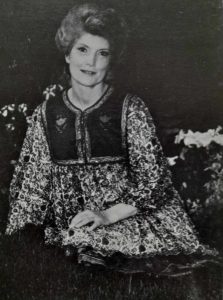

Episode 379. Stuart Burrows In Duet


So many great singing artists lost to the world of late! Almost a month ago now, the great Welsh tenor Stuart Burrows (07 February 1933 – 29 June 2025) left this mortal coil at the age of 92. Burrows was an artist of extraordinary technique, elegance, and sincerity and it has been an honor and a delight to put together this episode which celebrates his career. Because he was a favorite partner of so many exceptional divas, I decided to focus this episode on Burrows singing duets with some of the most important divas of his era. Included in the episode are Beverly Sills, Gundula Janowitz, Joan Sutherland, Renata Scotto, Leontyne Price, Nelly Miricioiu, Gwendolyn Killebrew, Margaret Price, and Reri Grist, singing Mozart, Massenet, Offenbach, Gounod, Berlioz, Donizetti, Bellini, Verdi, and even some Puccini. “The boys” are represented by José van Dam and Countermelody favorite Donald Gramm. In the late 1970s and 1980s, Burrows was a popular television star in the UK, starring in the eponymous BBC2 series, Stuart Burrows Sings. The episode also features two snippets from that show, one a duet with the beautiful lyric mezzo Diana Montague (whose husband tenor David Rendall died earlier this week). The episode begins with a tribute to the beloved Welsh pop contralto Iris Williams, who died on July 11 at the age of 79.

Countermelody is a podcast devoted to the glory and the power of the human voice raised in song. Singer and vocal aficionado Daniel Gundlach explores great singers of the past and present focusing in particular on those who are less well-remembered today than they should be. Daniel’s lifetime in music as a professional countertenor, pianist, vocal coach, voice teacher, and journalist yields an exciting array of anecdotes, impressions, and “inside stories.” At Countermelody’s core is the celebration of great singers of all stripes, their instruments, and the connection they make to the words they sing. By clicking on the following link (https://linktr.ee/CountermelodyPodcast) you can find the dedicated Countermelody website which contains additional content including artist photos and episode setlists. The link will also take you to Countermelody’s Patreon page, where you can pledge your monthly or yearly support at whatever level you can afford.

Episode 378. Rescue Mission III (Friends Edition)


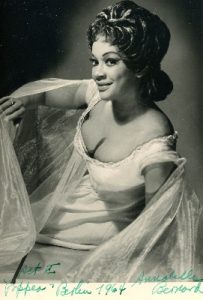
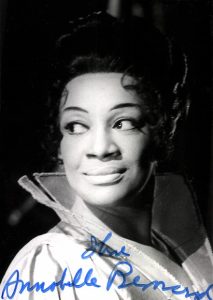
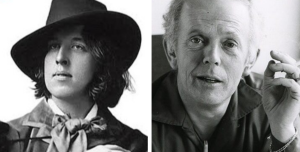
Even after I publish a Countermelody episode on a favorite singer, I continue to collect material on them, which I then occasionally fold into a potpourri episode of vocal and musical delights. I have dubbed such episodes part of my “Rescue Mission” series and I’m tempted to call today’s episode I’m tempted to call “Friend Edition” (even though there are several good friends I’ve made in recent years who are not represented today). Be that as it may, I do love putting out such episodes, especially as it gives new listeners some idea of the range and depth of the podcast, and the joys of dipping into Countermelody’s back catalogue. For today’s episode I spread the net particularly wide, and in some cases went way back into my archives so present you with some rarities which I have programmed in such a way to take us from the despair and confusion that many of us are feeling right now into a place of both resolution and resolve to keep holding on and fighting for what is right. Today’s setlist includes many Countermelody favorites: tenors George Shirley, Peter Pears, and Jerry Hadley; baritones William Parker and Jorma Hynninen, mezzo-soprano Maureen Lehane; and sopranos Eleanor Steber, Carol Neblett, Sarah Reese, Anne Wiggins Brown, Veronica Tyler, Annabelle Bernard, Denise Duval, Lois Marshall, Gloria Davy, and April Cantelo; with appearances by other great singers who have not yet been featured in full episodes, including Franco Corelli, Sandra Warfield, Helen Watts, Émile Belcourt, Valerie Masterson, and, in memoriam, Béatrice Uria-Monzon. We hear music from César Franck, Ottorino Respighi, Johann Sebastian Bach, Giacomo Puccini, Pyotr Il’yich Tchaikovsky, Franz Schubert, George Gershwin, Gioachino Rossini, Leonard Bernstein, Coleridge-Taylor Perkinson, Emmanuel Bondeville, and Giacomo Meyerbeer. As always, queer artists and artists of color are prominently featured, as one of my objectives in producing this podcast is to foreground such historical artists as essential to our growth and self-awareness. If you’re just getting to know the podcast, this is as good a place to start as anywhere!

Countermelody is a podcast devoted to the glory and the power of the human voice raised in song. Singer and vocal aficionado Daniel Gundlach explores great singers of the past and present focusing in particular on those who are less well-remembered today than they should be. Daniel’s lifetime in music as a professional countertenor, pianist, vocal coach, voice teacher, and journalist yields an exciting array of anecdotes, impressions, and “inside stories.” At Countermelody’s core is the celebration of great singers of all stripes, their instruments, and the connection they make to the words they sing. By clicking on the following link (https://linktr.ee/CountermelodyPodcast) you can find the dedicated Countermelody website which contains additional content including artist photos and episode setlists. The link will also take you to Countermelody’s Patreon page, where you can pledge your monthly or yearly support at whatever level you can afford.


Episode 377. Joan Caplan Memorial Tribute


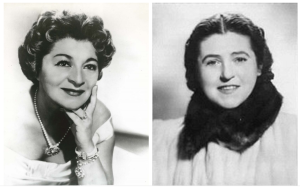
This past April, my former voice teacher and treasured friend Joan Caplan died at the age of 92. A few weeks ago, family and friends organized a memorial gathering for which I produced a short audio tribute, which is heard at the beginning of this episode. Before the event, we heard a number of recordings of Joan in her prime that absolutely knocked me on my ear. I was kindly given copies of these recordings from which I have fashioned an expanded episode in her honor. Most of these recordings have simply never been heard before, but I know that Joan was very proud of the work that she did during her active singing career, before she dedicated herself wholeheartedly to her teaching. Her rare live recordings of arias by Handel, Verdi, Donizetti, Purcell, and Hasse display her magnificent technique, while excerpts from her song recitals, including music by Brahms, Mahler, Montsalvatge, and Glanville-Hicks, display her versatility as well as her interpretive insight. I also share personal insights and reminiscences of Joan which will, I hope, reveal the special relationship that I shared with her, which many of her students, friends, and chosen family also experienced. When I last visited Joan, I promised her that I would do what I could to ensure that she would be properly remembered. With this episode, I do my part, to the best of my ability, to keep that promise.

Countermelody is a podcast devoted to the glory and the power of the human voice raised in song. Singer and vocal aficionado Daniel Gundlach explores great singers of the past and present focusing in particular on those who are less well-remembered today than they should be. Daniel’s lifetime in music as a professional countertenor, pianist, vocal coach, voice teacher, and journalist yields an exciting array of anecdotes, impressions, and “inside stories.” At Countermelody’s core is the celebration of great singers of all stripes, their instruments, and the connection they make to the words they sing. By clicking on the following link (https://linktr.ee/CountermelodyPodcast) you can find the dedicated Countermelody website which contains additional content including artist photos and episode setlists. The link will also take you to Countermelody’s Patreon page, where you can pledge your monthly or yearly support at whatever level you can afford.


Episode 374. Maureen Lehane Sings Bach


Today’s episode offers music of consolation, divinely sung. On a Sunday morning back in December, freshly arrived back in New York from a challenging trip to my home state of Wisconsin, I sat down to a cup of coffee and began playing a setlist that I had created in the aftermath of my “Great Contraltos Sing Bach” episode a few weeks before. This setlist was comprised of arias from Bach cantatas sung by the British contralto Maureen Lehane (18 September 1932 – 27 December 2010) which I had discovered on YouTube as part of a huge cache of Bach cantata recordings from German radio, many of which featured Lehane as the alto soloist. I was thrilled to find such a treasure trove, since during the preparation of that episode, Lehane had stood out for her impeccable diction and fluid vocal technique, which served her equally well in recitative, cantilena, and coloratura. As I listened to that setlist and contemplated the texts, I realized that these recordings needed to be shared. I have chosen fourteen of the very finest of those recordings and am presenting them today to all who are seeking to make some kind of sense of the world in its current chaos. May the voice of Maureen Lehane singing the music of Bach provide you with a momentary oasis of order and beauty. A biographical sketch of Lehane rounds out the episode.

Countermelody is a podcast devoted to the glory and the power of the human voice raised in song. Singer and vocal aficionado Daniel Gundlach explores great singers of the past and present focusing in particular on those who are less well-remembered today than they should be. Daniel’s lifetime in music as a professional countertenor, pianist, vocal coach, voice teacher, and journalist yields an exciting array of anecdotes, impressions, and “inside stories.” At Countermelody’s core is the celebration of great singers of all stripes, their instruments, and the connection they make to the words they sing. By clicking on the following link (https://linktr.ee/CountermelodyPodcast) you can find the dedicated Countermelody website which contains additional content including artist photos and episode setlists. The link will also take you to Countermelody’s Patreon page, where you can pledge your monthly or yearly support at whatever level you can afford.


Episode 373. Carol Neblett: Girl of the Golden West


Today is the day that the United States formerly celebrated its independence. But the events of recent months have not made me feel much like celebrating. As I racked my brain to think of an “American” (read: US-American) of whom we could be truly proud, my mind flew to Carol Neblett, one of the great (if relatively unsung) voices of the 1970s and beyond. Carol died prematurely and unexpectedly in November 2017, and from the earliest days of the podcast, it has been my intention to bring increased attention to her incandescent voice and artistry. For a while, her son Stefan Schermerhorn and I have been planning to do such a tribute, but as with so many such plans, life got in the way. With the looming national holiday, however, I felt the urgent need to do a Carol Neblett episode. So I contacted Stefan earlier this week to ask him if he had any reminiscences to share with us as I was preparing this urgently-needed episode. He returned with an absolutely charming Fourth of July anecdote which begins the tribute. There follows a plethora of live recordings of near-definitive performances of an enormous range of roles that were core to Carol’s repertoire: Violetta, Ariadne, Thaïs, Marietta, Manon, Musetta, Louise, Tosca, Magda in La Rondine, Margherita in Mefistofele, Leonora in Il Trovatore, and Elettra in Idomeneo. Also well-represented is no doubt her most celebrated portrayal: Minnie in La Fanciulla del West. Being a tall and statuesque California-born blonde made Carol a physically ideal Minnie, but even moreso, it was THAT VOICE which allowed her to negotiate all of the part’s considerable vocal difficulties and made her legendary in the part. This is the first of a planned series of Neblett episodes that I hope will bring you as much delight in listening as it did me in preparing it. And in this undeniably grim period of our nation’s history, we desperately need Carol Neblett as a shining example of the brilliance of which the United States is still capable.

Countermelody is a podcast devoted to the glory and the power of the human voice raised in song. Singer and vocal aficionado Daniel Gundlach explores great singers of the past and present focusing in particular on those who are less well-remembered today than they should be. Daniel’s lifetime in music as a professional countertenor, pianist, vocal coach, voice teacher, and journalist yields an exciting array of anecdotes, impressions, and “inside stories.” At Countermelody’s core is the celebration of great singers of all stripes, their instruments, and the connection they make to the words they sing. By clicking on the following link (https://linktr.ee/CountermelodyPodcast) you can find the dedicated Countermelody website which contains additional content including artist photos and episode setlists. The link will also take you to Countermelody’s Patreon page, where you can pledge your monthly or yearly support at whatever level you can afford.

Episode 371. Margherita Roberti @ 100 (with August Ventura)


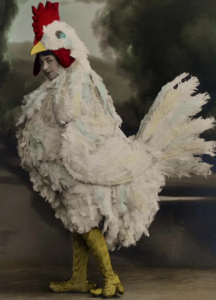
One hundred years ago today, Margaret Jean Roberts was born at the edge of a field before her parents could reach the hospital. The story of how she became Margherita Roberti, one of the leading dramatic sopranos in Italy, and a specialist in the music of Verdi, is a fascinating tale, indeed. My guest today on Countermelody is the author, scholar, and lecturer August Ventura, who a number of years ago unearthed a 1963 documentary entitled “In the Mouth of the Wolf” which features Roberti and her co-stars in Luisa Miller, the opening night of the season in Parma, facing off against a notoriously opinionated public that makes its strong opinions known in no uncertain terms. In 2014 Margherita gifted August with her personal copy of the film, the only known one in existence. My interview with August is supplemented with live recordings of Roberti which reveal her to be a superb singer, endowed with a glorious sense of the expansive Verdi line, a noble sense of utterance, and the vocal range and flexibility required to do justice to the heroines of Verdi’s early period.

Countermelody is a podcast devoted to the glory and the power of the human voice raised in song. Singer and vocal aficionado Daniel Gundlach explores great singers of the past and present focusing in particular on those who are less well-remembered today than they should be. Daniel’s lifetime in music as a professional countertenor, pianist, vocal coach, voice teacher, and journalist yields an exciting array of anecdotes, impressions, and “inside stories.” At Countermelody’s core is the celebration of great singers of all stripes, their instruments, and the connection they make to the words they sing. By clicking on the following link (https://linktr.ee/CountermelodyPodcast) you can find the dedicated Countermelody website which contains additional content including artist photos and episode setlists. The link will also take you to Countermelody’s Patreon page, where you can pledge your monthly or yearly support at whatever level you can afford.

Episode 357. Faust auf Deutsch


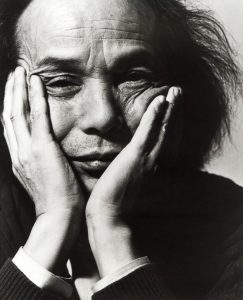
Today I offer three different recordings of excerpts, sung in German, from Charles Gounod’s opera Faust, which was known in the day in Germany as Margarethe. The Germans have always regarded this work with more than a little scorn because it has so little to do with Goethe’s towering masterpiece upon which it is based. The earliest of today’s excerpts is from a complete 1908 recording on the Berlin branch of the Grammophon label (when such a thing as a complete operatic recording was virtually unheard of), featuring Emmy Destinn, Karl Jörn and Paul Knüpfer under the baton of Bruno Seidler-Winkler. Much later came two recordings of excerpts in German: the first released on Deutsche Grammophon in 1958 with stalwart recording artist Maria Stader; nonpareil Kavalierbariton Eberhard Wächter; fierce Finnish bass Kim Borg; and the late German lyric tenor Heinz Hoppe under Ferdinand Leitner. The latter was released on Philips in 1963 with Ernst Kozub (recently featured on a “rehabilitational” Countermelody episode; the extraordinary German bass Franz Crass, and Swiss mega-soprano Colette Lorand (soon to be featured in her own Countermelody episode) under Marcel Couraud. As a bonus, I also feature a very young Sylvia Sass in one of her very first recordings from 1975 singing Marguerite’s Jewel Song in Hungarian.

Countermelody is a podcast devoted to the glory and the power of the human voice raised in song. Singer and vocal aficionado Daniel Gundlach explores great singers of the past and present focusing in particular on those who are less well-remembered today than they should be. Daniel’s lifetime in music as a professional countertenor, pianist, vocal coach, voice teacher, and journalist yields an exciting array of anecdotes, impressions, and “inside stories.” At Countermelody’s core is the celebration of great singers of all stripes, their instruments, and the connection they make to the words they sing. By clicking on the following link (https://linktr.ee/CountermelodyPodcast) you can find the dedicated Countermelody website which contains additional content including artist photos and episode setlists. The link will also take you to Countermelody’s Patreon page, where you can pledge your monthly or yearly support at whatever level you can afford.

Episode 356. Get to Know Irina Arkhipova


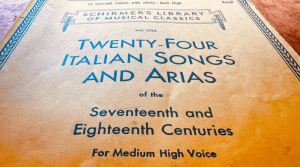
Directly after the disastrous November election in the United States, I compiled a setlist for two episodes self-explanitorially entitled “Mezzos on the Verge” and “Mezzos in Extremis.” One of the featured singers was the great Russian mezzo-soprano Irina Arkhipova, whose 100th birthday on January 2 of this year was one of the few positive things to happen in January! I happened to have a number of LPs featuring Arkhipova, and this episode features material from a number of those records, plus a CD reissue from a few years back entitled “The Art of Irina Arkhipova,” which features the 1970 recording of Mussorgsky and Rachmaninov songs that the singer made in Moscow with my teacher John Wustman while they were judges in that year’s Tchaikovsky Competition. Arkhipova is also featured in songs by Tchaikovsky; Russian opera arias by Rimsky-Korsakov and Mussorgsky; and selections from both Carmen and Il Trovatore, which feature tenors Zurab Andzhaparidzye and Vladislav Piavko, the latter of whom was also Arkhipova’s protégé (and later husband).

Countermelody is a podcast devoted to the glory and the power of the human voice raised in song. Singer and vocal aficionado Daniel Gundlach explores great singers of the past and present focusing in particular on those who are less well-remembered today than they should be. Daniel’s lifetime in music as a professional countertenor, pianist, vocal coach, voice teacher, and journalist yields an exciting array of anecdotes, impressions, and “inside stories.” At Countermelody’s core is the celebration of great singers of all stripes, their instruments, and the connection they make to the words they sing. By clicking on the following link (https://linktr.ee/CountermelodyPodcast) you can find the dedicated Countermelody website which contains additional content including artist photos and episode setlists. The link will also take you to Countermelody’s Patreon page, where you can pledge your monthly or yearly support at whatever level you can afford.


Episode 354. Get to Know April Cantelo


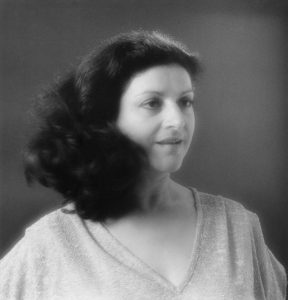
Only recently have I become fully aware of the exceptional voice and artistry of the late April Cantelo (02 April 1928 -16 July 2024). When she died last summer, I began more fully exploring her recorded output and to my surprise and delight, I found myself ranking her among the very finest 20th century British sopranos. It’s my great privilege to offer a full episode showing the wide range of musical genres that she effortlessly assayed. If her performances of Handel seemed near-definitive, it must also be remembered that she created the role of Helena in Britten’s Midsummer Night’s Dream in the summer of 1960 and championed the work of countless contemporary composers, including two heard here, Hugh Wood, and Malcolm Williamson, with whose works in particular she was closely associated. She is also featured in recordings of Grieg, Berlioz, Arne, and Wagner.

Countermelody is a podcast devoted to the glory and the power of the human voice raised in song. Singer and vocal aficionado Daniel Gundlach explores great singers of the past and present focusing in particular on those who are less well-remembered today than they should be. Daniel’s lifetime in music as a professional countertenor, pianist, vocal coach, voice teacher, and journalist yields an exciting array of anecdotes, impressions, and “inside stories.” At Countermelody’s core is the celebration of great singers of all stripes, their instruments, and the connection they make to the words they sing. By clicking on the following link (https://linktr.ee/CountermelodyPodcast) you can find the dedicated Countermelody website which contains additional content including artist photos and episode setlists. The link will also take you to Countermelody’s Patreon page, where you can pledge your monthly or yearly support at whatever level you can afford.

Episode 353. Canteloube Originals


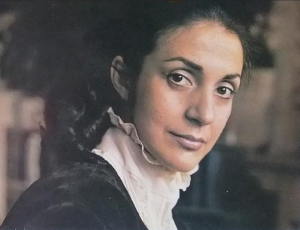
The composer Joseph-Marie Canteloube is primarily known for his lush orchestral arrangements of folk songs from his native Auvergne region. However, he also composed other work, including arrangements of French folk songs (from regions other than the Auvergne!) as well as original works including the lush orchestral song cycle Triptyque and a fascinating and unique cycle for voice and piano entitled L’arada (The Tilled Earth), set to poems in the Languedoc dialect. This work has been studied, promoted, and recorded by soprano Karen Coker Merritt, who deserves our especial thanks for bringing this unique work to our attention. Examples of all of these works are featured on this episode, which also does not shy away from exploring Canteloube’s difficult political legacy as a proud right-wing nationalist and supporter of the collaborationist Vichy government during World War II. I believe that we can and should decry such positions while at the same time exploring these works independently of and stripped (as much as possible) of their political associations. Performers (several accompanied by the composer himself) include Georges Thill, Karen Coker Merritt (performing two songs from L’arada with the exceptional pianist Sean Kennard), Geneviève Rex, Lucie Daullène, Véronique Gens, Netania Davrath, Bruno Laplante, María Bayo, and, transcendently, Frederica von Stade.

Countermelody is a podcast devoted to the glory and the power of the human voice raised in song. Singer and vocal aficionado Daniel Gundlach explores great singers of the past and present focusing in particular on those who are less well-remembered today than they should be. Daniel’s lifetime in music as a professional countertenor, pianist, vocal coach, voice teacher, and journalist yields an exciting array of anecdotes, impressions, and “inside stories.” At Countermelody’s core is the celebration of great singers of all stripes, their instruments, and the connection they make to the words they sing. By clicking on the following link (https://linktr.ee/CountermelodyPodcast) you can find the dedicated Countermelody website which contains additional content including artist photos and episode setlists. The link will also take you to Countermelody’s Patreon page, where you can pledge your monthly or yearly support at whatever level you can afford.


Episode 349. Lenten Melody


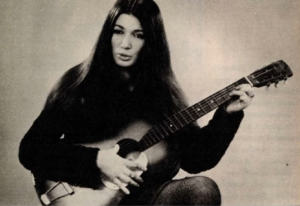
I’ve already done a Lententide episode devoted to contraltos singing the music of Bach, but it seemed to me that in the upheaval of today’s vengeful and war-hungry world, we could use another contemplative episode to provide us with meditative (and even tuneful!) music to calm our spirits. The tunefulness comes especially from recordings of favorite religious music by Gounod, Franck, and other 19th-century French composers sung by Camille Maurane, Marcel Journet, Richard Verreau, and Françoise Pollet. Also included are a live excerpt from Parsifal with Jon Vickers and Hans Knappertsbusch; the miraculous yet voiceless Hugues Cuénod performing an excerpt from the first of Couperin’s Leçons de Ténèbres; the unsung German-British soprano Ilse Wolf in a live performance of the Bach Johannes-Passion conducted by Pablo Casals; Gundula Janowitz in a searing but brief aria from Mendelssohn’s Paulus; excerpts from settings of the Stabat Maters of Haydn and Dvorák, sung by Alfreda Hodgson, Sena Jurinac, and Heinz Hoppe; the original version of Hendrik Andriessen’s exquisite Miroir de Peine cycle for voice and organ featuring our beloved Elly Ameling; and Jennie Tourel in an excerpt from her ultra-rare recording of Hindemith’s Das Marienleben preceded by Lotte Lehmanns’s recitation of the same Rilke poem. The episode begins and ends with realizations by Benjamin Britten and Michael Tippett of Baroque masters Henry Purcell and Pelham Humfrey sung, respectively, by Peter Pears and John Shirley-Quirk.

Countermelody is a podcast devoted to the glory and the power of the human voice raised in song. Singer and vocal aficionado Daniel Gundlach explores great singers of the past and present focusing in particular on those who are less well-remembered today than they should be. Daniel’s lifetime in music as a professional countertenor, pianist, vocal coach, voice teacher, and journalist yields an exciting array of anecdotes, impressions, and “inside stories.” At Countermelody’s core is the celebration of great singers of all stripes, their instruments, and the connection they make to the words they sing. By clicking on the following link (https://linktr.ee/CountermelodyPodcast) you can find the dedicated Countermelody website which contains additional content including artist photos and episode setlists. The link will also take you to Countermelody’s Patreon page, where you can pledge your monthly or yearly support at whatever level you can afford.
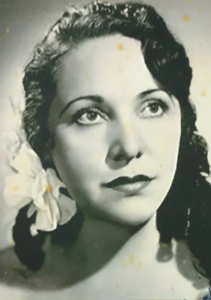

Episode 348. Rescue Mission II


After I post a Countermelody episode on a cherished singer, my relationship with these artists continues: one of those manifestataions is that I never stop seeking out rare and unusual recordings featuring those singers. This results in a grab-bag of fascinating and often obscure material that is simply too good not to share with my listeners. Today I present you with the second episode of such genre, which I have collectively dubbed “Rescue Mission.” On this episode I feature singers you’ve heard on the podcast over the course of the past several weeks and months, including, among many others, Janet Baker, Oralia Domínguez, Eugene Holmes, Ellabelle Davis, Gilda Cruz-Romo, Benjamin Luxon, Mara Coleva, Hugo Hasslo, Margaret Marshall, Gloria Davy, and Mady Mesplé, performing work by Handel, Verdi, Weill, Bach, Brahms, Boito, and Mozart. The episode concludes with Eleanor Steber (because, as I affirmed laast week, you can never have enough of her), in a 1949 performance of “Ah, Perfido!” that will have you picking your dislocated jaw up off the floor. Also expect shout-outs to friends of the podcast, old and new, as well as a certain amount of political snippiness!

Countermelody is a podcast devoted to the glory and the power of the human voice raised in song. Singer and vocal aficionado Daniel Gundlach explores great singers of the past and present focusing in particular on those who are less well-remembered today than they should be. Daniel’s lifetime in music as a professional countertenor, pianist, vocal coach, voice teacher, and journalist yields an exciting array of anecdotes, impressions, and “inside stories.” At Countermelody’s core is the celebration of great singers of all stripes, their instruments, and the connection they make to the words they sing. By clicking on the following link (https://linktr.ee/CountermelodyPodcast) you can find the dedicated Countermelody website which contains additional content including artist photos and episode setlists. The link will also take you to Countermelody’s Patreon page, where you can pledge your monthly or yearly support at whatever level you can afford.
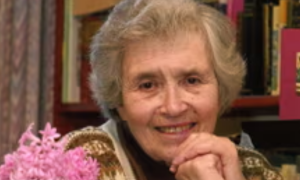

Episode 346. Olive Middleton and La Puma (Alternate Universe Bel Canto)


Hello, Campers! Once again it is April Fool’s Day, which means that here at Countermelody, we’re doing another in my “Alternate Universe Bel Canto” series. This year the featured diva is Olive Middleton, still remembered by a certain kind of opera lover who adores fearless singers who throw caution, technique, and discretion to the winds. In the case of Middleton, she became, late in life, the lead soprano of the La Puma Opera Company (officially titled the La Puma Opera Workshop), where she fearlessly undertook the most challenging soprano roles of the operatic repertoire. Today, as last year, I am joined by my friend the redoubtable Thomas Bagwell, whose love of bad taste and cringe-worthy artistic expression surpasses even mine. We have a rollicking conversation about Middleton, interspersed with choice live selections from La Puma in the 1960s. Along the way, we discuss the “so bad it’s good” phenomenon and its manifestations in film, on stage, and on the printed page, including an abominably bad poem about Olive that Thomas specifically for this episode. In the end, we arrive at many conclusions, first and foremost that singers like Middleton were motivated, in the words of John Ardoin, “a love for singing, a love for music, a love for her audience. She disperses this primary element in unstinting fashion, sharing with her public a devotion to and pursuit of art that is surely without parallel.” If you have not yet experienced the force of nature (and mind over matter) that is Olive Middleton, you are in for a listening experience like none you have ever had!

Countermelody is a podcast devoted to the glory and the power of the human voice raised in song. Singer and vocal aficionado Daniel Gundlach explores great singers of the past and present focusing in particular on those who are less well-remembered today than they should be. Daniel’s lifetime in music as a professional countertenor, pianist, vocal coach, voice teacher, and journalist yields an exciting array of anecdotes, impressions, and “inside stories.” At Countermelody’s core is the celebration of great singers of all stripes, their instruments, and the connection they make to the words they sing. By clicking on the following link (https://linktr.ee/CountermelodyPodcast) you can find the dedicated Countermelody website which contains additional content including artist photos and episode setlists. The link will also take you to Countermelody’s Patreon page, where you can pledge your monthly or yearly support at whatever level you can afford.
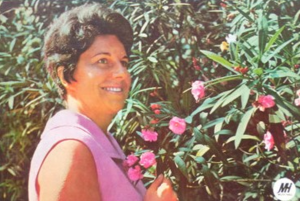

Episode 345. A Lenten Litany of Bach Contraltos


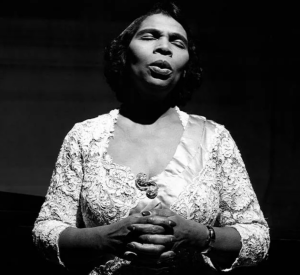
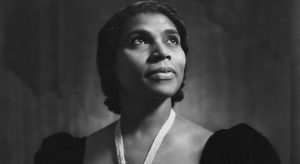
Over the course of the past year, I have done a number of episodes on contraltos singing a wide range of material. Toward the end of last year, I did a program on Bach contraltos, which featured just a few of the best (and my favorite) contraltos in this genre. At the time, I had an overflowing cornucopia of material and today I have reorganized and expanded that material to bring you a set of Bach arias particularly appropriate for the Lenten Season. And thus I present to you today, arias from the Passions sung by Julia Hamari, Marian Anderson (pictured), and Friedel Beckmann, but also cantata arias by such eminent contraltos as Kathleen Ferrier, Lorraine Hunt Lieberson, Carol Brice, Jennie Tourel, Carolyn Watkinson, Ria Bollen, Brigitte Fassbaender, Norma Lerer, Alfreda Hodgson, Birgit Finnilä, Elena Obraztsova (yes, you read correctly!), Anna Reynolds, and Else Brems. Non-contralto guest appearances include Arleen Augér, Peter Schreier, and Aldo Baldin. If you are not a Christian, fear not, for behold, there is much in Bach’s music that draws the listener in on any number of levels, not just (or even primarily) a theological one.

Countermelody is a podcast devoted to the glory and the power of the human voice raised in song. Singer and vocal aficionado Daniel Gundlach explores great singers of the past and present focusing in particular on those who are less well-remembered today than they should be. Daniel’s lifetime in music as a professional countertenor, pianist, vocal coach, voice teacher, and journalist yields an exciting array of anecdotes, impressions, and “inside stories.” At Countermelody’s core is the celebration of great singers of all stripes, their instruments, and the connection they make to the words they sing. By clicking on the following link (https://linktr.ee/CountermelodyPodcast) you can find the dedicated Countermelody website which contains additional content including artist photos and episode setlists. The link will also take you to Countermelody’s Patreon page, where you can pledge your monthly or yearly support at whatever level you can afford.
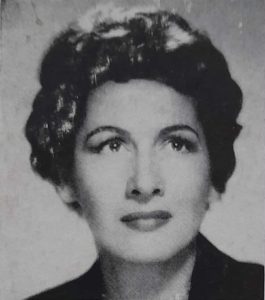

Episode 344. Mady Mesplé Revisited


This past March 7 would have been the 94th birthday of the great French coloratura soprano Mady Mesplé. This episode begins a new series of episodes devoted to “Queens of the Night,” the surprisingly wide variety of sopranos who at one time or another sang this role. After a sampling of Mesplé singing this role (in French), we also hear back to back comparisons with Janine Micheau (Mesplé’s teacher) and Mado Robin (one of Mesplé’s most famous predecessors); a Gounod duet with Nicolai Gedda; a stunning avant garde showpiece composed expressly for Mesplé; a series of mélodies by Debussy, Roussel and Ravel; a live late-career performance of Poulenc’s final composition, the dramatic monologue La Dame de Monte-Carlo; an effervescent live 1969 performance of Zerbinetta’s aria; and a deeply moving recording of La Mort de Socrate by Erik Satie. Further proof, if such were needed, of Mesplé’s versatility, virtuosity, and profound musicianship and humanity.

Countermelody is a podcast devoted to the glory and the power of the human voice raised in song. Singer and vocal aficionado Daniel Gundlach explores great singers of the past and present focusing in particular on those who are less well-remembered today than they should be. Daniel’s lifetime in music as a professional countertenor, pianist, vocal coach, voice teacher, and journalist yields an exciting array of anecdotes, impressions, and “inside stories.” At Countermelody’s core is the celebration of great singers of all stripes, their instruments, and the connection they make to the words they sing. By clicking on the following link (https://linktr.ee/CountermelodyPodcast) you can find the dedicated Countermelody website which contains additional content including artist photos and episode setlists. The link will also take you to Countermelody’s Patreon page, where you can pledge your monthly or yearly support at whatever level you can afford.
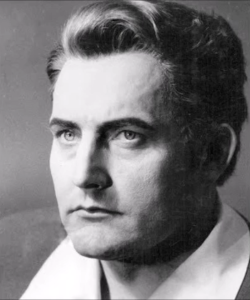


Episode 343. Over-the-Top Sopranos, French Edition


As a follow-up to my Mezzos on the Verge series, which seemed to resonate with so many of you, today I present the first in a new ongoing series, Over-the-Top Sopranos. As I first began exploring this repertoire, my first thoughts were focused on Italian repertoire. But then I gave myself the challenge of focusing on the French style instead, thinking that I would not have as easy a time of it. Was I ever wrong! There is such a profusion French (and non-French) singers going to the brink with life or death performances of French music that thrills one to the core. Naturally I focus on familiar composers of both French grand opera (Meyerbeer, Halévy, Gounod) and opéra-comique (Massenet, Bizet) but, as always with Countermelody, there are repertoire surprises along the way, including operas by Ernest Reyer and Sylvio Lazzari. And the wealth of sopranos heard here boggles the mind: again ranging from favorites such as Ninon Vallin, Rosa Ponselle, Mariella Devia, Germaine Lubin, Elisabeth Rethberg, and Carol Neblett, to such lesser-known lights as Andrée Esposito, Françoise Pollet, Madeleine Sibille, Mattiwilda Dobbs, Charlotte Tirard, and Margarete Teschemacher, alongside many others. This is the kind of episode I absolutely love to produce, one rich in both discoveries and old favorites, performed by old and new favorites. Goûtez-vous-en!

Countermelody is a podcast devoted to the glory and the power of the human voice raised in song. Singer and vocal aficionado Daniel Gundlach explores great singers of the past and present focusing in particular on those who are less well-remembered today than they should be. Daniel’s lifetime in music as a professional countertenor, pianist, vocal coach, voice teacher, and journalist yields an exciting array of anecdotes, impressions, and “inside stories.” At Countermelody’s core is the celebration of great singers of all stripes, their instruments, and the connection they make to the words they sing. By clicking on the following link (https://linktr.ee/CountermelodyPodcast) you can find the dedicated Countermelody website which contains additional content including artist photos and episode setlists. The link will also take you to Countermelody’s Patreon page, where you can pledge your monthly or yearly support at whatever level you can afford.

Episode 337. Anne Wiggins Brown


Today on Countermelody the first of two (for now) episodes celebrating the creators of George Gershwin’s legendary (and controversial) opera Porgy and Bess. Today we explore the fascinating life (and scant recorded legacy) of Anne Wiggins Brown, who was born in Baltimore on August 09, 1912, and died in Oslo on March 13, 2009. Like Muriel Smith, who a few years later created the title role of Carmen Jones on Broadway, Brown was still a student at the time she created the role of Bess. In Brown’s case, she was enrolled at the Juilliard School, one of the very first Black students admitted to the venerable institution. She was possessed of an admirable musical pedigree on her mother’s side; her father was a doctor and the family was raised in relative privilege in Baltimore. This, however, did not mean that all doors were open to the young would-be singer, who found her way by sheer determination and willpower. These same traits led to her being cast in the female lead of Gershwin’s Broadway opera, as well as a close working relationship with the composer, who expanded the role from a secondary part to having her name included in the title. Brown sang more than 500 performances of Bess around the world, but in 1948 chose to settle in Norway, where she married Thorleif Schjelderup, an Olympic skier who also became an author an environmentalist. Though she occasionally returned to the United States, Norway remained her home until her death at the age of 96. Brown’s career included significant concertizing and operatic appearances throughout the world. Eventually severe asthma led to her sudden retirement from the stage in 1955. She often decried the ugly spectre of racism, which she felt also curtailed and restricted her career. After her retirement, she became a noted voice teacher and stage director, leading several noteworthy productions of Porgy in the 1960s. This episode includes the vast majority of her slim recorded output, which include various excerpts from Porgy (in effect the very first Original Cast Album), as well as a collection of rare Norwegian recordings of spirituals, folk songs, and art songs in which she reveals a strong, true voice and a deeply musical sensibility, showing herself to be yet another artist whose artistic significance matches her historical importance. The episode opens with a heartfelt (and heartbroken) tribute to the great Roberta Flack, who died in the morning hours of February 24th.

Countermelody is a podcast devoted to the glory and the power of the human voice raised in song. Singer and vocal aficionado Daniel Gundlach explores great singers of the past and present focusing in particular on those who are less well-remembered today than they should be. Daniel’s lifetime in music as a professional countertenor, pianist, vocal coach, voice teacher, and journalist yields an exciting array of anecdotes, impressions, and “inside stories.” At Countermelody’s core is the celebration of great singers of all stripes, their instruments, and the connection they make to the words they sing. By clicking on the following link (https://linktr.ee/CountermelodyPodcast) you can find the dedicated Countermelody website which contains additional content including artist photos and episode setlists. The link will also take you to Countermelody’s Patreon page, where you can pledge your monthly or yearly support at whatever level you can afford.
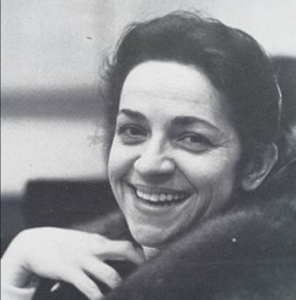


Episode 335. Felicia Weathers, Schlagersängerin


This week a light-hearted (and therefore much-needed!) tribute to the marvelous Felicia Weathers, who, in the midst of her burgeoning operatic career in the late 1960s, made two LPs of Schlagermusik, 1968’s Liebe Love L’amour (which also sports the best record cover in the history of the LP!) and, the following year, Wunderbar ist die Welt. Both of these were arranged and conducted by one Harold M. Kirschstein, referred to in the liner notes as an important conductor and arranger. Imagine my surprise when, upon doing a little research, I discovered that this person was better known in his native United States as Henri René, whom I knew from his work with Eartha Kitt in the early days of her recording career. His arrangements are, of course, predictably delightful. Amid all her other successes, Felicia Weathers (like Maria Ewing a generation later) found her greatest fame performing the title role of Richard Strauss’s Salome. This role may have put strain on her voice and shortened her career, but in the late 1960s her voice, as captured on these recordings, was a beguilingly beautiful instrument. She also displays a fine interpretive approach, keen linguistic sense, and vital communicative powers to these songs, which feature some of my favorite melodies ever, including those written by Georges Auric, Jimmy Webb, Harold Arlen, Henry Mancini, Jean-Paul Egide Martini, Oscar Straus, and Friedrich Hollaender. I supplement these delicious selections with two Rodgers and Hammerstein medleys from Weathers’ 1969 album of songs from musicals, Hello, Young Lovers, which also features duets with the superb African American baritone William Ray, who was also based in Europe during those years. Enjoy this delicious, if brief, escape from reality!

Countermelody is a podcast devoted to the glory and the power of the human voice raised in song. Singer and vocal aficionado Daniel Gundlach explores great singers of the past and present focusing in particular on those who are less well-remembered today than they should be. Daniel’s lifetime in music as a professional countertenor, pianist, vocal coach, voice teacher, and journalist yields an exciting array of anecdotes, impressions, and “inside stories.” At Countermelody’s core is the celebration of great singers of all stripes, their instruments, and the connection they make to the words they sing. By clicking on the following link (https://linktr.ee/CountermelodyPodcast) you can find the dedicated Countermelody website which contains additional content including artist photos and episode setlists. The link will also take you to Countermelody’s Patreon page, where you can pledge your monthly or yearly support at whatever level you can afford.
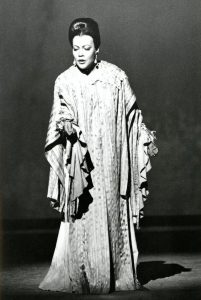

Episode 334. Gloria Davy Revisited


I’ve been wanting to revisit the legacy of the great African American soprano Gloria Davy (born in Brooklyn on 29 March 1931 and died in Genève on 28 November 2012) for some time now. In the first year of the podcast, I devoted one of my very first Black History Month episodes to exploring her career, recordings, and legacy. At that time, however, I had not yet acquired a commercial recording central to her recorded output: a 1957 LP on London Records entitled, simply, Concert Recital, which featured the soprano, accompanied by Giorgio Favaretto, in a varied program of Purcell and Brahms songs, followed by two important twentieth century song cycles, Poulenc’s 1939 cycle Fiançailles pour rire, set to poems by his close friend Louise de Vilmorin, and Joaquín Turina’s 1918 cycle, Poema en forma de canciones. A few years after posting that episode, I finally got my hands on this ultra-rare recording, which I am thrilled to present here. Recordings of either or both of those song cycles in particular were rare at the time this recording was made, and recordings of the complete Turina cycle remain so. On this record I supplement this record with her first London/Decca release from the year 1956, entitled simply Gloria Davy Spirituals. I have already played these recordings on the podcast, but they are always worth rehearing, especially because the spirituals, many of them quite off-the-beaten-path, are arranged and conducted by African American composer Julia Perry, who has only recently, particularly in the year of her centennial, been gaining the public exposure that she so richly deserves. In between I include additional examples of Gloria Davy in song, including excerpts from an early-career performance of Poulenc’s Caligrammes, his final cycle of poems by Guillaume Apollinaire, as well as an obscure but rousingly rendered song by the Italian composer, conductor, pianist, and teacher Vittorio Maria Vanzo.

Countermelody is a podcast devoted to the glory and the power of the human voice raised in song. Singer and vocal aficionado Daniel Gundlach explores great singers of the past and present focusing in particular on those who are less well-remembered today than they should be. Daniel’s lifetime in music as a professional countertenor, pianist, vocal coach, voice teacher, and journalist yields an exciting array of anecdotes, impressions, and “inside stories.” At Countermelody’s core is the celebration of great singers of all stripes, their instruments, and the connection they make to the words they sing. By clicking on the following link (https://linktr.ee/CountermelodyPodcast) you can find the dedicated Countermelody website which contains additional content including artist photos and episode setlists. The link will also take you to Countermelody’s Patreon page, where you can pledge your monthly or yearly support at whatever level you can afford.
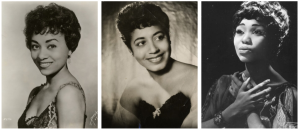

Episode 332. Ellabelle Davis Revisited


Today I present the African American soprano Ellabelle Davis (1907-1960) who during the late 1940s and early 1950s was greatly celebrated as a concert singer and who appeared around the world, the “Toast of Three Continents” as an early Musical America ad featuring the soprano proclaimed. She even appeared on the operatic stage, primarily as Aida, though her artistry was best suited to the concert platform. Additionally and unusually for the time, she made a number of recordings, including two 10-inch LPs for London-Decca records in 1950. During my research into Ellabelle Davis, I discovered that she had made a second series of recordings, a group of 78s for the Philips record company. I had assumed that, because of their format, these were earlier recordings, but upon further research, I found that these were recorded in 1952 with the Danish pianist Kjell Olsson (1917-1997) at the time of her final tour of Denmark. And to my surprise and delight, these included not only two sides of French art song, but also a disc of spirituals which she did not record elsewhere, and even the Brahms Zigeunerlieder, long a staple of her concert programs. In her day she was frequently written up in the New York Times and appeared repeatedly in high-profile concert appearances in the city, and even moreso, around the world. Yet her career was slowed by illness, and she died prematurely at the age of 53 of cancer, after attempting a career comeback the previous year. I present a number of her extant studio recordings and attempt to place her career within the context of larger social issues in the United States (and around the world) at that time, including considering why artists like Dorothy Maynor, Marian Anderson, and Davis herself, heavily promoted by the mainstream and celebrated for their modesty and dignity (always coded language!), were a more palatable counterpart for white audiences to more progressively-minded artists like Paul Robeson

Countermelody is a podcast devoted to the glory and the power of the human voice raised in song. Singer and vocal aficionado Daniel Gundlach explores great singers of the past and present focusing in particular on those who are less well-remembered today than they should be. Daniel’s lifetime in music as a professional countertenor, pianist, vocal coach, voice teacher, and journalist yields an exciting array of anecdotes, impressions, and “inside stories.” At Countermelody’s core is the celebration of great singers of all stripes, their instruments, and the connection they make to the words they sing. By clicking on the following link (https://linktr.ee/CountermelodyPodcast) you can find the dedicated Countermelody website which contains additional content including artist photos and episode setlists. The link will also take you to Countermelody’s Patreon page, where you can pledge your monthly or yearly support at whatever level you can afford.
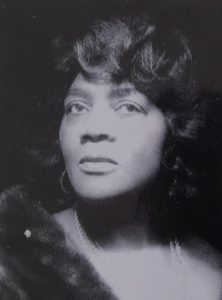


Episode 329. Lois Marshall @ 100


Yesterday was the 100th birthday of the sublime Canadian singer, Lois Marshall (29 January 1925 – 19 February 1997). I was sorry to see that there were very apparently few acknowledgements of this momentous occasion. Three years ago, in a Countermelody series on Great Canadian Singers, Lois Marshall was my first subject. If you haven’t heard of her (which is entirely possible, given the vagaries of posthumous fame and reputation), you are in for an enormous treat. Possessed of a rare musical scrupulousness, an interpretive honestly, directness, and integrity, as well as a finely-honed dramatic sensibility, Lois Marshall, in a better world, would have graced the world’s operatic stages. Alas, she was stricken with polio as a child, and though she managed to gain the ability to walk, staged opera was a genre which she only rarely attempted. Yet she worked with the world’s greatest conductors, among them Toscanini, Stokowski, and Beecham, and was a recitalist celebrated the world over. This episode offers an extended yet partial glimpse of the range and variety of her artistry, and includes recordings of arias by both Purcell and Puccini (the title role of Turandot!), Bach and Beethoven, as well as a dazzling array of recital repertoire from Debussy to folk song arrangements. Fellow Canadians Maureen Forrester and Glenn Gould are also featured. I wanted very much to present a brand-new Lois Marshall episode in hono(u)r of her centennial, and I promise you that is in the works, but in the meantime, I listened early this morning to the first Lois Marshall tribute I posted and I have decided to republish it today as I continue to prepare the brand-new episode. Some of today’s material, in particular an excerpt from Oskar Morawetz’s From the Diary of Anne Frank, which Lois Marshall premiered in 1970, serves as a grim reminder of the United States’ further descent into madness and inhumanity, especially since the inauguration of King Ubu. Through the darkness, however, the glorious voice and humanity of Lois Marshall provide us with an ideal example of our better selves.

Countermelody is a podcast devoted to the glory and the power of the human voice raised in song. Singer and vocal aficionado Daniel Gundlach explores great singers of the past and present focusing in particular on those who are less well-remembered today than they should be. Daniel’s lifetime in music as a professional countertenor, pianist, vocal coach, voice teacher, and journalist yields an exciting array of anecdotes, impressions, and “inside stories.” At Countermelody’s core is the celebration of great singers of all stripes, their instruments, and the connection they make to the words they sing. By clicking on the following link (https://linktr.ee/CountermelodyPodcast) you can find the dedicated Countermelody website which contains additional content including artist photos and episode setlists. The link will also take you to Countermelody’s Patreon page, where you can pledge your monthly or yearly support at whatever level you can afford.
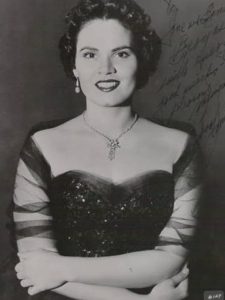

Episode 328. Mezzos in Extremis


Right after the disastrous US election of November 2024, I published an episode entitled “Mezzos on the Verge,” which featured some of my favorite mezzos in rafter-shaking performances of “on the edge” repertoire. At the time, I had enough additional material to produce a second episode, which I have called “Mezzos in Extremis.” And what better time to present that episode than as the new regime has begun its process of dismantling democracy. The material today ranges from Mozart to Britten, Handel to Janáček, Bach to Wagner, and features performances both live and studio from exceptional singers as Fedora Barbieri, Eva Randová, Margarete Klose, Irina Arkhipova, Brigitte Fassbaender, Viorica Cortez, Giulietta Simionato, Joyce DiDonato, Jennie Tourel, Lorraine Hunt Lieberson, and Dunja Vejzović, among others. I have structured the program so that the explosive expressions of insanity, fury, and rage gradually give way to the quieter (and possibly more profound) emotions of sadness, doubt, and contrition. And because I always like to compare and contrast singers, I take great joy in presenting several pairs of contrasting singers in the same repertoire: Dunja Vejzović and Paula Rasmussen in Handel’s Serse; Giulietta Simionato and Brigitte Fassbaender as Dorabella in Così; and Fedora Barbieri and Joyce DiDonato as Dejanira in Handel’s Hercules. The episode is offered in solidarity with all those who find themselves today in extreme situations.

Countermelody is a podcast devoted to the glory and the power of the human voice raised in song. Singer and vocal aficionado Daniel Gundlach explores great singers of the past and present focusing in particular on those who are less well-remembered today than they should be. Daniel’s lifetime in music as a professional countertenor, pianist, vocal coach, voice teacher, and journalist yields an exciting array of anecdotes, impressions, and “inside stories.” At Countermelody’s core is the celebration of great singers of all stripes, their instruments, and the connection they make to the words they sing. By clicking on the following link (https://linktr.ee/CountermelodyPodcast) you can find the dedicated Countermelody website which contains additional content including artist photos and episode setlists. The link will also take you to Countermelody’s Patreon page, where you can pledge your monthly or yearly support at whatever level you can afford.
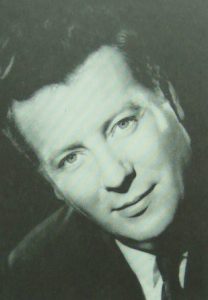


Episode 319. Leslie Uggams 1966–1975


Leslie Uggams’ long-standing place in American pop culture matches that of any pop diva of similar longevity, going back all the way to her days as a child star on 1950s television variety and game shows. She won a Tony in 1967 for her performance in the musical Hallelujah, Baby, and she was the first African American woman to host her own variety show, the short-lived Leslie Uggams Show, which I, as a little homo-in-training, soaked up like a sponge! These days she’s also celebrated for her participation in the Deadpool franchise and other high-profile projects. Today I’ve decided to shed some light on her status as a pop icon in the late 1960s, focusing on her three albums for Atlantic Records and subsequent releases in the 1970s on Dionne Warwick’s Sonday Records label and Motown Records, in other words, the period from just before Hallelujah, Baby leading up to just before her starring role in the earth-shattering 1977 miniseries Roots. Uggams reveals herself to be a versatile entertainer of the first order, performing songs by everyone from Holland-Dozier-Holland to Burt Bacharach, from Jimmy Webb to Waylon Jennings, from Jon Hendricks to Jackie DeShannon, including the very first official commercial release of the Leiber and Stoller song “Is That All There Is,” a year before it became a massive hit for Peggy Lee. The episode ends with a pair of protest songs recorded in 1968.

Countermelody is a podcast devoted to the glory and the power of the human voice raised in song. Singer and vocal aficionado Daniel Gundlach explores great singers of the past and present focusing in particular on those who are less well-remembered today than they should be. Daniel’s lifetime in music as a professional countertenor, pianist, vocal coach, voice teacher, and journalist yields an exciting array of anecdotes, impressions, and “inside stories.” At Countermelody’s core is the celebration of great singers of all stripes, their instruments, and the connection they make to the words they sing. By clicking on the following link (https://linktr.ee/CountermelodyPodcast) you can find the dedicated Countermelody website which contains additional content including artist photos and episode setlists. The link will also take you to Countermelody’s Patreon page, where you can pledge your monthly or yearly support at whatever level you can afford.


Episode 318. Christmas (Art) Songs, Part Deux


A final offering of Christmas music on Countermelody this year, but far be it from me to rehash the usual Christmas carols! Absolutely not! In this episode I offer a follow-up to an episode posted years ago featuring Christmas-themed art song. Expect the unexpected (including a big helping of 20th Century selections by Britten, Hindemith, Martinů, Rorem, and Corigliano), alongside selections from our favorite Romantic and post-Romantic composers (Brahms, Schumann, Reger, Grieg, and Strauss). Singers include Gundula Janowitz, Hermann Prey, Maureen Forrester, Edith Mathis, Karl Erb, Janet Baker, Peter Schreier, Tom Krause, and Nicolai Gedda, among many, many others. Happy Holidays to all my fans and supporters!

Countermelody is a podcast devoted to the glory and the power of the human voice raised in song. Singer and vocal aficionado Daniel Gundlach explores great singers of the past and present focusing in particular on those who are less well-remembered today than they should be. Daniel’s lifetime in music as a professional countertenor, pianist, vocal coach, voice teacher, and journalist yields an exciting array of anecdotes, impressions, and “inside stories.” At Countermelody’s core is the celebration of great singers of all stripes, their instruments, and the connection they make to the words they sing. By clicking on the following link (https://linktr.ee/CountermelodyPodcast) you can find the dedicated Countermelody website which contains additional content including artist photos and episode setlists. The link will also take you to Countermelody’s Patreon page, where you can pledge your monthly or yearly support at whatever level you can afford.
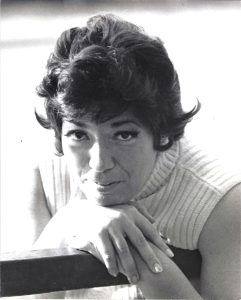

Episode 317. Big Baroque Christmas


Sometimes when I look back on past episodes of Countermelody, I surprise myself with how good they were, even in the early days when I was still trying to figure everything out. This episode, first posted as a bonus episode five years ago is a good example of that. Earlier that season I had coined the term “Full-Figured Baroque” to describe the “old-fashioned” style of Baroque performance that I personally prefer to what one currently hears in churches and concert halls around the world and on recordings. This episode was devoted to Baroque music composed specifically for the Christmas season, recorded between 1940 and 1992, and performed in deliciously non-period style, replete with deliberate tempi, judiciously applied vibrato, and stately ritardandi. There is a special focus on the Christmas portion of Handel’s Messiah and Bach’s Weihnachts-Oratorium and assorted cantatas for the Advent, Christmas, and Epiphany season. Singers include Janet Baker, Tom Krause, Jerry Hadley, Margaret Marshall, Francisco Araiza, Russell Oberlin, Helen Watts, William Warfield, John Shirley-Quirk, Peter Schreier, Heather Harper, Shirley Verrett, Edith Mathis, Hermann Prey, Marga Höffgen, Agnes Giebel, Kurt Equiluz, Florence Quivar, Aksel Schiøtz, Kirsten Flagstad, Christa Ludwig, Edith Mathis, Brigitte Fassbaender. Ernst Haefliger, Jennifer Vyvyan, Anna Reynolds, Judith Blegen, Fritz Wunderlich, Elly Ameling, Peter Schreier, and Gundula Janowitz. Conductors include Neville Marriner, Raymond Leppard, Colin Davis, Karl Richter, Lorin Maazel, Helmut Winschermann, Vittorio Negri, Karl Münchinger, Leonard Bernstein, Herbert von Karajan, Eugene Ormandy, Adrian Boult, Andrew Davis, and Eugen Jochum, among others. Don’t miss out on this full-figured Christmas treat!

Countermelody is a podcast devoted to the glory and the power of the human voice raised in song. Singer and vocal aficionado Daniel Gundlach explores great singers of the past and present focusing in particular on those who are less well-remembered today than they should be. Daniel’s lifetime in music as a professional countertenor, pianist, vocal coach, voice teacher, and journalist yields an exciting array of anecdotes, impressions, and “inside stories.” At Countermelody’s core is the celebration of great singers of all stripes, their instruments, and the connection they make to the words they sing. By clicking on the following link (https://linktr.ee/CountermelodyPodcast) you can find the dedicated Countermelody website which contains additional content including artist photos and episode setlists. The link will also take you to Countermelody’s Patreon page, where you can pledge your monthly or yearly support at whatever level you can afford.


Episode 315. Gilda Cruz-Romo


While I was growing up, Gilda Cruz-Romo was a fixture on the stage of the Metropolitan Opera. At the time, I did not fully appreciate her, as I thought of her as a second-string singer on the roster. I saw her once on the Met tour as Desdemona opposite Jon Vickers, but for reasons none too flattering to me, I undervalued her. In recent years, however, I have completely revised my opinion, and now think that Gilda Cruz-Romo was both the most significant Mexican soprano ever to appear on the world’s stages, but also simply one of the finest lirico-spinto sopranos of the twentieth centuries. Fortunately there are many people that agree with me, including some devoted fans who have posted an extraordinary number of live recordings of the artist on YouTube and elsewhere. And this is especially helpful because, incredibly, Cruz-Romo never made any commercial recordings. This episode fully explores the career and repertoire of our subject for today, and includes performances of the soprano in her core Verdi and Puccini repertoire (including such surprises as Odabella, Lady Macbeth, and Turandot!), as well as less expected forays into Mozart and bel canto. Throughout her virtues shine forth: a plangently beautiful voice with a particularly radiant top wedded to an incredibly secure technique, which afforded her enormous flexibility and coloratura facility. Added to this, and paramount to her artistry, is a dedication to her craft and to music which sweeps all before it and raises her work into the realm of the sublime. I think of this episode (the last completely new episode I’ll be putting out this season) as a pre-birthday tribute, as the diva turns 85 years old on February 12, 2025. Other singers heard on the episode are tenors Carlo Bergonzi, Colenton Freeman, and John Alexander, and baritone Matteo Manuguerra; among the conductors are Zubin Mehta, Nicola Rescigno, Riccardo Muti, Peter Maag, and Julius Rudel.

Countermelody is a podcast devoted to the glory and the power of the human voice raised in song. Singer and vocal aficionado Daniel Gundlach explores great singers of the past and present focusing in particular on those who are less well-remembered today than they should be. Daniel’s lifetime in music as a professional countertenor, pianist, vocal coach, voice teacher, and journalist yields an exciting array of anecdotes, impressions, and “inside stories.” At Countermelody’s core is the celebration of great singers of all stripes, their instruments, and the connection they make to the words they sing. By clicking on the following link (https://linktr.ee/CountermelodyPodcast) you can find the dedicated Countermelody website which contains additional content including artist photos and episode setlists. The link will also take you to Countermelody’s Patreon page, where you can pledge your monthly or yearly support at whatever level you can afford.
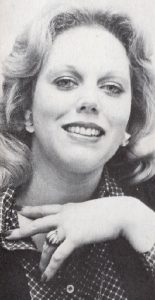

Episode 311. Ina Souez


Because we American expats in Germany often celebrate Thanksgiving on the weekend after our compatriots in the US, I offer you today a second Thanksgiving episode, this one featuring the extraordinary Ina Souez (1903 – 1992), one of the few Native American singers to achieve worldwide fame on the operatic stage. (For those of you who are unaware, November is Native American Heritage Month). Though her career was truncated by world events, Souez’s place in the history of recorded sound is assured by virtue of her participation in the series of Mozart operas as produced by HMV in the mid-1930s as souvenirs of the first seasons of the Glyndebourne Festival. Indeed, one could argue that her Fiordiligi remains the standard by which all other interpreters are judged. This episode also includes recordings from both ends of Souez’s career, as it were, including an extraordinarily rare yet impressive and touching 1957 recording of Souez singing arias and songs long after her active career had ended. The episode also features Souez in near-definitive recordings from both Ernani and La Bohème, the latter particularly appropriate as we just recently observed the 100th anniversary of the death of Giacomo Puccini. Finally, this episode also serves as a memorial to Souez, who died 32 years ago this coming week.

Countermelody is a podcast devoted to the glory and the power of the human voice raised in song. Singer and vocal aficionado Daniel Gundlach explores great singers of the past and present focusing in particular on those who are less well-remembered today than they should be. Daniel’s lifetime in music as a professional countertenor, pianist, vocal coach, voice teacher, and journalist yields an exciting array of anecdotes, impressions, and “inside stories.” At Countermelody’s core is the celebration of great singers of all stripes, their instruments, and the connection they make to the words they sing. By clicking on the following link (https://linktr.ee/CountermelodyPodcast) you can find the dedicated Countermelody website which contains additional content including artist photos and episode setlists. The link will also take you to Countermelody’s Patreon page, where you can pledge your monthly support at whatever level you can afford.
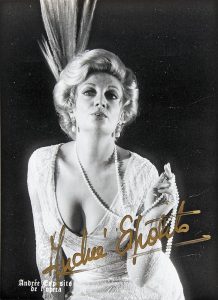


Episode 309. Get to Know Věra Soukupová


As a supplement to my ongoing series on great contraltos, and as a contrast to another outstanding Czech singer, soprano Hana Janků, recently featured on the podcast, I have been actively planning for some time now this episode on Czech contralto par excellence Věra Soukupová, still with us after recently celebrating her 92nd birthday in April. As I dug deeper and deeper into this fascinating artist’s recorded output, I was particularly taken by all the contemporary Czech work that she had sung and recorded and, in many cases, created. In this repertoire in particular, her voice leapt out at me, vivid and present, the musicianship profound, the vowel clarity astonishing, especially for a voice of such natural depth. This music and these performances deserve to be heard by a wider public. On this episode, I present stunning examples of the vocal and musical glory that is Věra Soukupová. I also offer a teaser for this week’s bonus episode, which features the artist in magisterial recordings of song cycles by Mahler and Dvořák, recorded in her prime in the mid-1960s.

Countermelody is a podcast devoted to the glory and the power of the human voice raised in song. Singer and vocal aficionado Daniel Gundlach explores great singers of the past and present focusing in particular on those who are less well-remembered today than they should be. Daniel’s lifetime in music as a professional countertenor, pianist, vocal coach, voice teacher, and journalist yields an exciting array of anecdotes, impressions, and “inside stories.” At Countermelody’s core is the celebration of great singers of all stripes, their instruments, and the connection they make to the words they sing. By clicking on the following link (https://linktr.ee/CountermelodyPodcast) you can find the dedicated Countermelody website which contains additional content including artist photos and episode setlists. The link will also take you to Countermelody’s Patreon page, where you can pledge your monthly support at whatever level you can afford.


Episode 308. Mezzos on the Verge


I am taking a short break before posting the final in my Mexican Opera Singers miniseries to bring you a compilation episode that is sure to get your blood flowing. I’ve entitled it “Mezzos on the Verge,” and that is exactly what it is: mezzo-sopranos portraying characters in extreme emotional situations. Whether it is Dalila (portrayed by Ebe Stignani) summoning the pagan gods to give her strength to conquer an infatuated strongman; Elena Obraztsova or Nadezhda Obukhova casting spells or predicting the future; Giulietta Simionato as Santuzza confronting Franco Corelli’s faithless Turiddu on the steps of the Sicilian village church on Easter morning; Gwendolyn Killebrew as Waltraute imploring help of her sister Brünnhilde to circumvent the Twilight of the Gods; Jean Madeira as Klytemnästra desperately seeking rest for her troubled soul; Shirley Verrett as Sapho preparing to throw herself into the sea; or Tatiana Troyanos as Dido dying of a broken heart – there’s something for each of us who might be feeling themselves in over their heads these days. Unlike most of us. however, (and luckily for us as well), each of these magnificent mezzos is expressing that anguish in glorious song.

Countermelody is a podcast devoted to the glory and the power of the human voice raised in song. Singer and vocal aficionado Daniel Gundlach explores great singers of the past and present focusing in particular on those who are less well-remembered today than they should be. Daniel’s lifetime in music as a professional countertenor, pianist, vocal coach, voice teacher, and journalist yields an exciting array of anecdotes, impressions, and “inside stories.” At Countermelody’s core is the celebration of great singers of all stripes, their instruments, and the connection they make to the words they sing. By clicking on the following link (https://linktr.ee/CountermelodyPodcast) you can find the dedicated Countermelody website which contains additional content including artist photos and episode setlists. The link will also take you to Countermelody’s Patreon page, where you can pledge your monthly support at whatever level you can afford.


Episode 306. Oralia Domínguez Revisited


Today (for what I hope are obvious reasons) begins a short Countermelody series on a few of the greatest singers that Mexico, our neighbor to the south, has gifted to the world. Contralto Oralia Domínguez (25 October 1925 – 25 November 2013) is famed for her collaborations with such musical giants as Maria Callas and Herbert von Karajan, but on her own terms, she ranks alongside those monumental true contraltos like Marian Anderson and Kathleen Ferrier. Though there is no question that she was under-recorded, she left a handful of classic commercial recordings, and a plethora of recorded live performances which an artist both technically grounded and fearless in expression, one whose legato singing exuded repose just as her phenomenal coloratura singing generates genuine excitement. I cannot say enough about this artist, who has rapidly become one of my very favorites! This episode, an expansion of a bonus episode I published a few years ago, features Domínguez in extended operatic scenes by Cilea, Saint-Saëns, and Monteverdi and in religious works by Verdi and Lili Boulanger as well as Spanish and Mexican songs, capped with some stunning vocalism in baroque works by Handel and Vivaldi. Vocal guest stars include the late great Antonietta Stella, Jon Vickers, Barry McDaniel, Luigi Ottolini, and the blazing hot verismo soprano Clara Petrella; conductors include Jean Fournet, Igor Markevitch, Alberto Zedda, Oliviero de Fabritiis, Herbert von Karajan, Fernando Previtali, Nicola Rescigno, Renato Cellini, and Leonard Bernstein. In other words, the “big guns,” an indication of the enormity of the magisterial talent of Oralia Domínguez.

Countermelody is a podcast devoted to the glory and the power of the human voice raised in song. Singer and vocal aficionado Daniel Gundlach explores great singers of the past and present focusing in particular on those who are less well-remembered today than they should be. Daniel’s lifetime in music as a professional countertenor, pianist, vocal coach, voice teacher, and journalist yields an exciting array of anecdotes, impressions, and “inside stories.” At Countermelody’s core is the celebration of great singers of all stripes, their instruments, and the connection they make to the words they sing. By clicking on the following link (https://linktr.ee/CountermelodyPodcast) you can find the dedicated Countermelody website which contains additional content including artist photos and episode setlists. The link will also take you to Countermelody’s Patreon page, where you can pledge your monthly support at whatever level you can afford.


Episode 305. Rage and Despair


Before I traveled to my home state of Wisconsin this week, I had prepared an episode to post this weekend, but in my naïveté, I had not anticipated the catastrophe that happened to my country, and to the world, when the unthinkable occurred this past Tuesday. Since then I have barely had a moment’s rest, feeling gripped by a torrent of negative emotions, rage and despair primary among them. It became apparent to me that I had to give voice to those feelings in order to work through them, and in the process maybe even help my friends and listeners who are struggling with their own versions of this toxic emotional cocktail. So here is the episode I dearly wish I had not felt compelled to produce, one devoted to despair and to rage, as we attempt to convert them into resolve and determination to “stand our ground” and demand that our beloved country not go under, powerless though we may feel at this moment to prevent that from happening. I have chosen work by Poulenc, Mozart, Weill, Monteverdi, Menotti, Schumann, Schubert, and Bernstein, performed by such podcast favorites as Jennie Tourel, Judy Garland, Gérard Souzay, Maria Callas, Oralia Domínguez, Virginia Zeani, Judith Raskin, Pilar Lorengar, and others, to act as our music therapists as we struggle to regain our equilibrium, “Lost in the Stars” though we may feel at this moment.

Countermelody is a podcast devoted to the glory and the power of the human voice raised in song. Singer and vocal aficionado Daniel Gundlach explores great singers of the past and present focusing in particular on those who are less well-remembered today than they should be. Daniel’s lifetime in music as a professional countertenor, pianist, vocal coach, voice teacher, and journalist yields an exciting array of anecdotes, impressions, and “inside stories.” At Countermelody’s core is the celebration of great singers of all stripes, their instruments, and the connection they make to the words they sing. By clicking on the following link (https://linktr.ee/CountermelodyPodcast) you can find the dedicated Countermelody website which contains additional content including artist photos and episode setlists. The link will also take you to Countermelody’s Patreon page, where you can pledge your monthly support at whatever level you can afford.


Episode 304. Portia White, Canadian Icon


As the United States faces its most momentous and contentious election since at least 1968, let’s turn for today to our neighbors to the North to become acquainted with one of their cultural icons: the African Canadian contralto Portia White (1911-1968), the first internationally renowned Black Canadian classical singer, named a “person of national historic significance” by the Canadian government in 1995. Her story is taught to Canadian school children, her legacy has yielded operas, musicals, plays, and memorials which celebrate her contribution; she has even appeared on a stamp issued by Canada Post. In Canada she is revered with the same significance as are Marian Anderson, Dorothy Maynor, and Roland Hayes. And yet in the United States she is virtually unknown. Part of this is no doubt because she left no commercial recordings, and because her international career was so brief. This episode seeks in its own humble way to right that wrong, and to place Portia White in the context of other Black singers of her era. At the time of her death of cancer in 1968, a memorial LP was issued containing live recordings from the 1940s, including selections by Schubert, Fauré, Bizet, and Arne; French Canadian folk songs, and spirituals. I have arranged those selections into an “imaginary recital” such as she might have given in one of her concerts during those years. The episode is framed by two different recordings of her “theme song,” the poignant and plangent “Think on Me.” White is the first of two contraltos of international significance I will be presenting this week. I am honored and thrilled to introduce (or re-introduce) her to you today.

Countermelody is a podcast devoted to the glory and the power of the human voice raised in song. Singer and vocal aficionado Daniel Gundlach explores great singers of the past and present focusing in particular on those who are less well-remembered today than they should be. Daniel’s lifetime in music as a professional countertenor, pianist, vocal coach, voice teacher, and journalist yields an exciting array of anecdotes, impressions, and “inside stories.” At Countermelody’s core is the celebration of great singers of all stripes, their instruments, and the connection they make to the words they sing. By clicking on the following link (https://linktr.ee/CountermelodyPodcast) you can find the dedicated Countermelody website which contains additional content including artist photos and episode setlists. The link will also take you to Countermelody’s Patreon page, where you can pledge your monthly support at whatever level you can afford.


Episode 303. Everything Must Change


Something a little outside of the normal scope of Countermelody for today’s episode:

Earlier this year I published a bonus episode on the fascinating singer/songwriter Benard Ighner (1945-2017) and his modern-day standard “Everything Must Change,” which I re-present today. The song has had a profound effect on me ever since I heard the version by the great Oleta Adams on her 1990 solo debut album, Circle of One. At the time I assumed that Oleta herself had written it, but I came to discover that it was penned by Ighner and first recorded by Quincy Jones on his 1974 album, Body Heat, and that since then many, many pop and jazz singers of the past fifty years have covered the song. All these different versions have both delighted and fascinated (as well as occasionally mystified and frustrated) me. The song itself is both fatalistic and hopeful, which is exactly the place I find myself as Election Day in the US approaches. Intrigued by both the song and its composer, I dug deeper and discovered all I could about Benard Ighner. An autodidactic musical polymath, Ighner rubbed shoulders with some of the greatest pop and jazz musicians of his time, and not just the hundreds of singers and instrumentalists who have jumped on the “Everything Must Change” bandwagon! This song brings out either the very best or the very worst of those who interpret it. In choosing my favorite versions, I have veered toward those who embrace understatement rather than vocal caterwauling and children’s choruses. The episode begins with examples of Ighner’s early work from the late sixties and early seventies, including pseudonymous encounters with Dizzy Gillespie (as Benard Ito) and Lalo Schifrin (as Alexander Saint Charles); proceeding through songs he wrote and produced for Shirley Bassey, Marlena Shaw, and Carmen McRae; as well as two excerpts from his solo album, a one-off 1978 Japanese release entitled Little Dreamer. We then hear ten different versions of the song, including, among others, Nina Simone, June Christy, Peggy Lee, Sarah Vaughan, Minako Yoshida (sung to her own Japanese translation), a recent magisterial live performance by Oleta Adams, and, even Ighner himself, who, alongside his other many musical talents, possessed a velvety baritone voice of exceptional beauty, poise, and power.

May this episode provide hope, courage, and insight for all of those who do believe that we can overcome the mad popularity-contest antics of this election cycle and lean toward a future in which morality and hope can still prove to be guiding principles.

Countermelody is a podcast devoted to the glory and the power of the human voice raised in song. Singer and vocal aficionado Daniel Gundlach explores great singers of the past and present focusing in particular on those who are less well-remembered today than they should be. Daniel’s lifetime in music as a professional countertenor, pianist, vocal coach, voice teacher, and journalist yields an exciting array of anecdotes, impressions, and “inside stories.” At Countermelody’s core is the celebration of great singers of all stripes, their instruments, and the connection they make to the words they sing. By clicking on the following link (https://linktr.ee/CountermelodyPodcast) you can find the dedicated Countermelody website which contains additional content including artist photos and episode setlists. The link will also take you to Countermelody’s Patreon page, where you can pledge your monthly support at whatever level you can afford.
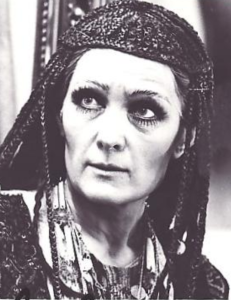

Episode 298. Verdi Duets


Last week, absorbed in preparations for my own birthday, I passed over the birthday of the great Giuseppe Verdi, born 10 October 1813. Two years ago I produced a pair of Verdi episodes, and today I feature the one first published as a bonus episode at that time, which features duets from Luisa Miller, Il Trovatore, La Traviata, Rigoletto, Otello, and Falstaff. In the spirit of my two recent episodes “Requiescat” and “In Pace,” I had the brilliant idea of highlighting great Verdi singers (and one conductor) who died in Octobers past, including: Joan Sutherland (October 10, 2010); Eleanor Steber (October 3, 1990); Montserrat Caballé (October 6, 2018); Vladislav Piavko (October 6, 2020); Rosanna Carteri (October 25, 2020); Leonard Bernstein (October 14, 1990); Walter Berry (October 27, 2000); Franco Bonisolli (October 30, 2003); Edita Gruberová (October 18, 2021); Ingvar Wixell (October 8, 2011); and Rolando Panerai (October 22, 2019). Heard alongside these musicians are the blazingly talented John Alexander, Sherrill Milnes, Leonard Warren, Irina Arkhipova, Mario del Monaco, Anselmo Colzani, Regina Resnik, Margherita Rinaldi, Giorgio Zancanaro, Luigi Alva, Judith Raskin, and Mattiwilda Dobbs. Live performances are featured alongside soundtrack recordings from three different operatic films, as well as a few rare studio recordings ensure that the great Giuseppe receives sufficient, if belated, accolades.

Countermelody is a podcast devoted to the glory and the power of the human voice raised in song. Singer and vocal aficionado Daniel Gundlach explores great singers of the past and present focusing in particular on those who are less well-remembered today than they should be. Daniel’s lifetime in music as a professional countertenor, pianist, vocal coach, voice teacher, and journalist yields an exciting array of anecdotes, impressions, and “inside stories.” At Countermelody’s core is the celebration of great singers of all stripes, their instruments, and the connection they make to the words they sing. By clicking on the following link (https://linktr.ee/CountermelodyPodcast) you can find the dedicated Countermelody website which contains additional content including artist photos and episode setlists. The link will also take you to Countermelody’s Patreon page, where you can pledge your monthly support at whatever level you can afford.
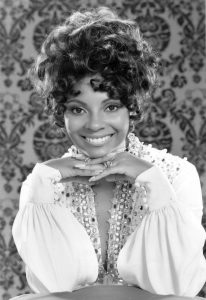

Episode 296. Dan’s Operatic Picks


I’m still under the weather, but I can’t let that keep me from posting my usual Tuesday episode! Here is another recycled bonus episode, this one posted two years ago in honor of my birthday, which features some of my favorite singers. At that time I posted a brand new episode entitled “Dan’s Picks,” but many of the best selections ended up on the cutting room floor. That hurt my heart so much that I had no choice but to do a companion episode which features a number of things that were lacking from the main episode: first of all, more tenor goodness (Aksel Schiøtz, Franco Corelli, Sándor Kónya, Jussi Björling, Richard Crooks, Ian Partridge); second of all, more burly baritones (Jorma Hynninen, Ettore Bastianini, Riccardo Stracciari, and the lesser-known megawatt talent Hugo Hasslo). Also heard are a number of sopranos that have not received enough Countermelody airtime (Edith Mason, Maria Vitale, Andrée Esposito, Lucia Popp), as well as a number of favorites that we (I?) simply can’t get enough of: Muzio, Lehmann, Olivero, Farrell, Steber. I even set aside modesty to include a brief clip of me from a demo I recorded some time ago, back when I could still sing! Every selection in this episode is very dear to my heart; I hope you will enjoy listening as much as I enjoyed putting it together.


Episode 295. Requiescat


Today on Countermelody is the first of two memorial episodes paying tribute to singers that we’ve lost just in the past few months. Applying the completely arbitrary rubric of gender, today I am focusing on sopranos (with two mezzo-soprano interlopers); my next episode will carry the memorial torch for all the male singers who’ve recently died. Today’s subjects ranged in age from only 35 to nearly 102 at the time of their deaths, and from Broadway star to early music singer: Jodie Devos, April Cantelo, Lucine Amara, Celestina Casapietra, Christine Weidinger, Elena Mauti Nunziata, Deborah Roberts, and Sanda Şandru; lower-voiced interlopers include Janis Paige, Margaret Cable, and Ruth Hesse. If you know some of these names, you know that you will be some mellifluous serenading; if you don’t, prepare yourself for a wide range of music from Renaissance polyphony to American pop standards, with operatic selections ranging from Donizetti to Falla.

Countermelody is a podcast devoted to the glory and the power of the human voice raised in song. Singer and vocal aficionado Daniel Gundlach explores great singers of the past and present focusing in particular on those who are less well-remembered today than they should be. Daniel’s lifetime in music as a professional countertenor, pianist, vocal coach, voice teacher, and journalist yields an exciting array of anecdotes, impressions, and “inside stories.” At Countermelody’s core is the celebration of great singers of all stripes, their instruments, and the connection they make to the words they sing. By clicking on the following link (https://linktr.ee/CountermelodyPodcast) you can find the dedicated Countermelody website which contains additional content including artist photos and episode setlists. The link will also take you to Countermelody’s Patreon page, where you can pledge your monthly support at whatever level you can afford.


Episode 293. The Mysterious Mara Coleva


The Bulgarian soprano Mara Coleva (12 March 1922 – 22 October 2014) was a vital and versatile singer, the majority of whose career took place in Italy in the 1950s through the very early sixties. Her most prominent and readily-accessible recordings are all for the RAI (Radio-Televisione Italiana), including the role of Silvana in a 1955 recording from Milano and two Martini & Rossi-sponsored RAI concerts, one in Milano in 1957, and the other in Roma in 1961. These recordings reveal an artist with a well-schooled voice with a powerful dramatic sense, but one whose life remains to a great extent shrouded in mystery. It is an enormous thrill and privilege to present this great (if virtually unknown) artist in repertoire ranging from Rossini, Catalani, Cilea, Verdi, and twentieth-century Italian composers Ottorino Respighi and Lodovico Rocca. The episode ends with Coleva in a surprising and superbly-sung rendition of Agata’s big scena from Il franco cacciatore (better known as Weber’s Der Freischütz!)

Countermelody is a podcast devoted to the glory and the power of the human voice raised in song. Singer and vocal aficionado Daniel Gundlach explores great singers of the past and present focusing in particular on those who are less well-remembered today than they should be. Daniel’s lifetime in music as a professional countertenor, pianist, vocal coach, voice teacher, and journalist yields an exciting array of anecdotes, impressions, and “inside stories.” At Countermelody’s core is the celebration of great singers of all stripes, their instruments, and the connection they make to the words they sing. By clicking on the following link (https://linktr.ee/CountermelodyPodcast) you can find the dedicated Countermelody website which contains additional content including artist photos and episode setlists. The link will also take you to Countermelody’s Patreon page, where you can pledge your monthly support at whatever level you can afford.


Episode 291. A Bevy of Bachian Contraltos


This week I pull out all the Baroque stops (appropriately enough), to present you with an episode chock full of contraltos, all singing the music of Johann Sebastian Bach. I have chosen 28 different contraltos, active between the late 1930s and the early 2000s, who excelled in the singing and interpretation of this most spiritual, and most genius, of composers. I am dividing this episode into two separate segments, the first of which I present here, a group of singers which includes such legendary historical figures as Kathleen Ferrier and Marian Anderson, and Christa Ludwig, as well as such exceptional voices from the Americas as Maureen Forrester and Carol Smith; and, from the continent, Aafje Heynis, Germaine Cernay, Brigitte Fassbaender, Hilde Rössel-Majdan, Claudia Hellmann, Marga Höffgen, and Margarethe Bence. These women are joined by a further a group of British contraltos and mezzo-sopranos, each with distinctive and exceptional approaches to the music of Bach, including Helen Watts, Norma Procter, Maureen Lehane (for me, the big discovery of the week), and of course Janet Baker, beloved to all of us. I also pay tribute to a select group of exceptional Kapellmeister including Karl Richter, Helmuth Kahlhöfer, Fritz Werner, Kurt Thomas, and Hans Thamm, who thrived in recordings and live performances from the 1950s and beyond. If certain favorite names of yours are missing from this week’s setlist, no worries: they may well appear on next week’s episode, which continues to combine Bachian expressive profundity with plummy contralto depths.

Countermelody is a podcast devoted to the glory and the power of the human voice raised in song. Singer and vocal aficionado Daniel Gundlach explores great singers of the past and present focusing in particular on those who are less well-remembered today than they should be. Daniel’s lifetime in music as a professional countertenor, pianist, vocal coach, voice teacher, and journalist yields an exciting array of anecdotes, impressions, and “inside stories.” At Countermelody’s core is the celebration of great singers of all stripes, their instruments, and the connection they make to the words they sing. By clicking on the following link (https://linktr.ee/CountermelodyPodcast) you can find the dedicated Countermelody website which contains additional content including artist photos and episode setlists. The link will also take you to Countermelody’s Patreon page, where you can pledge your monthly support at whatever level you can afford.
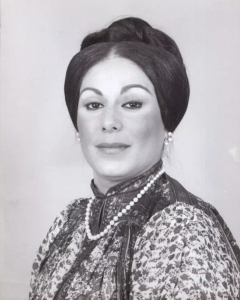

Episode 289. Meet Vera Little


On Monday June 3, 2024, a new memorial plaque commemorating African American mezzo-soprano Vera Little (10 December 1928 – 24 October 2012) was unveiled at her former residence in Berlin’s Charlottenburg neighborhood. Little is remembered today as the first Black singer to appear as Carmen on the stage of Berlin’s Städtische Oper, soon to be renamed the Deutsche Oper Berlin. At the time of that appearance there were cries and protests about her hiring instead of an “equally capable” German singer. And yet, when Little returned to the stage of the Deutsche Oper in 1963, now singing the role of Amneris, she became one of the central singers in the ensemble of that company, being named a Kammersängerin there in 1970. This episode examines the life and career of Vera Little, from her birth in Memphis through her decades-long residence in Berlin. It is a fascinating, circuitous path, and one which is documented only sporadically on recording. On this episode, I play excerpts from Little’s only solo recording, a 1957 Decca records release of spirituals recorded in France, as well as her recordings on Deutsche Grammophon of Der junge Lord by Hans Werner Henze, and Richard Strauss’s Daphne. In addition, there are live recordings of Little singing Baba the Turk in Stravinsky’s The Rake’s Progress, Giovanna Seymour in Donizetti’s Anna Bolena, and Beroe in Henze’s Die Bassariden, which Little created in its 1966 world premiere at the Salzburg Festival. Vera Little was also an author, who published four books of memoir and poetry, and just yesterday I obtained a copy of her first book, 1978’s Tears in My Eyes, from which I read a number of excerpts. I had known Little’s name for decades, but had never fully explored her legacy before. It is here (and on an accompanying bonus episode) my honor and privilege to present a great (and somewhat forgotten) artist for your delectation. Today’s vocal guest stars include Kostas Paskalis, Hilde Güden, Anneliese Rothenberger, and Teresa Żylis-Gara.

Countermelody is a podcast devoted to the glory and the power of the human voice raised in song. Singer and vocal aficionado Daniel Gundlach explores great singers of the past and present focusing in particular on those who are less well-remembered today than they should be. Daniel’s lifetime in music as a professional countertenor, pianist, vocal coach, voice teacher, and journalist yields an exciting array of anecdotes, impressions, and “inside stories.” At Countermelody’s core is the celebration of great singers of all stripes, their instruments, and the connection they make to the words they sing. By clicking on the following link (https://linktr.ee/CountermelodyPodcast) you can find the dedicated Countermelody website which contains additional content including artist photos and episode setlists. The link will also take you to Countermelody’s Patreon page, where you can pledge your monthly support at whatever level you can afford.
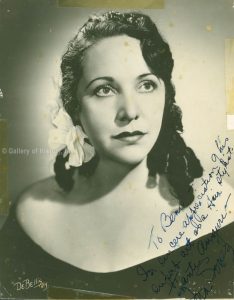


Episode 288. Teresa Żylis-Gara Revisited


Today I revisit the life, career, and sumptuous voice of the great Polish soprano Teresa Żylis-Gara, who died three years ago on 28 August 2021 at the age of 91. The soprano was for the most part shockingly under-recorded, so I have scoured the internet for examples of her live in performance, and unearthed examples of her singing Wagner, Massenet, Puccini, Verdi, Strauss, Giordano, Mozart, and Berlioz with some divine tenorial counterparts including Franco Bonisolli, José Carreras, Luciano Pavarotti, John Alexander, Alfredo Kraus, Wiesław Ochman, Peter Lindroos, and Piero Visconti. I know I am not the only one who revels in the rich velvety timbre of Mme. Żylis-Gara, and each of the tenors heard alongside her presents her versatile voice in a different facet of its beauty.

Countermelody is a podcast devoted to the glory and the power of the human voice raised in song. Singer and vocal aficionado Daniel Gundlach explores great singers of the past and present focusing in particular on those who are less well-remembered today than they should be. Daniel’s lifetime in music as a professional countertenor, pianist, vocal coach, voice teacher, and journalist yields an exciting array of anecdotes, impressions, and “inside stories.” At Countermelody’s core is the celebration of great singers of all stripes, their instruments, and the connection they make to the words they sing. By clicking on the following link (https://linktr.ee/CountermelodyPodcast) you can find the dedicated Countermelody website which contains additional content including artist photos and episode setlists. The link will also take you to Countermelody’s Patreon page, where you can pledge your monthly support at whatever level you can afford.
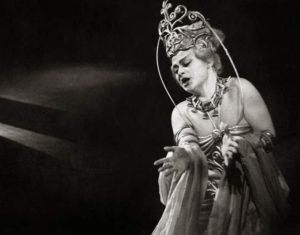

Episode 283. Betty Allen


Betty Allen has been featured on countless omnibus Countermelody episodes, but it’s time for her to get her own episode! Born in Ohio on 17 March, 1927, she died at the age of 82 on 22 June 2009. Not only did Betty Allen possess a voice of significant power and amplitude, she was a superb musician who channeled her soul into her singing, using her superb technique to convey depth of meaning in all the music she sang. She also had a wide repertoire, excelling in opera, concert, and recital. Though her recorded legacy is relatively small, it is superb and significant. Today’s episode samples a cross-section of her recordings, both live and studio, and includes collaborations with Leonard Bernstein, Nicolai Gedda, Eugene Ormandy, Carmen Balthrop, Horst Stein, Leontyne Price, Virgil Thomson, John DeMain, Hildegard Hillebrecht, Richard Bonynge, and Adele Addison. She was a powerful force for good in the musical world, as an educator and advocate as well, succeeding Dorothy Maynor in leading the Harlem School of the Arts, where she served as both executive director and president. Many currently active singers have been touched by the stringent generosity of this fine artist, and it is my honor to pay tribute to her today.

Countermelody is a podcast devoted to the glory and the power of the human voice raised in song. Singer and vocal aficionado Daniel Gundlach explores great singers of the past and present focusing in particular on those who are less well-remembered today than they should be. Daniel’s lifetime in music as a professional countertenor, pianist, vocal coach, voice teacher, and journalist yields an exciting array of anecdotes, impressions, and “inside stories.” At Countermelody’s core is the celebration of great singers of all stripes, their instruments, and the connection they make to the words they sing. By clicking on the following link (https://linktr.ee/CountermelodyPodcast) you can find the dedicated Countermelody website which contains additional content including artist photos and episode setlists. The link will also take you to Countermelody’s Patreon page, where you can pledge your monthly support at whatever level you can afford.
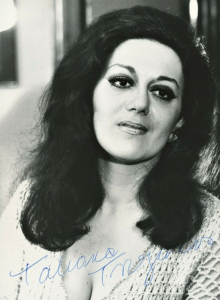

Episode 275. Margaret Tynes (Listeners’ Favorites)


On March 7, 2024, the legendary African American soprano Margaret Tynes died at the age of 104. During the second season of Countermelody, I featured the singer, who at the time was a mere 101 years old, on one of my Black History Month episodes. She was a unique artist, fearlessly forging her own musical, dramatic, and vocal path, aided and abetted by a strong voice with a powerful top register. Though she made a number of significant appearances in her homeland earlier in her career (including a televised appearance in Duke Ellington’s jazz suite, A Drum Is a Woman), her later successes were focused primarily in Europe, where she was particularly celebrated for her extraordinary Salome, with which she created a sensation in Spoleto in 1961, and her Lady Macbeth. Excerpts from all of these and more are featured on this episode, which also includes spirituals and Creole folk songs, as well as arias and duets from Aida, Carmen, and Porgy and Bess. Guest artists include LeVern Hutcherson, most remembered today for his appearances on stage and screen in Porgy, and George Shirley, the first African American tenor to sing at the Metropolitan Opera.

Countermelody is a podcast devoted to the glory and the power of the human voice raised in song. Singer and vocal aficionado Daniel Gundlach explores great singers of the past and present focusing in particular on those who are less well-remembered today than they should be. Daniel’s lifetime in music as a professional countertenor, pianist, vocal coach, voice teacher, and journalist yields an exciting array of anecdotes, impressions, and “inside stories.” At Countermelody’s core is the celebration of great singers of all stripes, their instruments, and the connection they make to the words they sing. By clicking on the following link (https://linktr.ee/CountermelodyPodcast) you can find the dedicated Countermelody website which contains additional content including artist photos and episode setlists. The link will also take you to Countermelody’s Patreon page, where you can pledge your monthly support at whatever level you can afford. Bonus episodes available exclusively to Patreon supporters are currently available and further bonus content including interviews and livestreams is planned for the upcoming season.
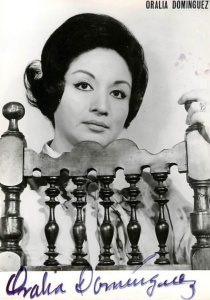

Episode 271. Muriel Smith (Listeners’ Favorites)


As I embark on several weeks of vacation, I bring you the first of several episodes from the early years of the podcast in between the new episodes that I will produce with somewhat less frequency between now and September. This week I am honored to bring to you the first of two episodes from the Season One of Countermelody which introduced my listeners to the great African American mezzo-soprano Muriel Smith (1923-1985) who, among other important contributions, premiered the title role of Carmen Jones on Broadway in 1943. We examine her work in musicals and films as well as pop music and opera. Her eclecticism, her ability to color her voice in a way uniquely suited to the wide range of roles she undertook, as well as her deep connection to text and expression, mark her as an artist of the highest caliber. Featured is a rare 1955 Philips recording of spirituals represents Muriel Smith at her artistic and interpretive peak.

Countermelody is a podcast devoted to the glory and the power of the human voice raised in song. Singer and vocal aficionado Daniel Gundlach explores great singers of the past and present focusing in particular on those who are less well-remembered today than they should be. Daniel’s lifetime in music as a professional countertenor, pianist, vocal coach, voice teacher, and journalist yields an exciting array of anecdotes, impressions, and “inside stories.” At Countermelody’s core is the celebration of great singers of all stripes, their instruments, and the connection they make to the words they sing. By clicking on the following link (https://linktr.ee/CountermelodyPodcast) you can find the dedicated Countermelody website which contains additional content including artist photos and episode setlists. The link will also take you to Countermelody’s Patreon page, where you can pledge your monthly support at whatever level you can afford. Bonus episodes available exclusively to Patreon supporters are currently available and further bonus content including interviews and livestreams is planned for the upcoming season.


Episode 269. Alberta Hunter


Please join me today for this overview of the roller coaster career of Alberta Hunter (01 April 1895 – 17 October 1984), a jazz legend whose surprising and extraordinary life was shaped by a voice that simply personified the Blues. Early in her life, around the time she was 15, she fled her native Memphis for Chicago, where, with tenacity, grit, and ambition, she became the darling of the night club circuit, performing sometimes under tommy-gun-adjacent circumstances. She soon made her way to Broadway and, following the lead of her compatriots, Joséphine Baker, Adelaide Hall, Florence Mills, and Elisabeth Welch, to Paris and London, where she was the toast of the town and appeared as Queenie opposite Paul Robeson in the original London production of Show Boat. Later during and after World War II she became a fixture of the USO circuit. Following the death of her mother, she abandoned her performing career and took up nursing in her sixties. After her enforced retirement twenty years later, through a set of freaky coincidences, she made a miraculous return to live performing at the age of 82 and became an overnight sensation, the toast of three continents. She always returned to her ongoing residency at a club in the Village called The Cookery, the venue where the final chapter of her career began. She continued to perform and record until shortly before her death just before her 90th birthday. Though she lived her life discreetly and never came out overtly, she nevertheless was involved with women throughout her life and formed her strongest emotional and romantic bonds with them. Sassy, raunchy, and gritty on the surface, Hunter possessed a voice and ingratiating style of such honesty, humor, and character, that masked a modesty hidden beneath that brash exterior, and a musical sensibility that dazzles with its ease, subtlety, and complexity. Featured musical excerpts, both studio and live, extend over more than 60 years and include collaborations with such jazz giants as Eubie Blake, Fats Waller, Lovie Austin, Charlie Shavers, and producer John Hammond and includes a clip from her appearance in the British film Radio Parade of 1935.

Countermelody is a podcast devoted to the glory and the power of the human voice raised in song. Singer and vocal aficionado Daniel Gundlach explores great singers of the past and present focusing in particular on those who are less well-remembered today than they should be. Daniel’s lifetime in music as a professional countertenor, pianist, vocal coach, voice teacher, and journalist yields an exciting array of anecdotes, impressions, and “inside stories.” At Countermelody’s core is the celebration of great singers of all stripes, their instruments, and the connection they make to the words they sing. By clicking on the following link (https://linktr.ee/CountermelodyPodcast) you can find the dedicated Countermelody website which contains additional content including artist photos and episode setlists. The link will also take you to Countermelody’s Patreon page, where you can pledge your monthly support at whatever level you can afford. Bonus episodes available exclusively to Patreon supporters are currently available and further bonus content including interviews and livestreams is planned for the upcoming season.
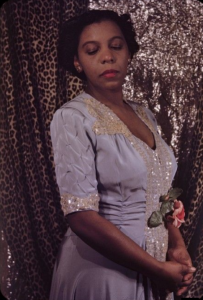


Episode 267. A Cavalcade of Pop Contraltos


My intention this week to produce a joyous new episode further celebrating contraltos, was undermined by multiple deaths this past week in the musical world, including French pop icon Françoise Hardy, Swiss tenor Eric Tappy, American art song icon Paul Sperry, and R&B diva Angela Bofill, capped by the tragic demise of young Belgian coloratura soprano Jodie Devos of breast cancer at the age of only 35. The episode, thus, begins with brief musical excerpts from all of these recently departed artists. In the main episode, I spread the contralto net even wider than last time, focusing on low-voiced doyennes of popular song. We hear jazz singers (Betty Carter, Sarah Vaughan, Carmen McRae); stars of stage, screen, and radio (Marlene Dietrich, Polly Bergen, Connee Boswell, Alice Faye, Lisa Kirk, Kate Smith); purveyors of the Blues (Bessie Smith, Bertice Reading); French cabaret singers (Damia, Barbara); fado, rebetika, and tango artists (Amália Rodrigues, Milva, Maria Bethânia, Sotiria Bellou); and late-20th century pop icons (Cher, Tina Turner, Karen Carpenter, Annie Lennox); with a few delightful surprises along the way. I should also note, in honor of Pride Month, that more than a few of these artists flaunted societal norms regarding their affectional preferences, living either furtively or openly at a time when such expressions could have serious consequences. I love putting this kind of episode together and I hope that you enjoy the kaleidoscopic sounds that emerge from the throats of these deep-voiced pop divas.

Countermelody is a podcast devoted to the glory and the power of the human voice raised in song. Singer and vocal aficionado Daniel Gundlach explores great singers of the past and present focusing in particular on those who are less well-remembered today than they should be. Daniel’s lifetime in music as a professional countertenor, pianist, vocal coach, voice teacher, and journalist yields an exciting array of anecdotes, impressions, and “inside stories.” At Countermelody’s core is the celebration of great singers of all stripes, their instruments, and the connection they make to the words they sing. By clicking on the following link (https://linktr.ee/CountermelodyPodcast) you can find the dedicated Countermelody website which contains additional content including artist photos and episode setlists. The link will also take you to Countermelody’s Patreon page, where you can pledge your monthly support at whatever level you can afford.


Episode 265. Meet Hana Janků


Have you ever encountered a singer that no one has apparently heard of, yet once you have discovered them, you feel compelled to introduce them to practically everyone you know? I’ve had this experience more than a few times over the past five years of producing weekly Countermelody episodes, and today I bring you another such singer: friends, meet Hana Janků, the Czech soprano who lived from 25 October 1940 to 28 April 1995. Her voice is one of steely brilliance that she can taper down to the slightest whisper of a pianissimo. As important as her extraordinary voice was her profoundly-felt and deeply-etched characterizations of all the roles she assumed. As a young music lover, Hana’s aims were modest, but thanks to a voice teacher who recognized her gift, she moved from the chorus to a member of the ensemble at the Brno Opera before she was 20. Five years later in Bratislava, she first performed the role with which she would be most closely associated: Puccini’s Turandot. Two short years later, after an arduous audition process, she sang the role at La Scala and became a star overnight. Her large repertoire also encompassed roles such Tosca, Gioconda, and Lady Macbeth, French and Russian operas as well as Mozart and Wagner roles, with a large smattering of roles by Czech composers as well, in particular Smetana and Dvořák. Because of political unrest, she made the difficult decision to leave her native Czechoslovakia, performing instead throughout the world, including stints in the ensembles at the Deutsche Oper am Rhein in Düsseldorf and the Deutsche Oper Berlin. Ill health forced her to leave the opera stage prematurely, and she died of cancer in Vienna before she turned 55. Janků left very few commercial recordings, but I have been plumbing the internet for rare live recordings spanning her entire career, encompassing not only her legendary Italian roles, but also roles by Mozart, Gounod, and Othmar Schoeck, as well as a smattering of Czech repertoire. It is an honor to present to you the woman whom Birgit Nilsson dubbed the finest Turandot of her era and who was, as we shall hear, so much more as well! Vocal guest stars include Franco Corelli, Giorgio Merighi, Cornell MacNeil, Roland Hermann, William Holley, and Naděžda Kniplová.

Countermelody is a podcast devoted to the glory and the power of the human voice raised in song. Singer and vocal aficionado Daniel Gundlach explores great singers of the past and present focusing in particular on those who are less well-remembered today than they should be. Daniel’s lifetime in music as a professional countertenor, pianist, vocal coach, voice teacher, and journalist yields an exciting array of anecdotes, impressions, and “inside stories.” At Countermelody’s core is the celebration of great singers of all stripes, their instruments, and the connection they make to the words they sing. By clicking on the following link (https://linktr.ee/CountermelodyPodcast) you can find the dedicated Countermelody website which contains additional content including artist photos and episode setlists. The link will also take you to Countermelody’s Patreon page, where you can pledge your monthly support at whatever level you can afford.


Episode 264. Rescue Mission (Forgotten Divas Edition)


During Black History Month this year I featured a group of five exceptional singers I dubbed, for lack of a better term, “Forgotten Divas.” Each of these women, sopranos Delcina Stevenson, Annabelle Bernard, and Veronica Tyler, mezzo-soprano Gwendolyn Killebrew, and jazz singer Ethel Ennis, represents the peak of achievement in each of their respective fachs. These proved to be among the most popular and far-reaching of my recent episodes. At that time, I promised my listeners that I would continue to seek out rare recordings of each of these women and that, if and when such material surfaced, I would be sure to share it with my listeners. True to my promise, I present a brand-new episode featuring (for the most part) newly discovered material with each of these singers: a live Washington Opera Ariodante from 1971 and a live Carnegie Hall Orfeo ed Euridice from 1967, both with Veronica Tyler; live original language performances of Puccini’s Il tabarro and Meyerbeer’s Le Prophète from the stage of the Deutsche Oper Berlin which starred Annabelle Bernard; Gwendolyn Killebrew singing the Habanera from Carmen, one of her most celebrated roles, as well as the Waldtaube in Schoenberg’s Gurrelieder; rare studio recordings of Delcina Stevenson singing Bach and Vivaldi from the early 1970s; and live material featuring Ethel Ennis over the course of nearly fifty years of her career, 1958 through 2005. As more of this material resurfaces, I will present further episodes of this new “Rescue Mission” series featuring both these singers and others I have already featured on the podcast, performing material that adds to our understanding and appreciation of their artistry.

Countermelody is a podcast devoted to the glory and the power of the human voice raised in song. Singer and vocal aficionado Daniel Gundlach explores great singers of the past and present focusing in particular on those who are less well-remembered today than they should be. Daniel’s lifetime in music as a professional countertenor, pianist, vocal coach, voice teacher, and journalist yields an exciting array of anecdotes, impressions, and “inside stories.” At Countermelody’s core is the celebration of great singers of all stripes, their instruments, and the connection they make to the words they sing. By clicking on the following link (https://linktr.ee/CountermelodyPodcast) you can find the dedicated Countermelody website which contains additional content including artist photos and episode setlists. The link will also take you to Countermelody’s Patreon page, where you can pledge your monthly support at whatever level you can afford.


Episode 263. Contralto Central


Finally, the first in my long-promised series on the contralto voice! The contralto is a rara avis in the today’s opera and classical music scene, and yet back in the day, there seem to have been more of them before the public. And of course contraltos have always been a powerful presence on the popular music scene, whether in blues, disco, jazz, or as purveyors of the Great American Songbook. There is no way that I can cover all of the great (and near-great) contraltos in recorded history, but that doesn’t mean I’m not going to try! Today’s selections span a wide chronological range , even for this podcast: nearly 120 years, and include voices both fleet and monolithic (and sometimes both). We begin with a tribute to the late Polish coloratura contralto Ewa Podleś and along with way we hear the most famous contraltos like Kathleen Ferrier and Marian Anderson, and jazz and pop contraltos like Nina Simone and Cassandra Wilson. We also sample singers from the earlier twentieth century such as Ernestine Schumann-Heink, Cloe Elmo, Clara Butt, Eugenia Mantelli, Kerstin Thorborg, and Sigrid Onégin (about whom I spill some major tea!) Throughout the episode are sprinkled some of the most beautiful voices of any kind that I have ever heard: the Scottish Caroline Kaart, the Romanian Florica Cristofereanu, the Czech Věra Soukupová, the Dutch Aafje Heynis, the French Germaine Cernay, the British Norma Procter, and the Russian Valentina Levko. And if like me you have despaired of ever hearing another true contralto again in our lifetime, we hear in young Jasmin White cause for rejoicing. And if your favorites are not heard today, fear not, for this is the tip of the iceberg: many more great singers will follow when the series continues in two weeks.

Countermelody is a podcast devoted to the glory and the power of the human voice raised in song. Singer and vocal aficionado Daniel Gundlach explores great singers of the past and present focusing in particular on those who are less well-remembered today than they should be. Daniel’s lifetime in music as a professional countertenor, pianist, vocal coach, voice teacher, and journalist yields an exciting array of anecdotes, impressions, and “inside stories.” At Countermelody’s core is the celebration of great singers of all stripes, their instruments, and the connection they make to the words they sing. By clicking on the following link (https://linktr.ee/CountermelodyPodcast) you can find the dedicated Countermelody website which contains additional content including artist photos and episode setlists. The link will also take you to Countermelody’s Patreon page, where you can pledge your monthly support at whatever level you can afford.
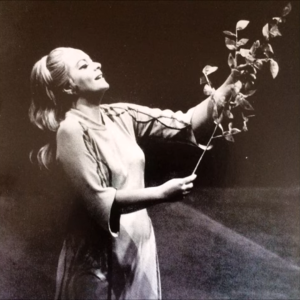

Episode 262. Sylvia Sass Revisited


Several summers ago I published my first episode celebrating the artistry of Sylvia Sass which primarily featured her 1984 album of pop songs sung in Hungarian. At the time I called it, without any irony, the finest crossover album of the 1980s and one of the best of all time. Sass is an artist who continues to engage discourse. Many of the opinions, theories, and input encountered therein are predicated on dissecting the reasons for her short international career. My objective with today’s episode, however, is simply to celebrate Sass’s singing in all its glory, extending from the standard Italian operatic repertoire with which she is most associated through the thorniest contemporary idioms to the subtlest art song to the most refined Mozart singing, with, once again, a nod to the pop material which initially drew me to her. I always say that I believe in giving flowers to our favorite artists when they are still around to receive them, and today’s bouquet is a stunning display full of color and variety humbly presented to one of my favorite divas.

Countermelody is a podcast devoted to the glory and the power of the human voice raised in song. Singer and vocal aficionado Daniel Gundlach explores great singers of the past and present focusing in particular on those who are less well-remembered today than they should be. Daniel’s lifetime in music as a professional countertenor, pianist, vocal coach, voice teacher, and journalist yields an exciting array of anecdotes, impressions, and “inside stories.” At Countermelody’s core is the celebration of great singers of all stripes, their instruments, and the connection they make to the words they sing. By clicking on the following link (https://linktr.ee/CountermelodyPodcast) you can find the dedicated Countermelody website which contains additional content including artist photos and episode setlists. The link will also take you to Countermelody’s Patreon page, where you can pledge your monthly support at whatever level you can afford.
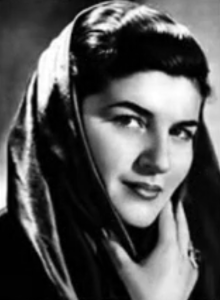

Episode 261. Thom Baker Introduces Rosanna Carteri (Listeners’ Favorites)


Today’s episode is one of my Listeners’ Favorites episodes, this one introduced by my wonderful friend Thom Baker. He had just written me about his enthusiasm for the Rosanna Carteri episode I posted in the fall of 2020 on the occasion of her death, just a few short weeks before her 90th birthday. Thom and I were both equally taken with this long-lived artist, who abandoned her performing career in 1966 when she was only 35 years old, brought her full-throated voice and impeccable artistry to operatic stages around the world for fifteen exceptional years. Carteri’s was a lyric yet full-bodied voice with facility that allowed her to undertake soubrette parts as well as some spinto roles. I feature extended examples of her versatility over the course of that entire career, including excerpts from La traviata, La bohème, La rondine, Guglielmo Tell, Falstaff, L’elisir d’amore, Madama Butterfly, Roméo et Juliette, Otello, Pietro Mascagni’s L’amico Fritz and Iris, Prokofiev’s War and Peace (the final version of which she created in Florence in 1954), the premiere recording of Poulenc’s Gloria and Gilbert Bécaud’s Opéra d’Aran (which she premiered in Paris in 1962). These operas represent just a fraction of her repertoire, in which are featured, among others, Giuseppe di Stefano, Nicolai Gedda, Leonard Warren, Carlo Bergonzi, Ettore Bastianini, Ferruccio Tagliavini, Giuseppe Taddei, Cesare Valletti, and Giuseppe Gismondo and conductors Tullio Serafin, Pierre Monteux, Vittorio Gui, Georges Prêtre, Gabriele Santini, and Artur Rodzinski. In other words, the crème de la crème of the operatic firmament in the 1950s and 1960s, in which company Carteri most emphatically belonged.

Countermelody is a podcast devoted to the glory and the power of the human voice raised in song. Singer and vocal aficionado Daniel Gundlach explores great singers of the past and present focusing in particular on those who are less well-remembered today than they should be. Daniel’s lifetime in music as a professional countertenor, pianist, vocal coach, voice teacher, and journalist yields an exciting array of anecdotes, impressions, and “inside stories.” At Countermelody’s core is the celebration of great singers of all stripes, their instruments, and the connection they make to the words they sing. By clicking on the following link (https://linktr.ee/CountermelodyPodcast) you can find the dedicated Countermelody website which contains additional content including artist photos and episode setlists. The link will also take you to Countermelody’s Patreon page, where you can pledge your monthly support at whatever level you can afford.

Episode 258. (Frank) Lopardopalooza


Today I present to you the American lyric tenor Frank Lopardo, who from 1984 through 2014 appeared in all the major opera houses of the world, celebrated particularly for his Mozart and Rossini roles. Too often today these superb singers even from the recent past are forgotten by today’s audiences, and my listeners know that it is always a mission of mine to celebrate great artists who, for whatever reason, are not in the forefront of the public’s awareness. In Frank’s case, I suggest it has absolutely nothing to do with his stellar voice and astounding technique. Some singers are content to do their job and live their lives and serve the music and the art form to the best of their considerable abilities without engaging in antics or self-destructive behavior. A quick glance at Frank’s accomplishments and the musicians with whom he collaborated makes it immediately clear that his career unfolded naturally and organically at the highest levels. Today’s episode explores the infinite variety of Lopardo’s artistry and his impeccable musicianship and technique, which aided him in his pursuit of always discovering new aspects of the central roles in his career. Conductors with whom he collaborated (and as heard on the episode) include Georg Solti, Claudio Abbado, Ion Marin, Riccardo Muti, Robert Spano, and the late Seiji Ozawa. While Lopardo was never tempted to move outside the natural confines of his lyric voice, he did in the final years of his career, move into some of Verdi’s larger lyric tenor parts, in operas like Un ballo in maschera and Simon Boccanegra, both of which are sampled here. We also hear Frank in duet with some of his favorite colleagues, including memorable Chilean sopranos Verónica Villarroel and Cristina Gallardo-Domâs. It was all I could do not to entitle this episode Lopardopalooza, ‘cause that’s exactly what it is!

Countermelody is a podcast devoted to the glory and the power of the human voice raised in song. Singer and vocal aficionado Daniel Gundlach explores great singers of the past and present focusing in particular on those who are less well-remembered today than they should be. Daniel’s lifetime in music as a professional countertenor, pianist, vocal coach, voice teacher, and journalist yields an exciting array of anecdotes, impressions, and “inside stories.” At Countermelody’s core is the celebration of great singers of all stripes, their instruments, and the connection they make to the words they sing. By clicking on the following link (https://linktr.ee/CountermelodyPodcast) you can find the dedicated Countermelody website which contains additional content including artist photos and episode setlists. The link will also take you to Countermelody’s Patreon page, where you can pledge your monthly support at whatever level you can afford.
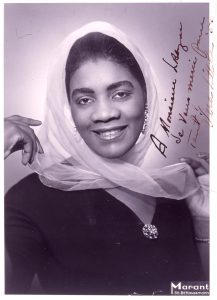

Episode 256. Mari Lyn’s Golden Treasury of Chutzpah (Alternate Universe Bel Canto III)


Many of my listeners look forward with eager anticipation to my annual April Fool’s episodes, and today’s packs a particularly powerful punch! A few months back my friend Thomas Bagwell, a perpetual friend of the podcast, told me he had a dub of a rare recording on Philips Records [sic] by the New York-based soprano Mari Lyn, well known as the Singing Hostess of the 1980s public access cable television program The Golden Treasury of Song. On the spurious LP she sings Verdi and Puccini arias accompanied (sort of) by her artistic collaborator Howard Salat (of the Local 802) leading the “Belgravia Philharmonia Symphonica Orchestra” [sic]. If any of you remember Ms. Lyn from my previous Alternate Universe Bel Canto episodes, you will know that she packs a vocal punch that can leave you reeling (and your ears ringing!) I actually convinced Thomas to get on the horn with me yesterday from Copenhagen and we recorded a spirited conversation in which we discuss everything from Easter bonnets to theater organs to cranky Unitarians to defective blenders to aging ingénues to Lee Press-On Nails to Oscar the Grouch to Queens, Europe to the power of parlando before we get down to the true business of the day: singing the praises of our alternate universe diva, Marilyn Sosman (known to vocal aficionados the world over as Mari Lyn), she of the indestructible vocal bands, lofty wigs, and life-affirming (and -altering) costume jewelry. This whimsical episode strips Mari Lyn of her wigs, gowns, and accountrements (in a figurative sense only) leaving her only with her most powerful asset: that legendary Sherman tank of a voice. Armed with that voice, she refashions some of the most popular arias of Verdi and Puccini, and, thanks to her imaginative use of the Italian language; her refusal to conform to the strait-jacket of the printed page; and her idiosyncratic use of pitch, rhythm, and vocal color; renders them unrecognizable in the process. Not only is the music transformed, but so are we, her fans, who listen on in horrified fascination at what she will think of next. Evviva Mari Lyn!

Countermelody is a podcast devoted to the glory and the power of the human voice raised in song. Singer and vocal aficionado Daniel Gundlach explores great singers of the past and present focusing in particular on those who are less well-remembered today than they should be. Daniel’s lifetime in music as a professional countertenor, pianist, vocal coach, voice teacher, and journalist yields an exciting array of anecdotes, impressions, and “inside stories.” At Countermelody’s core is the celebration of great singers of all stripes, their instruments, and the connection they make to the words they sing. By clicking on the following link (https://linktr.ee/CountermelodyPodcast) you can find the dedicated Countermelody website which contains additional content including artist photos and episode setlists. The link will also take you to Countermelody’s Patreon page, where you can pledge your monthly support at whatever level you can afford.
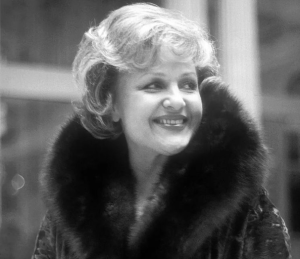

Episode 246. Previn Moore Introduces Camilla Williams and Janet Williams (Listeners’ Favorites)


As the final entry in this year’s Black History Month episodes, my dear friend Previn Moore introduces his Listeners’ Favorites choice, an episode I published in the early months of Countermelody back in the fall of 2019. It features two phenomenal Black sopranos whose friendship and mentorship Previn outlines in detail in an introductory interview I did with him at his home in Vienna this past week. This episode features the phenomenal, the legendary, the pathbreaking soprano Camilla Williams (1919-2012), whom Previn first met as a young tenor at Indiana University’s School of Music, where Miss Williams was the first African American teacher of singing to serve on the faculty. While there, Previn also formed a lifelong friendship with Camilla’s student, Janet Williams, who herself went on to a brilliant worldwide career, including twelve years as a leading soprano with the Staatsoper Unter den Linden here in Berlin. Janet and I met as fellow students in the Merola Opera Program of the San Francisco Opera and it has been my joy and a privilege to share a treasured friendship with her ever since. In tribute to both of these extraordinary sopranos, I offer a cache of rare studio recordings by Camilla Williams, supplemented by live material sung by Janet Williams from the artist’s private archives. Included among the selections are excerpts from Camilla’s rarely-heard album of spirituals on the MGM Records label, and a concert given by Janet Williams in her home town of Detroit in 1989, capped by a stunning rendition of Undine Smith Moore’s arrangement of the spiritual “Watch and Pray,” dedicated to Camilla Williams. Many thanks to Previn, Janet, and the extraordinary Camilla Williams for their shining examples and for their dedicated artistry.

Countermelody is a podcast devoted to the glory and the power of the human voice raised in song. Singer and vocal aficionado Daniel Gundlach explores great singers of the past and present focusing in particular on those who are less well-remembered today than they should be. Daniel’s lifetime in music as a professional countertenor, pianist, vocal coach, voice teacher, and journalist yields an exciting array of anecdotes, impressions, and “inside stories.” At Countermelody’s core is the celebration of great singers of all stripes, their instruments, and the connection they make to the words they sing. By clicking on the following link (https://linktr.ee/CountermelodyPodcast) you can find the dedicated Countermelody website which contains additional content including artist photos and episode setlists. The link will also take you to Countermelody’s Patreon page, where you can pledge your monthly support at whatever level you can afford.
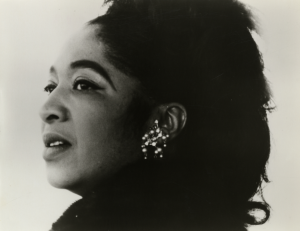

Episode 244. Veronica Tyler (BHM 2024)


This Countermelody episode is the last in my miniseries featuring artists from Baltimore. It is also the last in my new episodes for Black History Month 2024 featuring “Forgotten Divas.” Today I offer to you the absolutely divine soprano of Veronica Tyler (1939-2020), who fits all three categories. In the 1960s, Veronica Tyler was a name on everyone’s lips: she appeared on three different episodes of Leonard Bernstein’s Young People’s Concerts, she was the second prize winner of the International Tchaikovsky Competition in Moscow in 1966, the first time this venerable contest had featured singers, she was a featured artist at the New York City Opera, where, in their first season at Lincoln Center, she sang a Pamina in The Magic Flute of such humanity and transcendent vocal beauty that audiences were transported into another world. She sang under conductors Leopold Stokowski, Erich Leinsdorf, Zubin Mehta, Eugene Ormandy, Carlo Maria Giulini, Robert Shaw, and Stanislaw Skrowaczewski. Later on she made a belated Met debut in 1985 as Serena in their premiere production of Porgy and Bess, but gradually her high profile appearances became fewer and fewer and eventually she disappeared from view. Her death on 21 March 2020 was only announced three months later, and with little fanfare. But during her heyday, Veronica Tyler was among the most elegant, compelling, and ingratiating lyric sopranos in the business. I have scoured the archives to bring to light some of the artist’s most beautiful performances, some of them virtually unheard for decades, including a 1980 album of spirituals that ranks among the best of this repertoire ever committed to disc. What inexpressible joy it brings me to present to you the unforgettable Veronica Tyler!

Countermelody is a podcast devoted to the glory and the power of the human voice raised in song. Singer and vocal aficionado Daniel Gundlach explores great singers of the past and present focusing in particular on those who are less well-remembered today than they should be. Daniel’s lifetime in music as a professional countertenor, pianist, vocal coach, voice teacher, and journalist yields an exciting array of anecdotes, impressions, and “inside stories.” At Countermelody’s core is the celebration of great singers of all stripes, their instruments, and the connection they make to the words they sing. By clicking on the following link (https://linktr.ee/CountermelodyPodcast) you can find the dedicated Countermelody website which contains additional content including artist photos and episode setlists. The link will also take you to Countermelody’s Patreon page, where you can pledge your monthly support at whatever level you can afford.
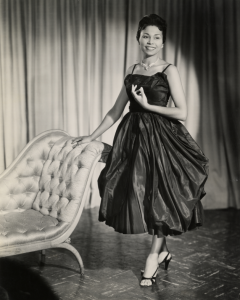

Episode 243. Ethel Ennis (BHM 2024)


Today’s “Forgotten Diva” takes us outside of the realm of opera and into the rich musical field of jazz. I have been in musical heaven the past few days as I’ve been savoring the output of the great Ethel Ennis (28 November 1932 – 17 February 2019). In her native Baltimore she was known as the “First Lady of Jazz,” and while this might cause some persons to look askance at such a claim, I can only say that they have not yet sampled the vocal, musical and interpretive majesty that is Ethel Ennis! Because of her superlative gifts, worldwide fame kept nipping at her heels, and yet she had no interest in being “famous.” She just wanted to make music, and that’s exactly what she did, remaining in the city of her birth, where she performed regularly at certain clubs, including one she and her husband Earl Arnett ran in the 1980s called “Ethel’s Place.” She had recording contracts with both Capitol Records and RCA, for whom she released some monumental albums in the 1950s and 1960s, and later in her career, as her artistry become more refined, burnished, and inward-looking, she also recorded a number of spectacular live recordings on small, independent labels. Recordings sampled on this episode cover the musical gamut from the Great American Songbook to quirky non-standards, to contemporary pop. If you hear Ethel Ennis interpret just one song, I predict that you will become an immediate fan for life.

Countermelody is a podcast devoted to the glory and the power of the human voice raised in song. Singer and vocal aficionado Daniel Gundlach explores great singers of the past and present focusing in particular on those who are less well-remembered today than they should be. Daniel’s lifetime in music as a professional countertenor, pianist, vocal coach, voice teacher, and journalist yields an exciting array of anecdotes, impressions, and “inside stories.” At Countermelody’s core is the celebration of great singers of all stripes, their instruments, and the connection they make to the words they sing. By clicking on the following link (https://linktr.ee/CountermelodyPodcast) you can find the dedicated Countermelody website which contains additional content including artist photos and episode setlists. The link will also take you to Countermelody’s Patreon page, where you can pledge your monthly support at whatever level you can afford.
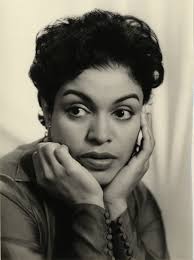

Episode 240. Annabelle Bernard (BHM 2024)


Last week we celebrated the 97th birthday of our Ur-Diva, Leontyne Price. And today, continuing my Black History Month 2024 theme of “Forgotten Divas,” I present to you a Verdi soprano of similar repertoire and voice to Miss Price, Annabelle Bernard (1935-2005), whose career, unlike Price’s, was centered primarily in Europe, specifically at the Deutsche Oper in Berlin, where she was a member of the company for nearly forty years. Born in New Orleans, she received her early musical training from Earl Hogan (uncle of the famous composer and conductor Moses Hogan) and Sister Mary Elise Sisson, whom Bernard herself credited with being her formative and primary musical inspiration. With the patronage of Edith Rosenwald Stern, an heiress to the Sears-Roebuck fortune, Bernard found early success in Europe, winning second prize in the Munich ARD Competition in 1960, settling in Berlin in 1962. Annabelle Bernard was married to the German tenor Karl-Ernst Mercker (1933-2021), who in addition to appearing alongside her in many performances and productions, was also a fierce advocate for his wife during her tenure in Berlin, when she would encounter racism. The two of them retired to New Orleans in 1998, where Bernard became a voice teacher at Xavier University, her alma mater. This episode includes rare live clips of the soprano in works by Verdi, Mercadante, and Dallapiccola, as well as from her sole commercial recording, excerpts from Porgy and Bess in German alongside the iconic African American baritone Lawrence Winters, released in 1964, the year before Winters’s untimely death. Mercker’s strong lyric tenor is also featured in a few brief excerpts, but the main focus is on the radiant voice and artistry of Annabelle Bernard. Believe me when I tell you that I remain on the lookout for further recordings of this magnificent artist!

Countermelody is a podcast devoted to the glory and the power of the human voice raised in song. Singer and vocal aficionado Daniel Gundlach explores great singers of the past and present focusing in particular on those who are less well-remembered today than they should be. Daniel’s lifetime in music as a professional countertenor, pianist, vocal coach, voice teacher, and journalist yields an exciting array of anecdotes, impressions, and “inside stories.” At Countermelody’s core is the celebration of great singers of all stripes, their instruments, and the connection they make to the words they sing. By clicking on the following link (https://linktr.ee/CountermelodyPodcast) you can find the dedicated Countermelody website which contains additional content including artist photos and episode setlists. The link will also take you to Countermelody’s Patreon page, where you can pledge your monthly support at whatever level you can afford.
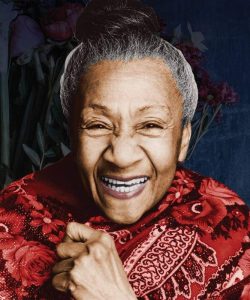

Episode 239. Gwendolyn Killebrew (BHM 2024)


This week’s “Forgotten Diva” is the mezzo-soprano / contralto Gwendolyn Killebrew (26 August 1941 – 24 December 2021), who made an indelible contribution to opera in particular during the active years of her career (1965 – 2009). Though the majority of her career was centered at the Deutsche Oper am Rhein in Düsseldorf, she sang the world over with some of the most important opera companies (including the Metropolitan Opera, San Francisco Opera, the Salzburg Festival, Bayreuth, Washington Opera, Santa Fe Opera, La Monnaie, and the Bayerische Staatsoper), conductors (Pierre Boulez, Gary Bertini, Michael Gielen, Herbert von Karajan, Zubin Mehta, Georg Solti), and stage directors (Patrice Chéreau, Jean-Pierre Ponnelle, August Everding, Giancarlo del Monaco, Christof Loy, and John Dew). She had an enormous repertoire from Monteverdi and Handel to Henze and Fortner, excelling in particular in various Wagner roles. She was also a superb actor, who, through the use minimal gestures and stage business, made an enormous impact. This episode presents her in a wide range of material, including both live and commercial recordings ranging from Cavalieri to Zimmermann, alongside such fellow singers as Teresa Stratas, Carlo Bergonzi, Hermann Prey, Stuart Burrows, Sherrill Milnes, and Gail Gilmore led by conductors Leonard Bernstein, Gary Bertini, Bohumil Gregor, Berislav Klobučar, James Levine, Heinz Wallberg, and Eve Queler. Of special interest is a rare live recording of her prize-winning performance of “Asie” from Ravel’s Shéhérazade at the 1967 International Voice Competition in Montréal. The episode opens with brief memorial tributes to soprano Wilhelmenia Fernandez and pianist Thomas Muraco.

Countermelody is a podcast devoted to the glory and the power of the human voice raised in song. Singer and vocal aficionado Daniel Gundlach explores great singers of the past and present focusing in particular on those who are less well-remembered today than they should be. Daniel’s lifetime in music as a professional countertenor, pianist, vocal coach, voice teacher, and journalist yields an exciting array of anecdotes, impressions, and “inside stories.” At Countermelody’s core is the celebration of great singers of all stripes, their instruments, and the connection they make to the words they sing. By clicking on the following link (https://linktr.ee/CountermelodyPodcast) you can find the dedicated Countermelody website which contains additional content including artist photos and episode setlists. The link will also take you to Countermelody’s Patreon page, where you can pledge your monthly support at whatever level you can afford.
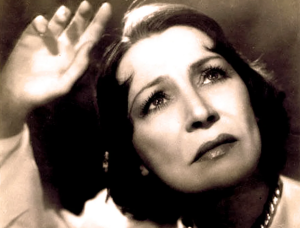

Episode 238. Delcina Stevenson (BHM2024)


I am so grateful to all the listeners who did introductions to their favorite episodes last month. It provided me with a little bit of needed breathing space and now I am back raring to go with my first new episode for 2024, just in time for Black History Month 2024! There is a secondary theme for this month which is “Forgotten Divas,” a favorite topic of mine at any time of year. The term “forgotten” needs to be taken with a grain of salt, because these women are anything but forgotten among those who experienced their singing, teaching, or friendship live and in person. Nevertheless, for want of a better term (Divas Who Deserve to Be As Well-Remembered as Any of Their More Famous Counterparts seems a little wordy), I’ll stick with the designation I chose.

Today’s artist is the only “Forgotten Diva” who is still with us, soprano Delcina Stevenson, born 29 September 1933, so this enables me to also “give flowers” (to coin a present-day term I actually like) to her directly. She was born in Kansas and graduated from Kansas University. After moving to California in 1960, she coached and studied with Lotte Lehmann, Gwendolyn Koldofsky, Martial Singher, and William Vennard, and was a protégée early in her career of Kurt Herbert Adler at the San Francisco Opera. She has lived and performed around the world, primarily in California, New York, and Germany. She possessed one of the most exquisite lyric soprano voices I have ever heard, one which never aged, but simply grew more lush and voluminous. The musical excerpts I have compiled feature her in live and studio recordings from over the course of more than 30 years, ranging Mozart to Sondheim to Rossini, in which that voice is on shimmering display. I am thrilled to introduce (or reintroduce) her to you.

Countermelody is a podcast devoted to the glory and the power of the human voice raised in song. Singer and vocal aficionado Daniel Gundlach explores great singers of the past and present focusing in particular on those who are less well-remembered today than they should be. Daniel’s lifetime in music as a professional countertenor, pianist, vocal coach, voice teacher, and journalist yields an exciting array of anecdotes, impressions, and “inside stories.” At Countermelody’s core is the celebration of great singers of all stripes, their instruments, and the connection they make to the words they sing. By clicking on the following link (https://linktr.ee/CountermelodyPodcast) you can find the dedicated Countermelody website which contains additional content including artist photos and episode setlists. The link will also take you to Countermelody’s Patreon page, where you can pledge your monthly support at whatever level you can afford.